MaltaWildPlants.com - an online flora of the Maltese Islands by Stephen Mifsud (2002-2023)
|
MaltaWildPlants.com - an online flora of the Maltese Islands by Stephen Mifsud (2002-2023)
|
| ||||||||||||
| All data on this webpage is copyright of Stephen Mifsud / www.MaltaWildPlants.com - (2002-2022) | ||||||||||||
|
INTRODUCTION
|
IMPORTANT NEWS
| ||||||||||||||||||||||||||||||||||||||||||||||||||||||||||||||||||||||
|
Vegetation of the Maltese Islands
Introduction
Due to the position of the Maltese Islands in the centre of the Mediterranean Sea the Maltese flora has affinities with the floras of all the regions of the Mediterranean and thus one finds species with eastern, western and North African affinities. As is to be expected the Maltese flora is most similar to that of Sicily, especially to that of the Hyblean Region (South-Eastern Sicily), to which the Maltese Islands were intermittently attached until about 12,000 years ago. The Maltese vascular flora comprises about 1100 species of which some 800 are presumably indigenous, the rest being naturalised aliens.
The Maltese climate is typical of the Mediterranean region with a wet cool season alternating with a warm dry season. Temperatures rarely fall below 5°C (although grass temperature occasionally falls below zero in winter) and rarely rise above 35°C. The average annual rainfall is 513mm. The Maltese Islands are composed almost entirely of Oligo-Miocene sedimentary rocks which are largely of marine biogenic origin; there are also a few Pleistocene deposits of non-marine origin. These are highly calcareous thus giving rise to alkaline soils with a pH generally ranging from 7.0 to about 8.5. The Coralline limestones are hard rocks and they give rise to a karstic landscape wherein the effect of rain over the millennia has resulted in a system of depressions in which soil accumulates. Karstlands support a garigue or rocky steppe vegetation. The small size of the Islands coupled with their low altitude (the highest point is only 253m above sea level) means that all parts are influenced by the surrounding sea and soils may be somewhat saline. There is considerable exposure to strong winds, especially north-westerlies [Malt. Majjistral]. Thus the plant life of these islands has to be adapted to withstand all these stresses. Maltese Evergreen Woods (Maltese: Msaġar u Boskijiet)
The Maltese evergreen woods have been virtually destroyed. The few small populations of the Evergreen Oak (Quercus ilex; Maltese: Ballut), some of great age, are possibly the remnants of woods which existed up to a few hundreds of years ago. The Aleppo Pine (Pinus halepensis; Maltese: Żnuber) had been almost totally destroyed but has been widely replanted and is now regenerating. The maquis vegetation is still widespread, especially on the sides and bottoms of the dry valleys or widien (singular: wied). However almost all our maquis is of secondary origin and is dominated by trees such as the Carob (Ceratonia siliqua; Maltese: Ħarrub) which are not really indigenous but which were introduced in antiquity because of their utility .
Other components of the maquis are the Lentisk (Pistacia lentiscus; Maltese: Deru), Bay Laurel (Laurus nobilis; Maltese: Rand) and the Olive (Olea europaea; Maltese: Żebbuġ). Due to the drastic reduction in grazing and browsing over the past forty years, there has been some regeneration of maquis and some formerly uncommon species such as Mediterranean Buckthorn (Rhamnus alaternus; Maltese: Alaternu) are starting to increase. Particularly interesting is the Alerce, Arar or Sandarac Gum Tree (Tetraclinis articulata; Maltese: Għargħar), a conifer related to the Junipers. This tree has a Maghrebian distribution with Malta and some areas in southern Spain as the only European stations. Several hundreds of years ago it must have been widespread in the Maltese Islands, judging from medieval Arabic accounts) but it is now rare. It forms a maquis on rocky slopes
Maquis (Maltese: Makkja)
The maquis vegetation is still widespread especially on the sides and bottoms of the dry valleys or widien (singular: wied). However all our maquis is of secondary origin and is dominated by trees such as the Carob (Ceratonia siliqua) which are not really indigenous but which were introduced in antiquity because of their utility. Other components of the maquis are the Lentisk (Pistacia lentiscus), Bay Laurel (Laurus nobilis) and the Olive (Olea europaea). Due to the recent drastic reduction in grazing there has been some regeneration of maquis and some formerly uncommon species such as Mediterranean Buckthorn (Rhamnus alaternus) and Terebinth (Pistacia terebinthus) are starting to increase. Particularly interesting is the Alerce or Sandarac Gum tree (Tetraclinis articulata), a conifer related to the Junipers. This tree has a Maghrebian distribution with Malta and an area in Murcia as the only European stations. Several hundreds of years ago it must have been widespread in the Maltese Islands but it is now very rare. It forms a maquis on rocky slopes.
The Garigue (Maltese: Xgħari)
The garrigue is the most typical of the Maltese vegetational communities and is characteristic of the karstic rocky regions of the islands. Nevertheless the garrigue community is fast declining due to the incursions of the building industry, new roads, dumping and other forms of habitat disturbance. The most important shrubs of the Maltese garrigues are the Mediterranean Thyme (Thymbra capitata; Maltese: Sagħtar), Mediterranean Heath (Erica multiflora; Maltese: Erika ) the endemic Yellow Kidney-Vetch (Anthyllis hermanniae subsp. melitensis: Maltese: Ħatba s-Sewda), the endemic Maltese Spurge (Euphorbia melitensis; Maltese: Tengħud tax-Xagħri), Tree Spurge (Euphorbia dendroides; Maltese: Tengħud tas-Siġra) and Olive-leaved Germander (Teucrium fruticans; Maltese: Żebbuġ tal-Blat, Żebbuġija). Some rare formations also feature Rock-Roses (Cistus incanus and Cistus monspeliensis; Maltese: Ċistu Rosa, Ċistu Abjad, Borgħom). Herbaceous species are numerous and many of these also occur in rocky steppes and open maquis.
The Steppe (Maltese: Steppa)
Steppic vegetation is very widespread with a great diversity of species. Dominant steppe grasses are Stipa capensis, Hyparrhenia hirta, Andropogon distachyus, Brachypodium retusum, Dactylis hispanica, Trachynia distachya, Aegilops geniculata; Maltese: respectively Nixxief ta' l-iSteppa, Barrum tax-Xagħri, Barrum Aħmar, Għomma, Deqquqa, Għomma Żgħira, Brimba). Thistle steppes are dominated by the Clustered Carline-thistle (Carlina involucrata; Maltese: Sajtun) , a North African species which in Europe seems to occur only on the Maltese and Pelagian islands. The commonest geophyte is the Branched Asphodel (Asphodelus aestivus; Maltese: Berwieq), which is abundant on ground which is frequently burnt or very poor in nutrients, others include the Sea Squill (Urginea pancration: Maltese: Ġħansar) and several species of orchids (Maltese: Ħajja u Mejta, Bajdet il-Fenek, Orkidi) although numerous other species occur. Many steppic species also occur in garrigues and maquis clearings. A particularly interesting steppic community occurs on clay slopes. This is usually dominated by Esparto Grass (Lygeum spartum; Maltese: Ħalfa), Cardoon or Wild Artichoke (Cynara cardunculus; Maltese: Qaqoċċ tax-Xewk) and Sulla (Hedysarum coronarium: Maltese: Silla).
Cliff Communities (Maltese: Rdum)
Coastal cliffs are an important feature of Maltese topography and occur along the south and west of Malta, and much of Gozo and Comino. Cliff flora is especially interesting since it includes many of our endemic species as well as species of North African affinity. Characteristic cliff species are the Maltese Rock-Centaury (Palaeocyanus crassifolius; Maltese: Widnet il-Baħar), Maltese Salt-Tree (Darniella melitensis; Maltese Xebb), the endemic Maltese Sea Lavender (Limonium melitense; Maltese: Limonju ta’ Malta) and Maltese Cliff-Orache (Cremnophyton (= Atriplex) lanfrancoi; Maltese: Bjanka tal-Irdum) all of which are endemic, as well as Caper (Capparis orientalis; Maltese: Kappar), Egyptian St. John’s Wort (Hypericum aegypticum; Maltese: Fexfiex tal-Irdum), Rock Crosswort (Crucianella rupestris: Maltese: Kruċanella) and Sea Carrots (Daucus gingidium ; Maltese: Zunnarija tal-Irdum).
Coastal Sand Dunes (Maltese: Għaram tar-Ramel)
Sand dunes have suffered greatly in the past thirty-five years and their flora has been greatly impoverished. The Marram Grass (Ammophila littoralis; Maltese: Qasba tar-Ramel, Birrun), normally dominating coastal dune communities, seems to have become extinct, although it is possible that it may still be present in the seed bank. The dominant species of extant dunes are Sand Couch (Elytrigia juncea ; Maltese: Sikrana tar-Ramel), Dropseed Grass (Sporobolus arenarius; Maltese: Niġem tar-Ramel ), Sea Kale (Cakile maritima; Maltese:Kromb il-Baħar), Sea Holly (Eryngium maritimum; Maltese: Xewk tar-Ramel) and Sea Daffodil (Pancratium maritimum; Malt. Pankrazju, Ġilju tar-Ramel). Unfortunately several dune species have disappeared during the last decade or so.
Coastal communities (Maltese: Komunitajiet tax-Xtajta)
Low-lying coastal habitats are most often rocky. These are dominated by a variety of halophytic (salt-tolerant) plants. Among the most characteristic are the Golden Samphire (Limbarda crithmoides; Maltese: Xorbett, Xorbebb) which may also be found in saline marshes and other saline communities, Sea Samphire (Crithmum maritimum; Maltese: Busbies il-Baħar), species of Sea Lavender (mainly Limonium virgatum and the endemic Limonium zeraphae; Limonju ), Spiny Chicory (Cichorium spinosum; Maltese: Qanfuda) and Shrubby Glasswort (Arthrocnemum macrostachyum; Maltese: Almeridja) which also occurs in saline marshes and on cliffs.
Saline marshlands (Maltese: Bwar Mielħa)
This is a rare habitat occurring mainly where water courses open onto the sea or coastal lowlying depressions which retain water. Much of the vegetation of such communities in the Mediterranean is very similar to that of like communities in continental Europe and North Africa. All our saline marshlands have been heavily degraded by human interference, although some of these have been, or are being, rehabilitated as nature reserves. Their vegetation is dominated by various chenopods including Glassworts (species of Arthrocnemum, Sarcocornia and Salicornia; Maltese: Almeridja), Seablite (Suaeda maritima; Maltese: Swejda), Sea Purslane (Halimione portulacoides; Maltese: Bjanka tal-Baħar), Shrubby Orache (Atriplex halimus; Maltese: Bjanka); rushes (Juncus spp.; Maltese Simar) and several grasses such as the Common Reed (Phragmites australis; Maltese: Qasbet ir-Rih).
Water Courses (Maltese: Widien li jżommu l-ilma)
Some valleys support temporary water courses or small permanent springs and here the vegetation is mainly characterised by Reeds (especially Arundo donax; Maltese Qasab), Sedges such as several species of Carex (Maltese: Sogħda), Galingale (Cyperus longus; Maltese: Bordi) and Clustered Club-Rush (Scirpoides holoschoenus; Maltese: Simar tal-Boċċi) and many grasses such as Annual Beard-Grass (Polypogon monspeliensis; Maltese: Denb il-Liebru), Torpedo Grass (Panicum repens; Maltese: Niġem tal-Wied), Tall Fescue (Schedonorus arundinaceus; Maltese: Żwien) . Other characteristic water course plants include the Southern Reed-Mace (Typha domingensis; Malt. Buda) and Clustered Dock (Rumex conglomeratus; Maltese: Qarsajja tal-Ilma).
Other Wetland communities
A few water courses also support some deciduous trees such as White Poplar (Populus alba; Malt. Luq), Hoary Elm (Ulmus canescens; Malt. Nemmiesa , Ulmu), Ash (Fraxinus angustifolia subsp. oxycarpa; Maltese: Fraxxnu) and the Willows (Salix alba and Salix pedicellata; Malt. Żafżaf) all of which, particularly the willows, are rare. This type of habitat, which is now very rare, is referred to as Riparian Woodland.
A peculiar type of wetland habitat consists of temporary pools of rainwater which form in karstic depressions and which support a unique flora and fauna. The flora includes species such as the Water Crowfoot (Ranunculus saniculaefolius; Malt. Ċfolloq tal-Ilma) the sub-endemic Waterwort (Elatine gussonei; Malt. Elatine), the endemic Maltese Horned Pondweed (Zannichellia melitensis; Maltese: Ħarira tal-Ilma), Mediterranean Starfruit (Damasonium bourgaei; Maltese: Damażonju) and stoneworts (Chara and Tolypella species; Maltese: Kara). Disturbed Ground (Maltese: Art mharbta)
The Maltese Islands were colonised about 7000 years ago by immigrants from Sicily who already had a sophisticated agricultural technology and who eventually created the Temple Culture. Renfrew (in Before Civilisation) estimated that during the Temple Period Malta supported some 11,000 inhabitants. Thus the Maltese Islands have been under heavy anthropic pressure, since their colonisation, to a much greater extent than most other Mediterranean islands of comparable size. Due to the high level of human impact, disturbed habitats have become the most widespread over the islands and their flora includes most of the familiar wild plants. Many of these species are aliens or adventives (i.e. of foreign origin) which have become naturalised over the years.
Thus the most common of Maltese wild plants, the Cape Sorrel (Oxalis pes-caprae; Malt. Ħaxixa Ngliża, Qarsu) is actually a native of South Africa and was only introduced in Malta at the beginning of the nineteenth century. From Malta it has spread all over the Mediterranean and along the Atlantic coast of Europe and can now be found also in the south of England. The Crown Daisy (Glebionis coronaria; Malt. Lellux, Żigland, Bebbuna) is probably native to the Orient, where it is also an important food crop, and was probably introduced several hundreds of years ago. The Narrow-leaved Aster (Symphiotrichum (= Aster) squamatus; Malt. Settembrina Salvaġġa), which has now overrun the country, was only introduced in the 1930s. The Tobacco Tree (Nicotiana glauca; Malt. Tabakk tas-Swar) was introduced as an ornamental, but is now extensively naturalized, especially on building rubble. The same applies to the Castor Oil Tree (Ricinus communis; Malt. Siġra tar-Riġnu) which has spread rapidly and which even invades valleys. Some other very common species of disturbed habitats are Borage (Borago officinalis; Maltese: Fidloqqom), Honewort (Cerinthe major; Malltese: Qniepen), White Wall-Rocket (Diplotaxis erucoides; Maltese: Ġarġir), Yellow Wall-Rocket (Diplotaxis tenuifolia; Maltese: Ġarġir Isfar), Wild Radish (Raphanus raphanistrum; Maltese: Ravanell Salvaġġ), Animated Oat (Avena sterilis; Maltese: Ħafur Kbir), Bearded Oat (Avena barbata; Maltese: Ħafur Żgħir), Wild Barley (Hordeum leporinum: Maltese: Nixxief, Bunixxief). Weeds of arable land include species of Poppy (Papaver rhoeas, P. pinnatifidum, P. dubium; Maltese: Pepprin, Xaħxieħ) and Fumitory (Fumaria spp.; Maltese: Daħnet l-Art). Supplied by: Edwin Lanfranco, Earth Sciences, University of Malta. [Back to Top] |
|
Endemism
Endemism refers to species that are confined to a country or small geographical region, in our case the Maltese islands. Sometimes, the distribution of endemic species widens to parts of neighbouring countries and territories and are called sub-endemic. In our case these are the islands of Pantellaria, Lampedusa and more importantly Sicily. Strangely, some sub-endemic species are also found in Apulia in mainland Italy. Although some species appear to be common in our islands (e.g. Darniella melitensis, Euphorbia melitensis or Ophrys melitensis), one have to consider that they are confined to single location worldwide, and hence the importance of their protection and conservation especially from habitat loss. Only few endemic species are not protected, those which are very common, easy to regenerate due to the production of many seed, and their habitat is not declining or able to thrive in different habitats. Such examples are Anthemis urvilleana, Chiliadenus bocconei and Allium melitense.
| ||||||||||||||||||||||||||||||||||||||||||||||||||||||||||||||||||||||||||||||||||||||||||||||||||||||||||||||||||||||||||||||||||||||||||||||||||||||||||||||||||||||||||||||||||||||||||||||||||||||||||||||||||||||||||||||||||||||||||||||||||||||||||||||||||||||||||||||||||||||||||||||||||||||||||||||||||||||||||||||
|
Few Endangered species in Malta by IUCN (International Union for Conservation of Nature) Aristolochia clusii (Birthwort) Asplenium ceterach (Rusty back Fern) Atriplex lanfrancoi (Maltese Cliff Orache) Cardaria draba (Whitetop plant) Cheirolophus crassifolius (Maltese Rock Centuary) Conium maculatum (Hemlock) Euphorbia paralias (Sea Spurge) Euphorbia peplis (Purple Spurge) Helichrysum melitense (Maltese Everlasting) Hymenocarpos circinnatus (Spiny Kidney Vetch) Linum bienne (Pale Flax) Limonium serotinum (Narbonne's Sea Lavander) Lotus halophilus (Sand Restharrow) Lotus preslii (Presli's bird's-foot trefoil) Ononis biflora (Two-flowered Restharrow) Ophrys apifera (Bee Orchid) Ophrys lacaitae (Yellow spider orchid) Ophrys tenthredinifera (Sawfly orchid) Parietaria cretica (Cretan pellitory of the wall) Persicaria salicifolia (Willow-leaved Knotgrass) Pistaccia terebinthus (Terebinth tree) Pteranthus dichtomus Pteridium aquilinum (Bracken Fern) Pyrus syriaca (Wild Pear) Salix alba (White Willow) Sarcopoterium spinosum (Thorny Burnett) Scrophularia auriculata (Water Figwort) Sedum stellatum (Starry Stonecrop) Silene fruticosa (Shrubby Campion) Spartium unceum (Spanish Broom) Tetraclinis articulata (Sandarac Gum Tree) Tulipa australis (Southern Wild Tulip) Verbascum creticum (Cretan Mullein) Below there are a few links related to endangered or threatened flora in the Maltese islands and some environmental protection:
|
|
Main website credits
|

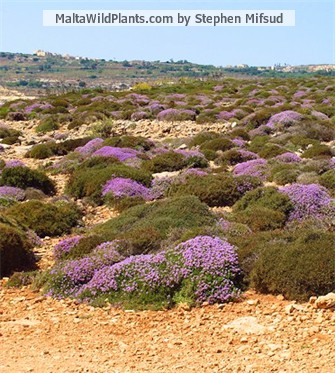 The Maltese garigue
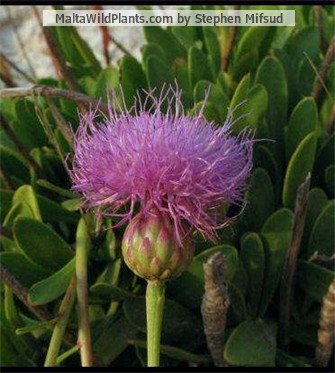 Maltese Rock-Centaury (national plant of Malta)
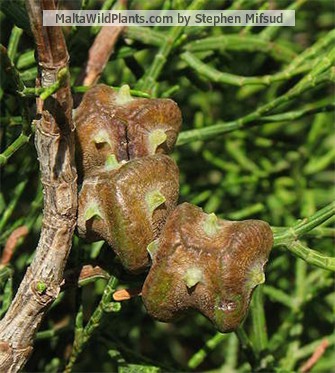 Sandarac Gum Tree (national tree of Malta)
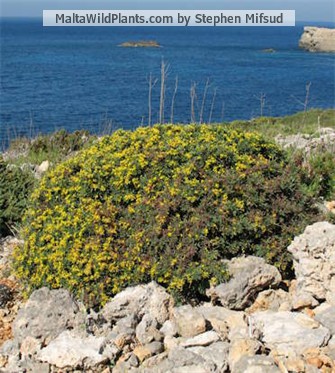 Maltese Yellow Kidney Vetch (endemic)
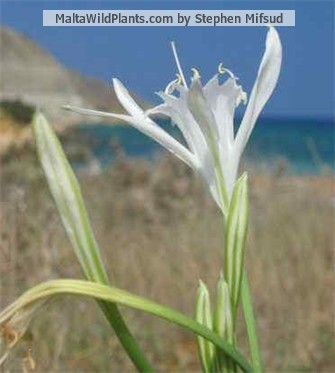 Sea Daffodil
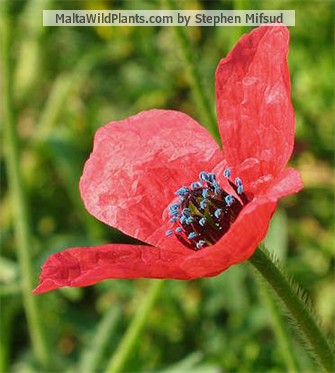 Rough Poppy
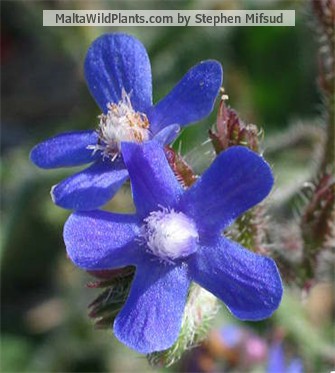 Italian Bugloss
 Spotted Milky Orchid
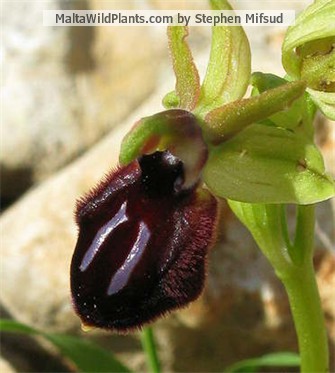 Maltese Spider Orchid (endemic)
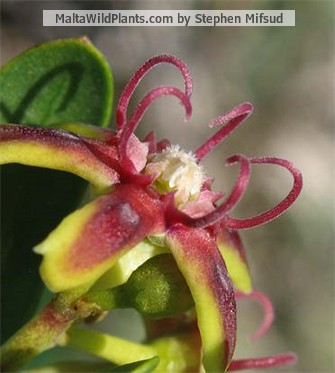 African Wolfbane
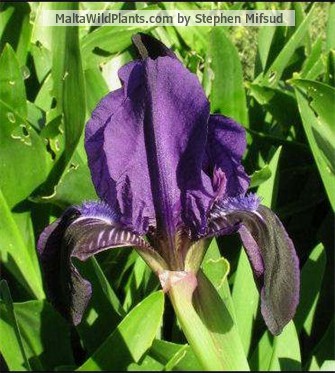 Souther Dwarf Iris (subendemic)
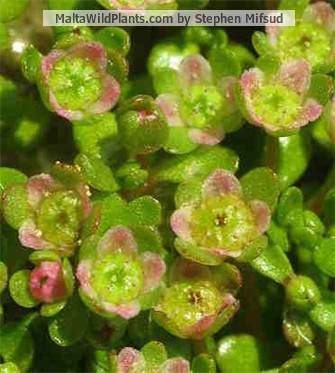 Maltese waterwort (subendemic)
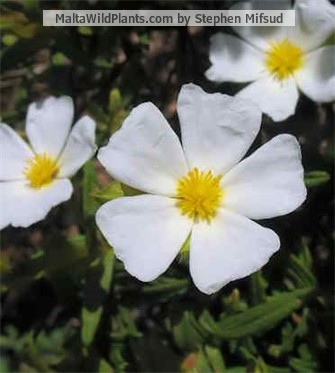 White rockrose
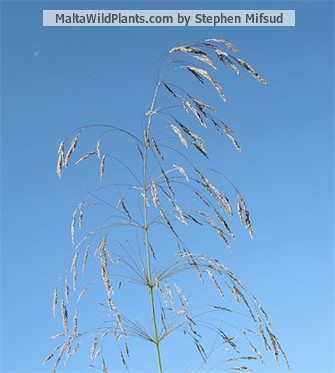 Rice Grass
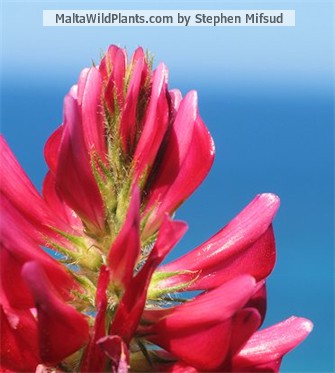 Sulla
Sulla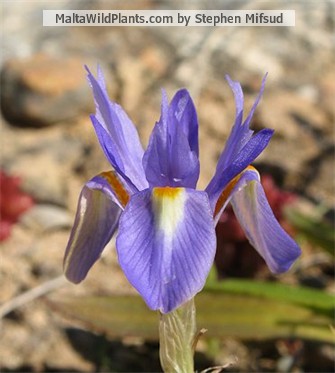 Barbary nut iris
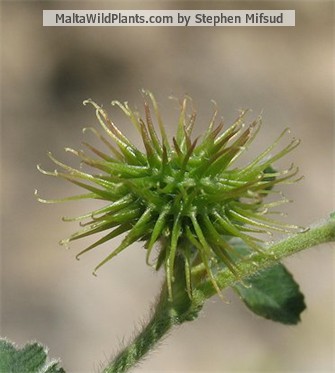 Burr medick
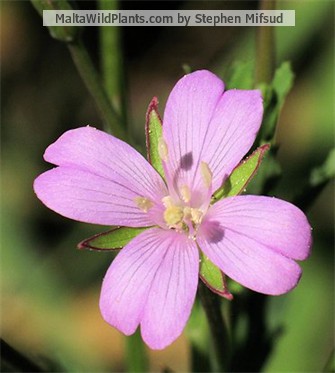 Hoary willowherb
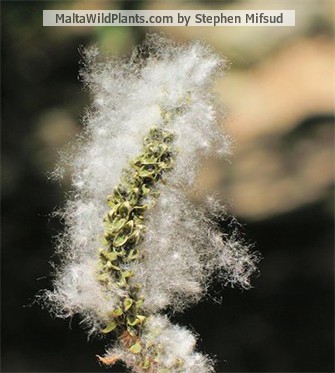 White poplar
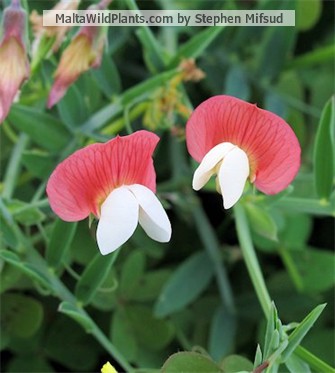 Spanish vetch
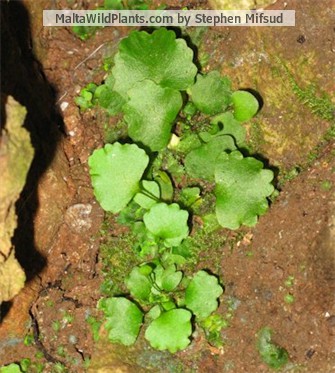 Young ferns
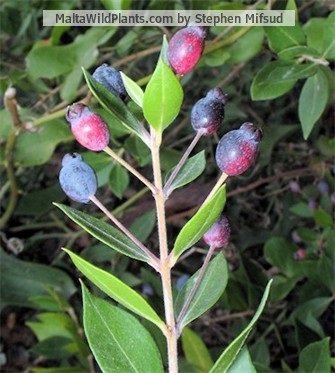 Common Myrtle
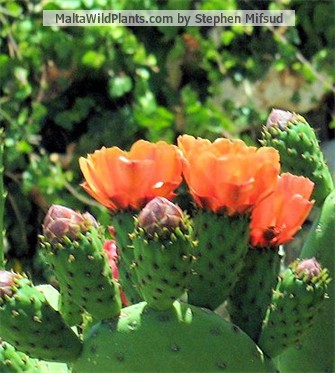 Prickly pear tree
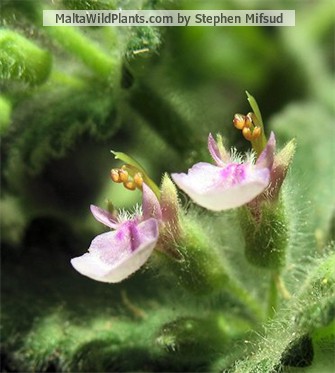 Water Germander
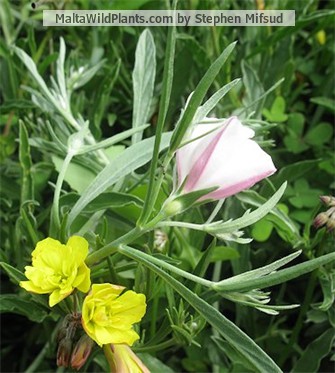 Olive-leaved bindweed
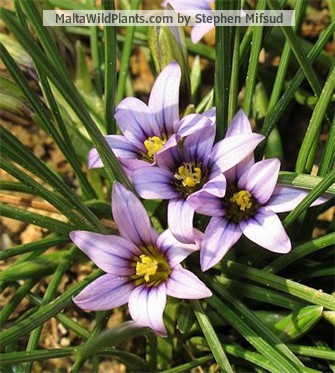 Maltese Sand crocus
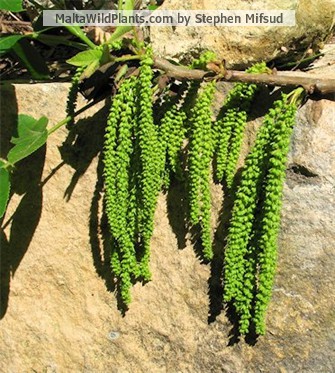 Narrow-leaved ash
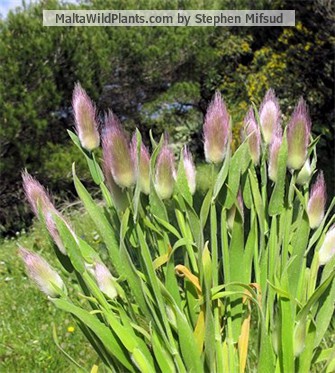 Hare's tail grass
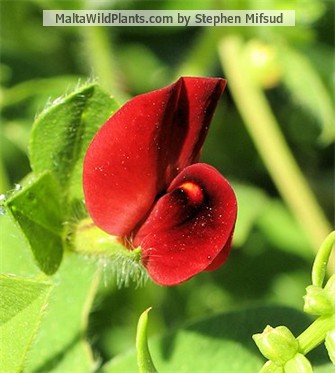 Crimson Dragons Teeth
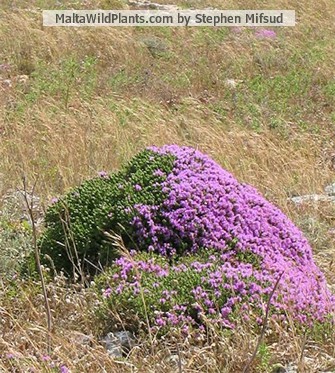 Mediterranean thyme


 MaltaWildPlants.com website describes in detail the wild flowering plants growing in the Maltese islands - an archipelago in the Mediterranean Sea composed of 5 main islands - Malta, Gozo, Comino, Selmunett and Filfla. The biodiversity of plants on these islands is very rich and over 1100 species are recorded from the various habitats of Malta, such as in woodland, maquis, pre-desert scrub, garigue, steppe, wasteland, abandoned fields, walls, cliff edges, valleys, coastal areas, shores, rock pools and sand dunes. I always wished to create a database of the wild plants found in my country with detailed information and high resolution photos. This project started in October 2002 and is kept updated till present. During this time I became a professional qualified botanists and so the information supplied is reliable, of which most is obtained from renowned books and internet sites. Additionally, the layout, presentation, high quality annotated photos, user-friendly navigation, and indexes make this website to stand out received an international award for management and prestige by the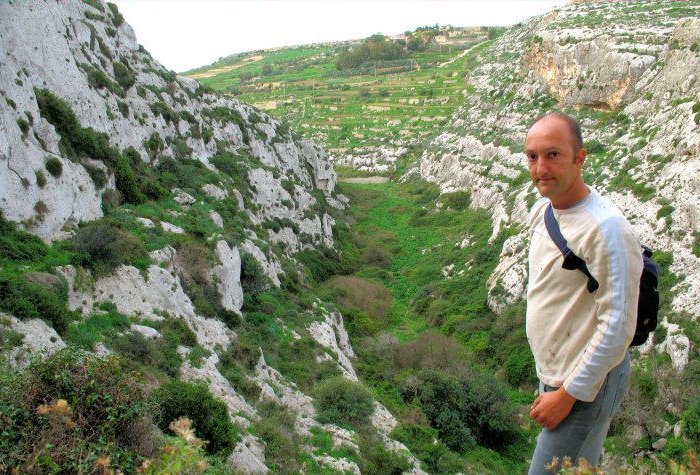

 1034 plant species listed.










.jpg "Ophrys sicula (subendemic)")