Ophrys eleonorae   MaltaWildPlants.com - A website dedicated to the flora of Malta  
        
   Wed 23 May 2012           Google PR= 5
HOME  - Index of Plant FamiliesA to Z INDEX - Species list aided with query filter toolsNEWS - Lateset news from the author & web updatesCOMMUNICATE ( Emails, Comments, Donations, etc)


Yellow-throated Crocus

Crocus longiflorus  Rafinesque  (Fam: IRIDACEAE.)
Crocus longiflorus  / Yellow-throated Crocus / Żagħfran selvaġġ
This plant is brought to you by one of the project's sponsors:
MCST - Malta Council for Science & Technology
More sponsors are needed for this project [ click here ]

Contents Links  (Detailed Profile)


Nomenclature

Morphology

Description & Specifications

Plant Information

Photo Gallery

Links and further info

Sales, Support and Donations

Submit further info on this species

Give a small Donation Online

Website FORUM

Copyright Notes


Iridaceae Index

Main Family Index

 
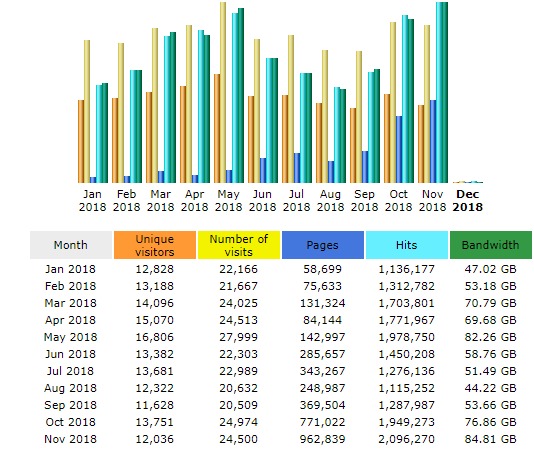
Visitors (Dec-2003):
Profile created on Dec-2003. / Last Update 29 Jun 2011.

Nomenclature

Species name:

Crocus longiflorus   Rafinesque

Author(s):

Constantine Samuel Rafinesque-Schmaltz;
   Turkey/France/Sicily, 1783-1840

Common names:

Yellow-throated Crocus

Maltese name:

Zagħfran Selvaġġ

Plant Family:

Iridaceae   (Iris Family)

Name Derivation:

Crocus = Saffron (Latin);
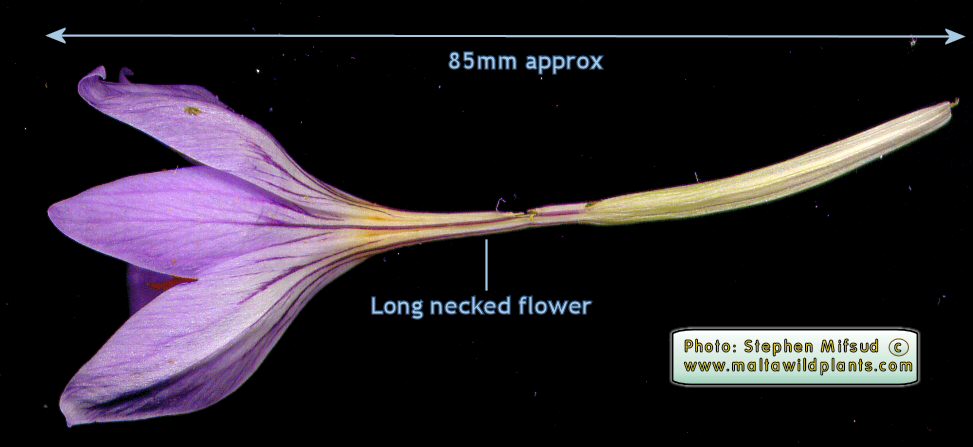
longiflorus = Long flowered, referring to the long neck of the flower (Latin).

Synonyms:

None

Remarks:

Sub-endemic and Rare. -


Morphology

PLANT STRUCTURE:

Character

Growth Form

Branching

Surface

Description

No aerial stem, stalk or scape :

Stalkless flowers and leaves grow directly from an underground true stem (bulb, rhizome, tuber, etc.).

No aerial stem, stalk or scape :

Aerial stem or flowering scape is absent.

Hirsute :

Covered with rough, coarse hairs.

General
Picture

Wild Plants of the Mediterranean Islands of Malta  - Copyright Stephen Mifsud / Maltawildplants.com / Malta (2002-2010) Wild Plants of the Mediterranean Islands of Malta  - Copyright Stephen Mifsud / Maltawildplants.com / Malta (2002-2010) Wild Plants of the Mediterranean Islands of Malta  - Copyright Stephen Mifsud / Maltawildplants.com / Malta (2002-2010)

LEAVES:

Character

Arrangement

Attachment

Venation

Description

No arrangement :

Leaves grow randomly from bulbs, rhizomes or other underground stems at no particular arrangement.

Sessile from an underground stem :

Growing directly from an underground stem (bulb, rhizome, tuber, etc.) without a stalk.

Single :

One central main vein (midrib) along leaf axis.

General
Picture

Wild Plants of the Mediterranean Islands of Malta  - Copyright Stephen Mifsud / Maltawildplants.com / Malta (2002-2010) Wild Plants of the Mediterranean Islands of Malta  - Copyright Stephen Mifsud / Maltawildplants.com / Malta (2002-2010) Wild Plants of the Mediterranean Islands of Malta  - Copyright Stephen Mifsud / Maltawildplants.com / Malta (2002-2010)
 

Character

Leaf Shape

Leaf Margin

Remarks

Description

Ensiform :

Sword-shaped, long, flat and gradually tapering to a pointed tip.

Entire :

Smooth margin without indentations, lobes or any projections.

General
Picture

Wild Plants of the Mediterranean Islands of Malta  - Copyright Stephen Mifsud / Maltawildplants.com / Malta (2002-2010) Wild Plants of the Mediterranean Islands of Malta  - Copyright Stephen Mifsud / Maltawildplants.com / Malta (2002-2010) Wild Plants of the Mediterranean Islands of Malta  - Copyright Stephen Mifsud / Maltawildplants.com / Malta (2002-2010)

FLOWERS:

Character

Colour

Basic Flower Type

No. of Petals

No. of Sepals

Description

Lilac to violet

Salverform :

A flower starting with a long, thin tube made usually but not always of fused petals that widens suddenly into a flat-faced flower with petals becoming separated.

6

To be botanically precise, the flower has 3 sepals (outer whorl) and 3 petals (inner whorl) which are identical, and so they are collectively referred to as 6 tepals or perianth segments.

0

General
Picture

  Wild Plants of the Mediterranean Islands of Malta  - Copyright Stephen Mifsud / Maltawildplants.com / Malta (2002-2010) Wild Plants of the Mediterranean Islands of Malta  - Copyright Stephen Mifsud / Maltawildplants.com / Malta (2002-2010) Wild Plants of the Mediterranean Islands of Malta  - Copyright Stephen Mifsud / Maltawildplants.com / Malta (2002-2010)
 

Character

Inflorescence

Description

Ovary

Stamens

Description

Single and Terminal :

Single, solitary flower at the apex of the stem or flower branch.

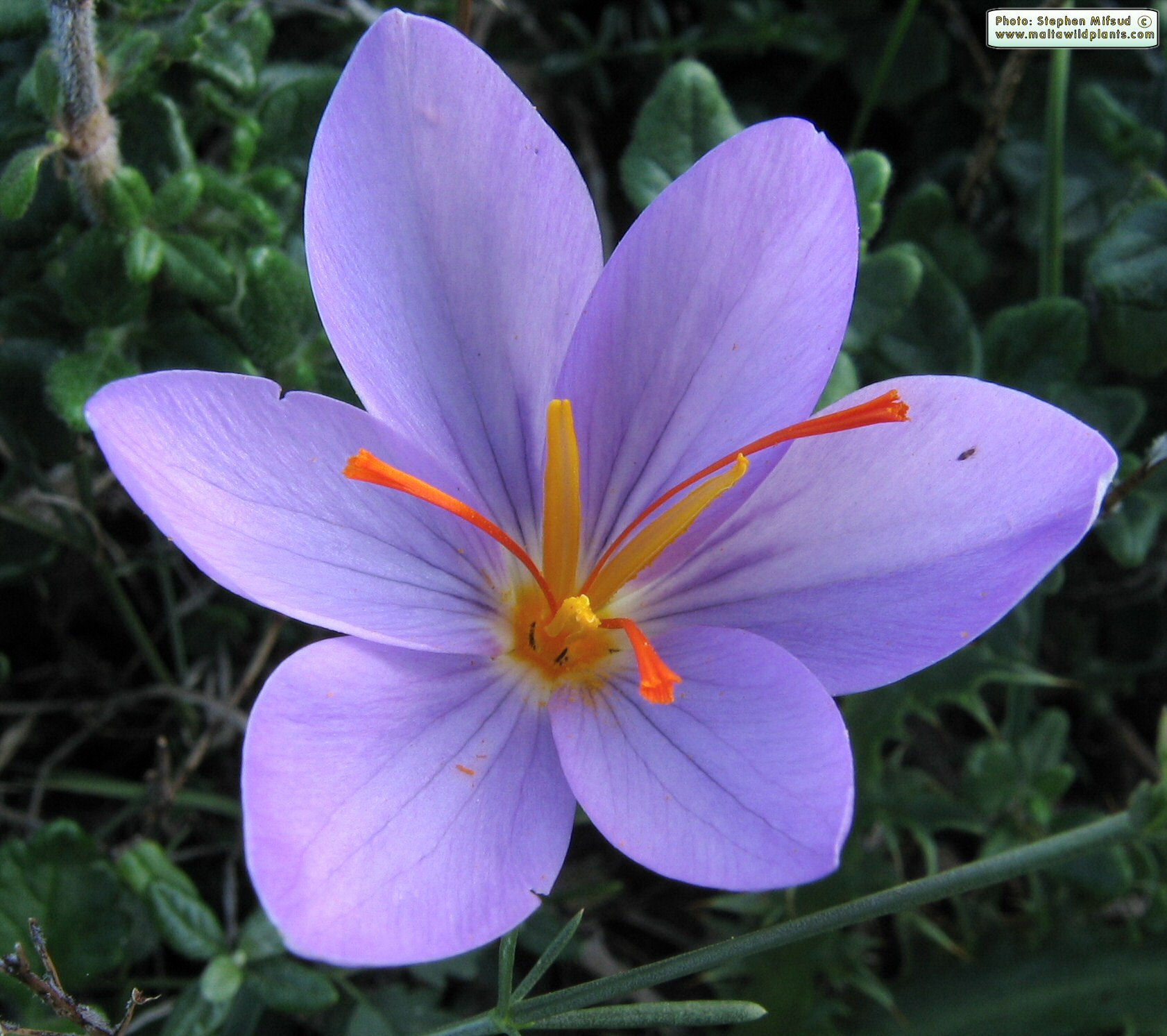
The flower consists of 6 distinct petals of lilac / violet colour which have dark purple veins more prominent at the outer side. The petals constrict and form a tube like structure (the neck) at the basal part. The tubular neck runs further down to the underground corm where the ovaries are located. There is a yellow ring at the constriction region (known as the throat).

Inferior :

Ovary situated below the flower parts (the calyx, corolla, and androecium). In other words, these are attached above the ovary.

3, Antipetalous :

Stamens situated on the same radii of the corolla segments, hence radiating out over the petals - not alternating with them. The 3 stamens of this species are over the 3 tepals that form the inner whorl (considered as the true petals).

General
Picture

Wild Plants of the Mediterranean Islands of Malta  - Copyright Stephen Mifsud / Maltawildplants.com / Malta (2002-2010) Wild Plants of the Mediterranean Islands of Malta  - Copyright Stephen Mifsud / Maltawildplants.com / Malta (2002-2010) Wild Plants of the Mediterranean Islands of Malta  - Copyright Stephen Mifsud / Maltawildplants.com / Malta (2002-2010) Wild Plants of the Mediterranean Islands of Malta  - Copyright Stephen Mifsud / Maltawildplants.com / Malta (2002-2010)
 

Character

Scent

Average Flower Size

Pollen Colour

Other Notes

Description

YES

Sweet and quite strong honey-like scent.

30mm across

(when flower is fully open).

Bright Yellow

-


SEEDS:

Character

No. Per Fruit

Shape

Size

Colour

Description

16-24

Spherical or Slightly ovoid

2-3mm

Orange to reddish-brown

(when fully ripe they have a reddish brown colour).

General
Picture

Wild Plants of the Mediterranean Islands of Malta  - Copyright Stephen Mifsud / Maltawildplants.com / Malta (2002-2010) Wild Plants of the Mediterranean Islands of Malta  - Copyright Stephen Mifsud / Maltawildplants.com / Malta (2002-2010) Wild Plants of the Mediterranean Islands of Malta  - Copyright Stephen Mifsud / Maltawildplants.com / Malta (2002-2010) Wild Plants of the Mediterranean Islands of Malta  - Copyright Stephen Mifsud / Maltawildplants.com / Malta (2002-2010)

FRUIT AND OTHER BOTANICAL DATA:

Character

Fruit Type

Colour of Fruit

Subterranean Parts

Other Notes

Description

Dehiscent Loculicidal Capsule :

A fruit capsule that splits open longitudinally into the cavity of the locule when the seeds are ripe.

Green

Turns light brown when ripe.

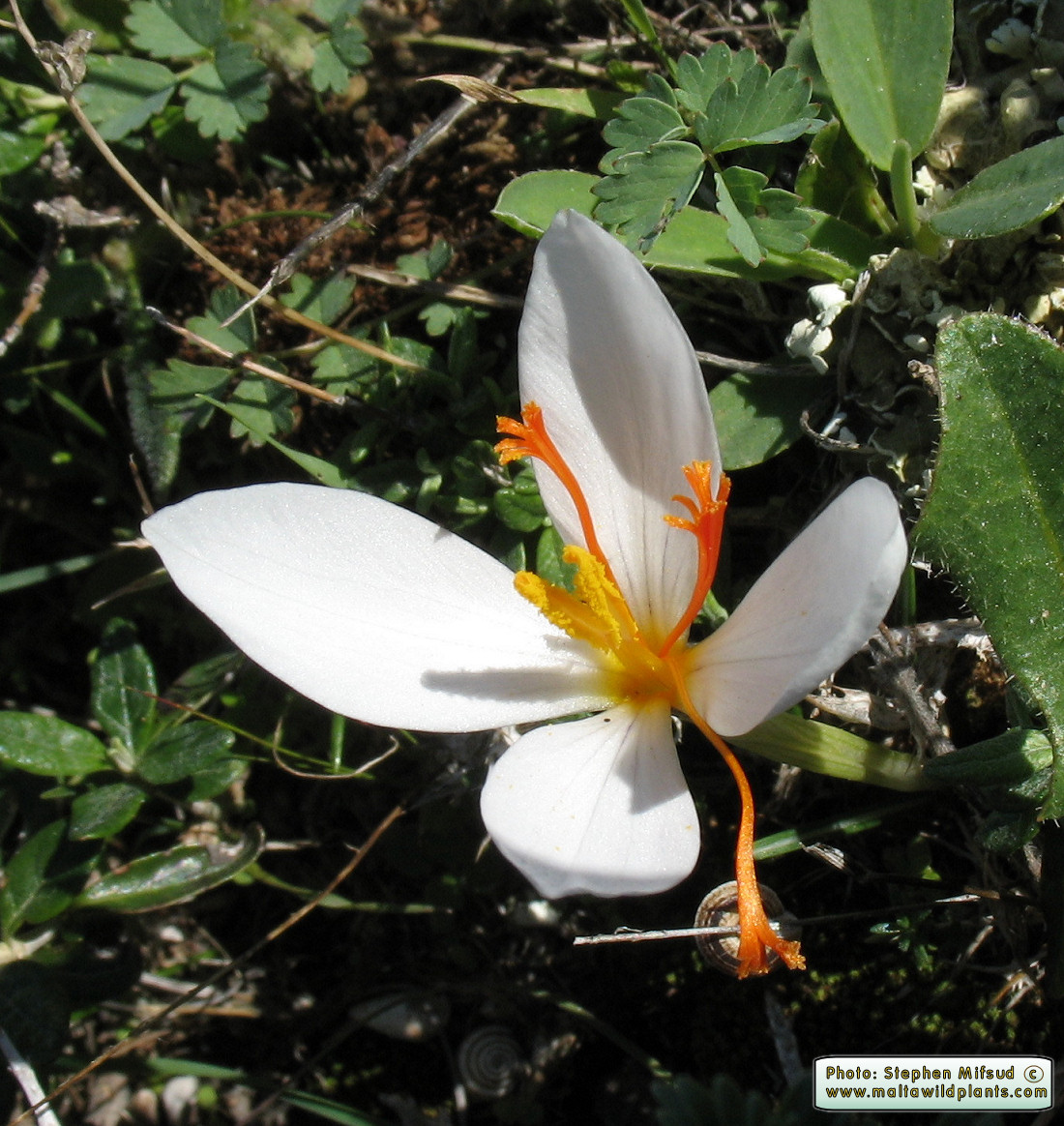
Corm :

A bulb-like stem, which, unlike a true bulb, is solid and has a bud on top from which the new stem grows and sends down roots from its base when the new growing.
-

General
Picture

Wild Plants of the Mediterranean Islands of Malta  - Copyright Stephen Mifsud / Maltawildplants.com / Malta (2002-2010) Wild Plants of the Mediterranean Islands of Malta  - Copyright Stephen Mifsud / Maltawildplants.com / Malta (2002-2010) Wild Plants of the Mediterranean Islands of Malta  - Copyright Stephen Mifsud / Maltawildplants.com / Malta (2002-2010) Wild Plants of the Mediterranean Islands of Malta  - Copyright Stephen Mifsud / Maltawildplants.com / Malta (2002-2010)

Specifications & Description

Life Cycle:

Perennial.

Growth Form:

GEOPHYTE (Bulbous/Rhizomous plants)

Habitat:

Grassy land in rocky places and garigues.

Frequency:

Rare

Localities in Malta:

Very Rare but locally frequent in one area at the South-South West of Malta (ie. Dingli Cliffs, Ghar il-Kbir, Girgenti).

Plant Height:

15cm.

Flowering Period:

Oct - Dec

Protection in Malta:

Not Protected by Law (LN200/2011 or LN311/2006)

Red List 1989:

This species has a threatened status and is listed in the Flora section of the National Red Data Book (Lanfranco, 1989)

Poison:

Unlikely to be poisonous.

This low (10cm approx) perennial grows from underground brown and fibrous corms. Around the start of Autumn, the vegetative corm start developing the reproductive flower. The flower grows directly from the corm with no real stalks or stems. The stalk-like structure is actually the long neck of the flower. The leaves also grow directly from the corm and strangely they develop fully just at or after blossoming of the flowers.

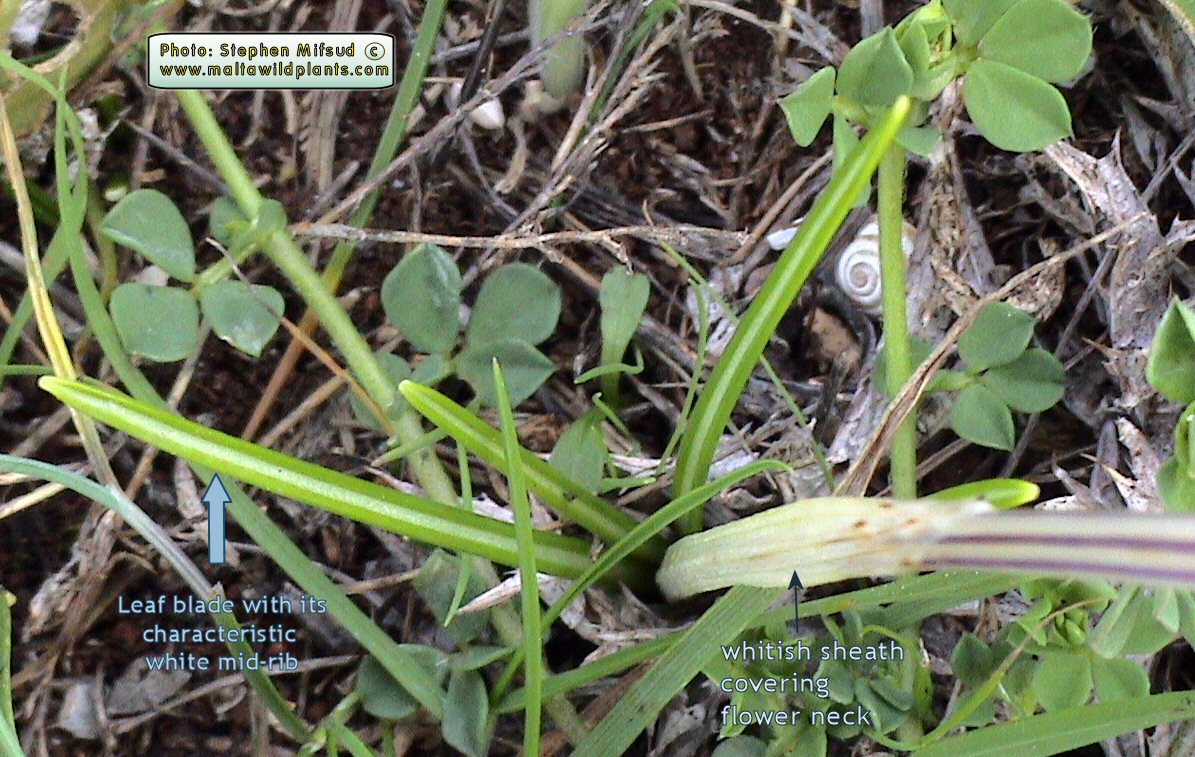
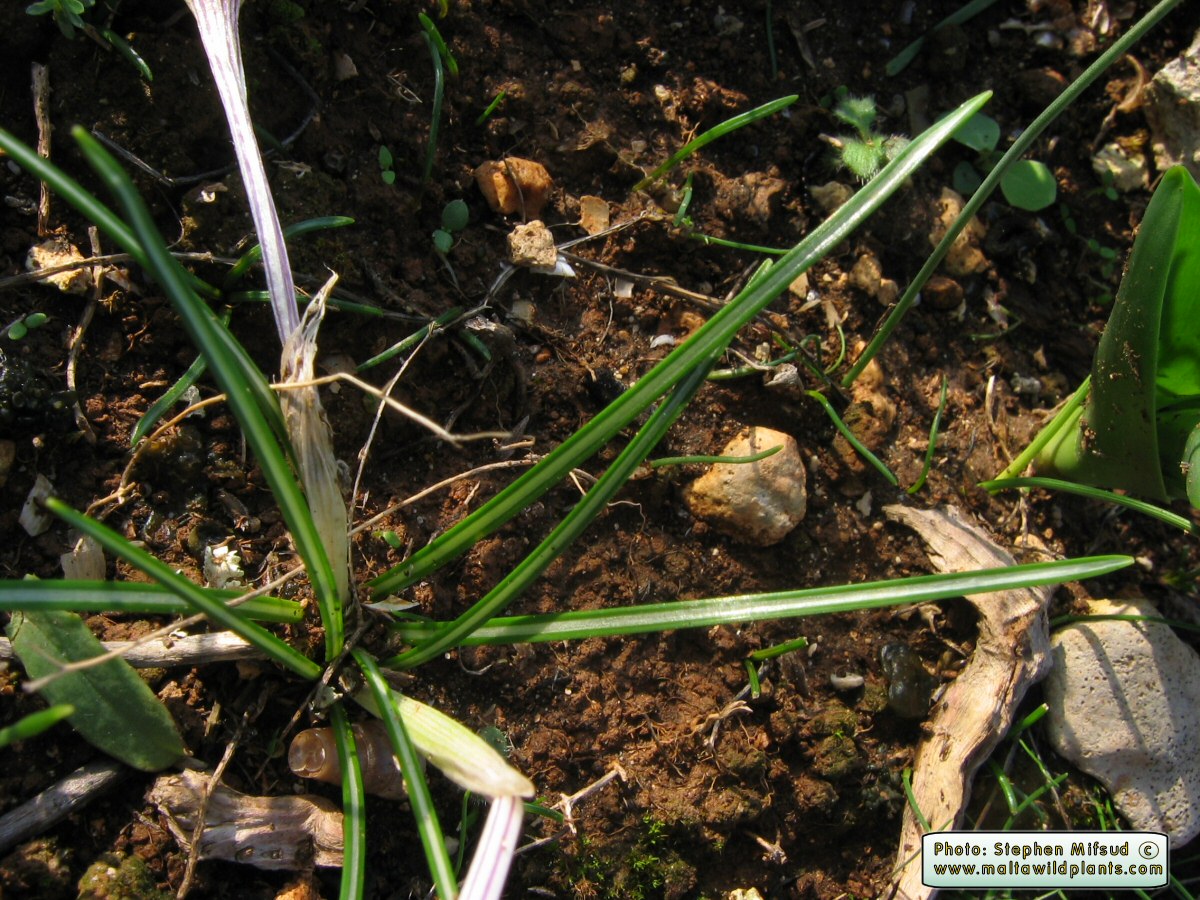
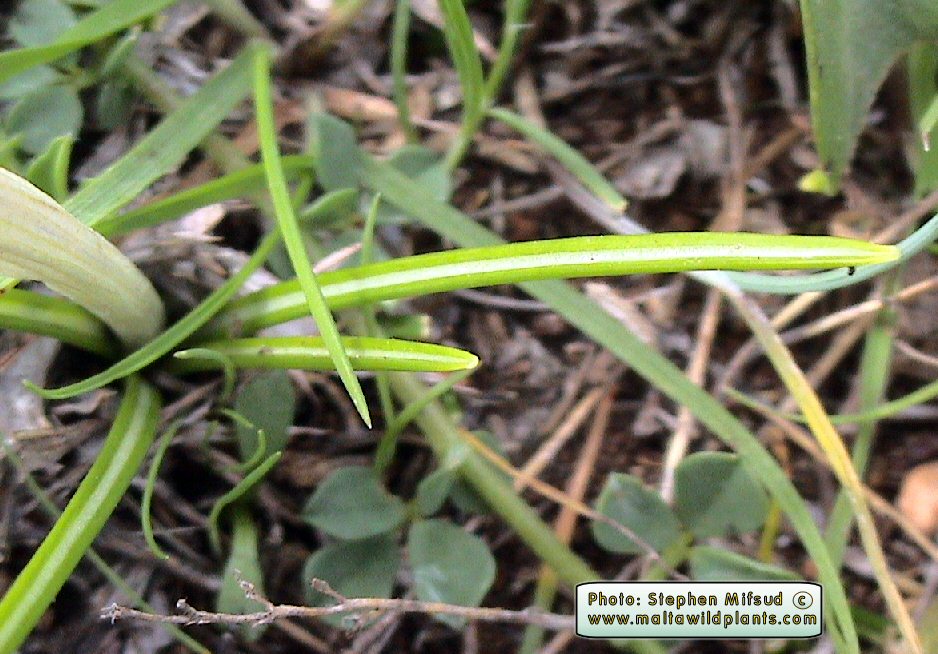
The leaves are simple and variably long (about 5-10cm), thin (2 to 3mm), have an entire outline and a characteristic central white stripe running longitudinally along the leaf axis. The shape of these leaves is sometimes described as ensiform, hence having the shape of sword-blade.

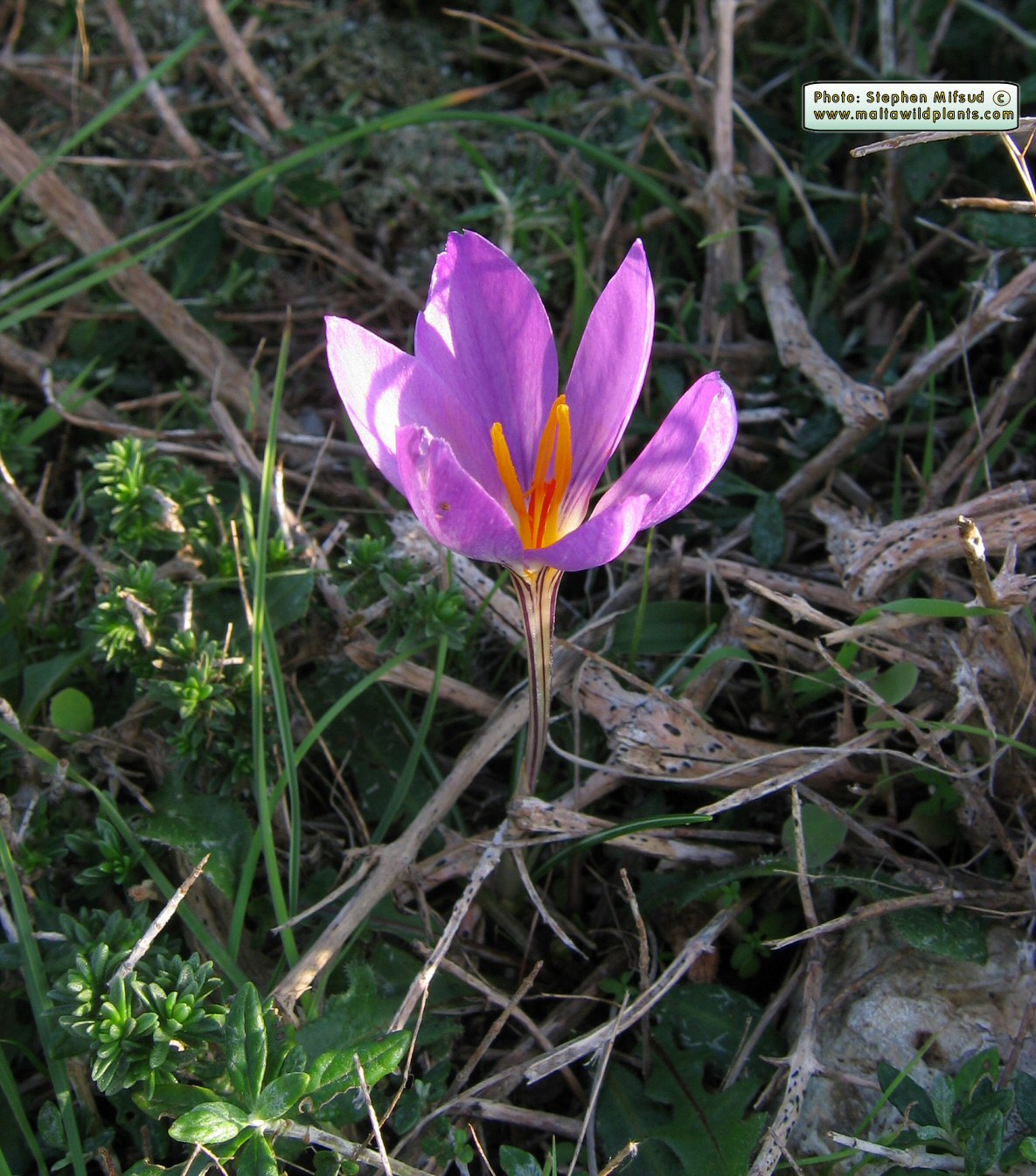
If the leaf is simple, the flower is not! It is highly coloured, sweet scented, and attractive. It is made up of 6 petals of a pale violet / lilac colour, but no sepals. At the outer side there is a pattern of pinnate dark-violet/purple veins which are less prominent at the inside part of the petal. The petals are mostly un-fused, but they constrict and then join at the 'base' of the flower to form a thin tube which goes further down under the soil to the corn. At along half way its length. the flower tube is protected by a whitish to pale green sheath which also supports the flower neck.

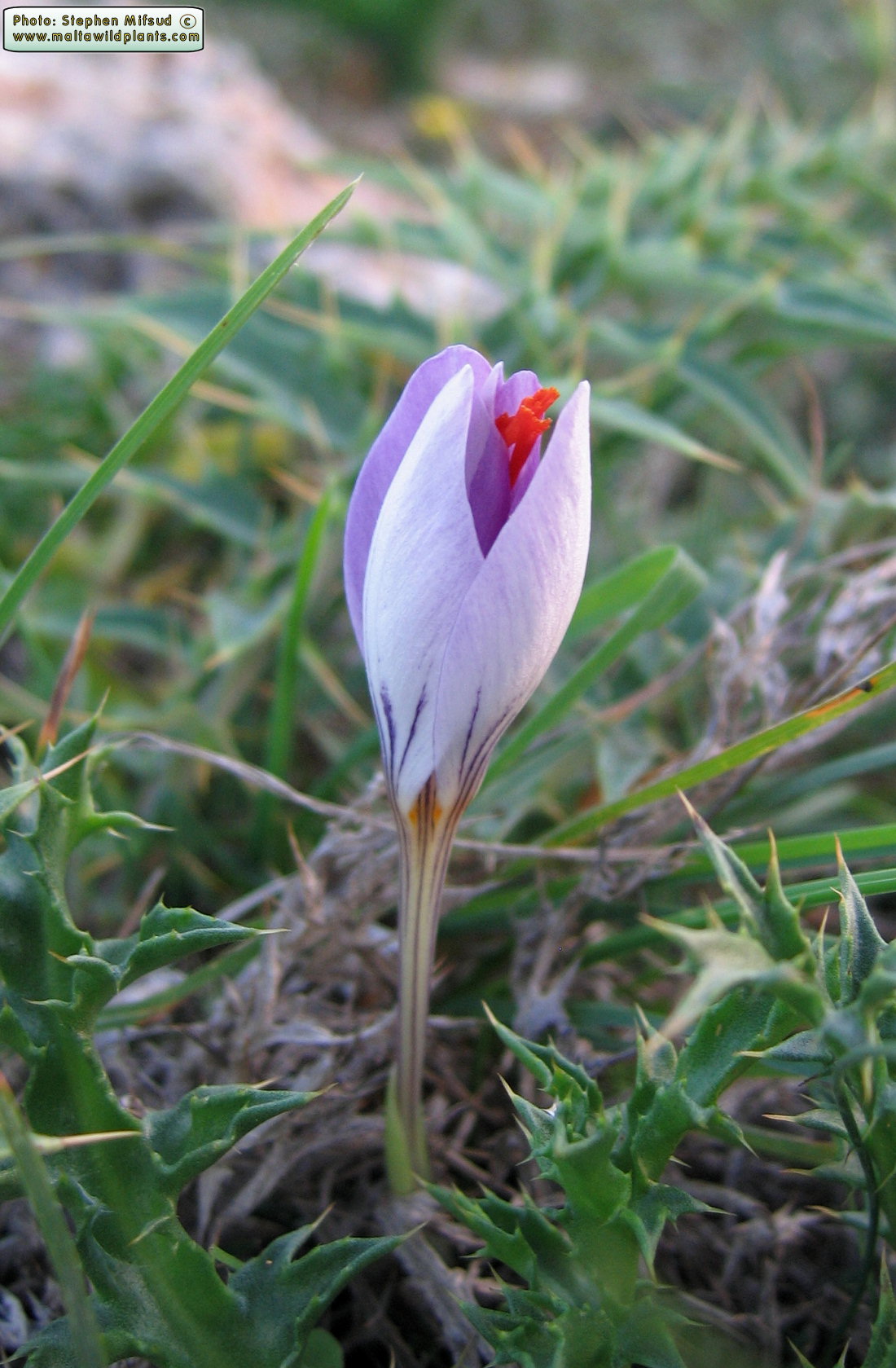
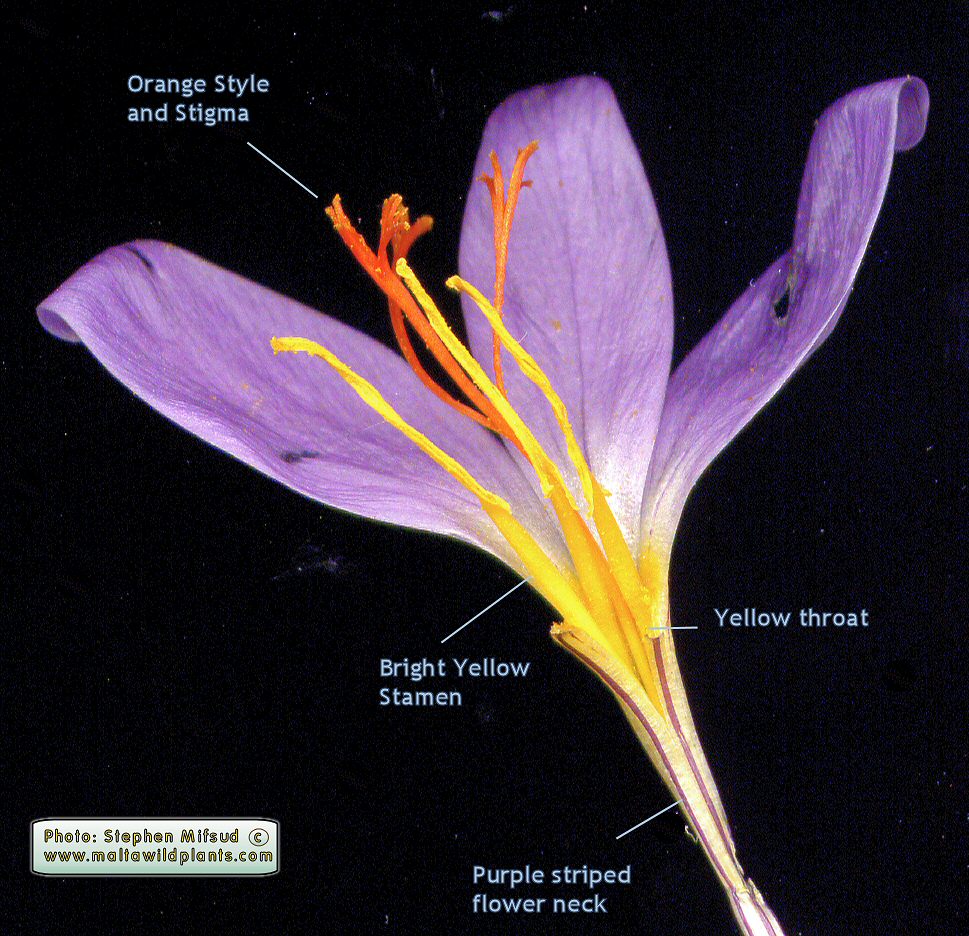
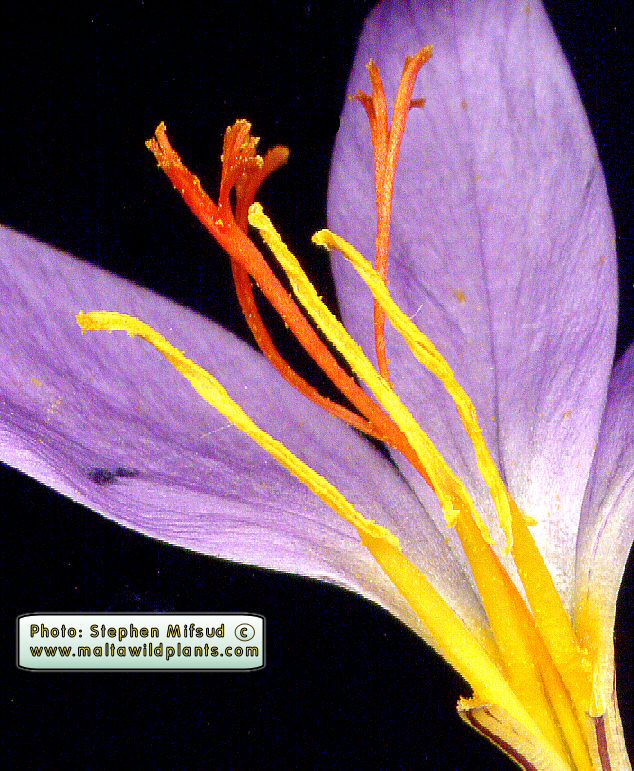
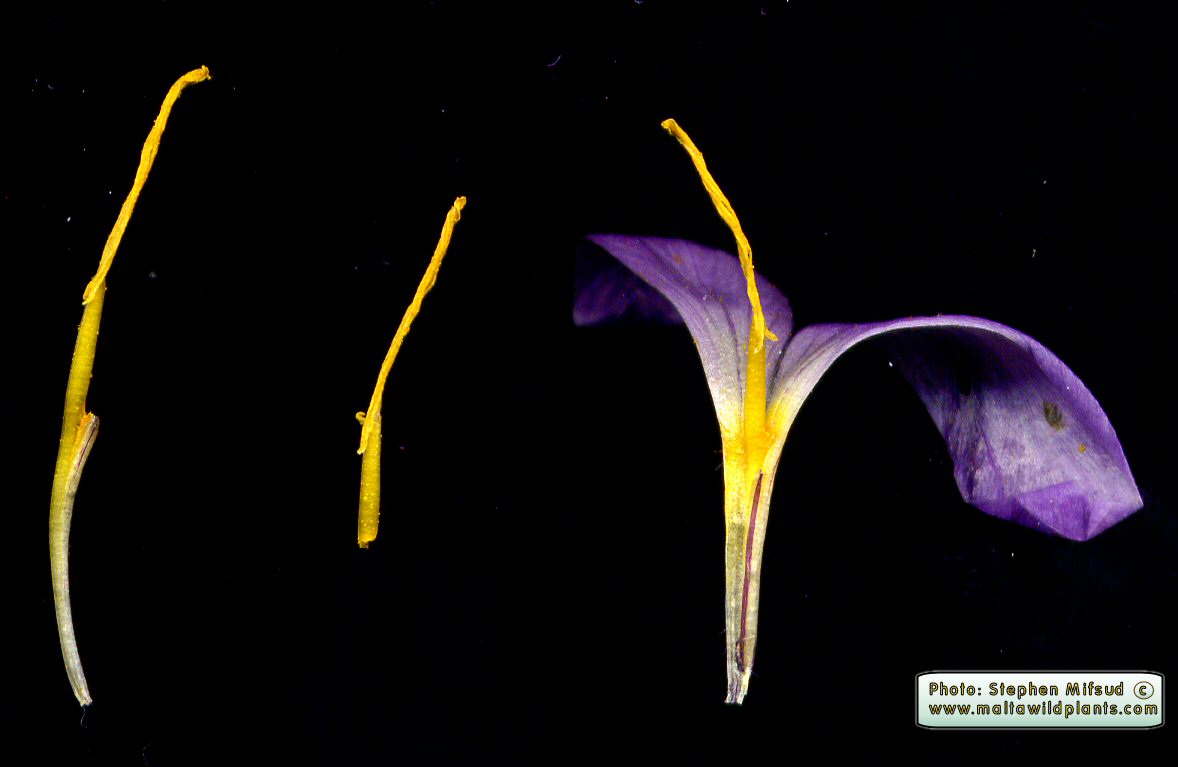
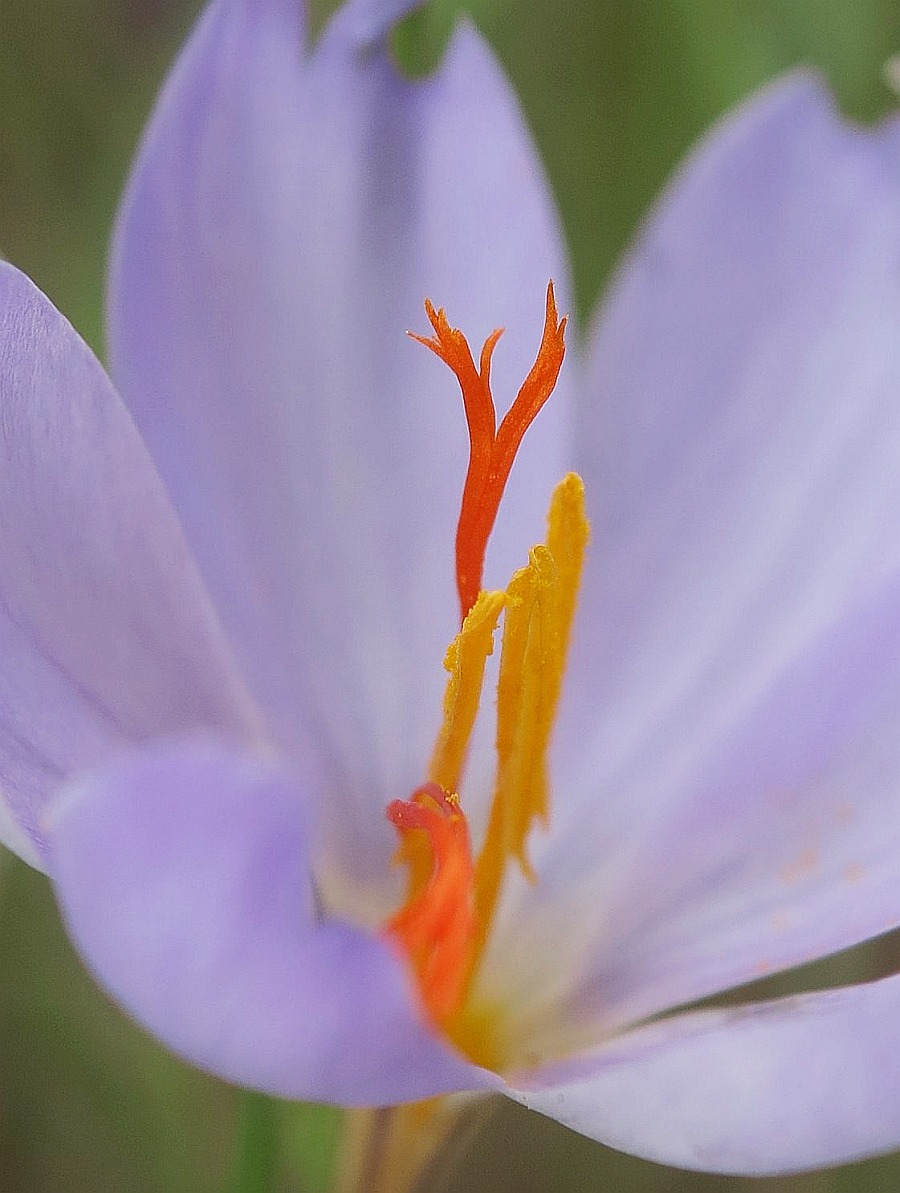
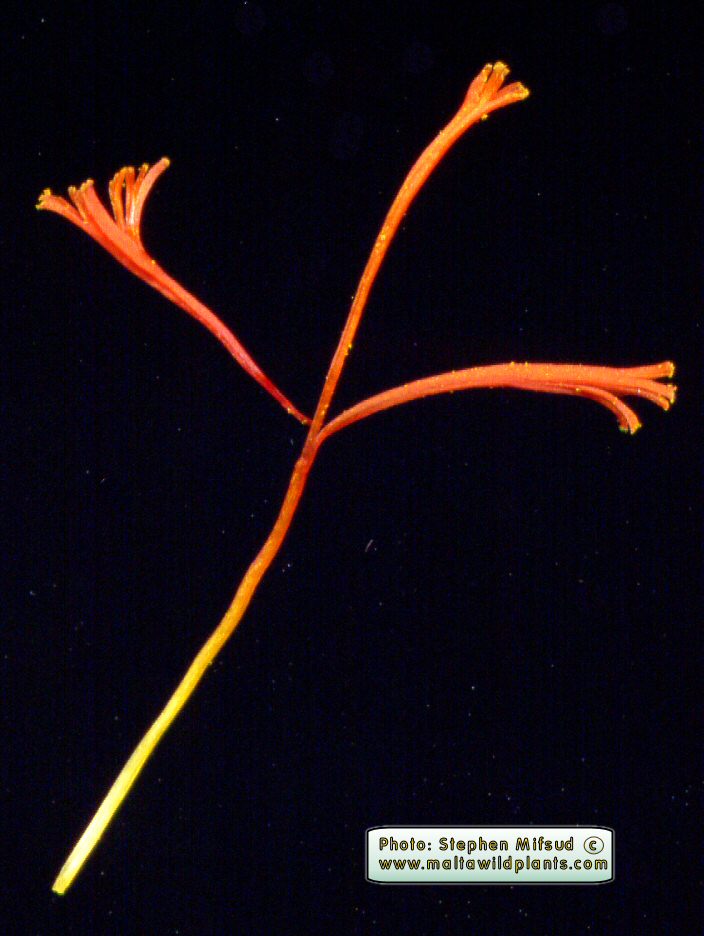
At the zone where the petals constrict to form a tube, hence at a region referred to as the throat, there is a yellow coloration, more prominent from inside of the flower, but still noticable from the exterior. At the throat region, 3 stamens are joined to the 3 petals (= the inner whorl of 6 corolla tepals). The stamens are erect, and have a rod-shaped anther which is bright yellow in colour. The female part is more contrasting, having a bright orange-red colour, prominent, and the style divides to three branches of stigma which have short lobed ends. The style goes down the flower neck until it reaches the ovary located under the soil.

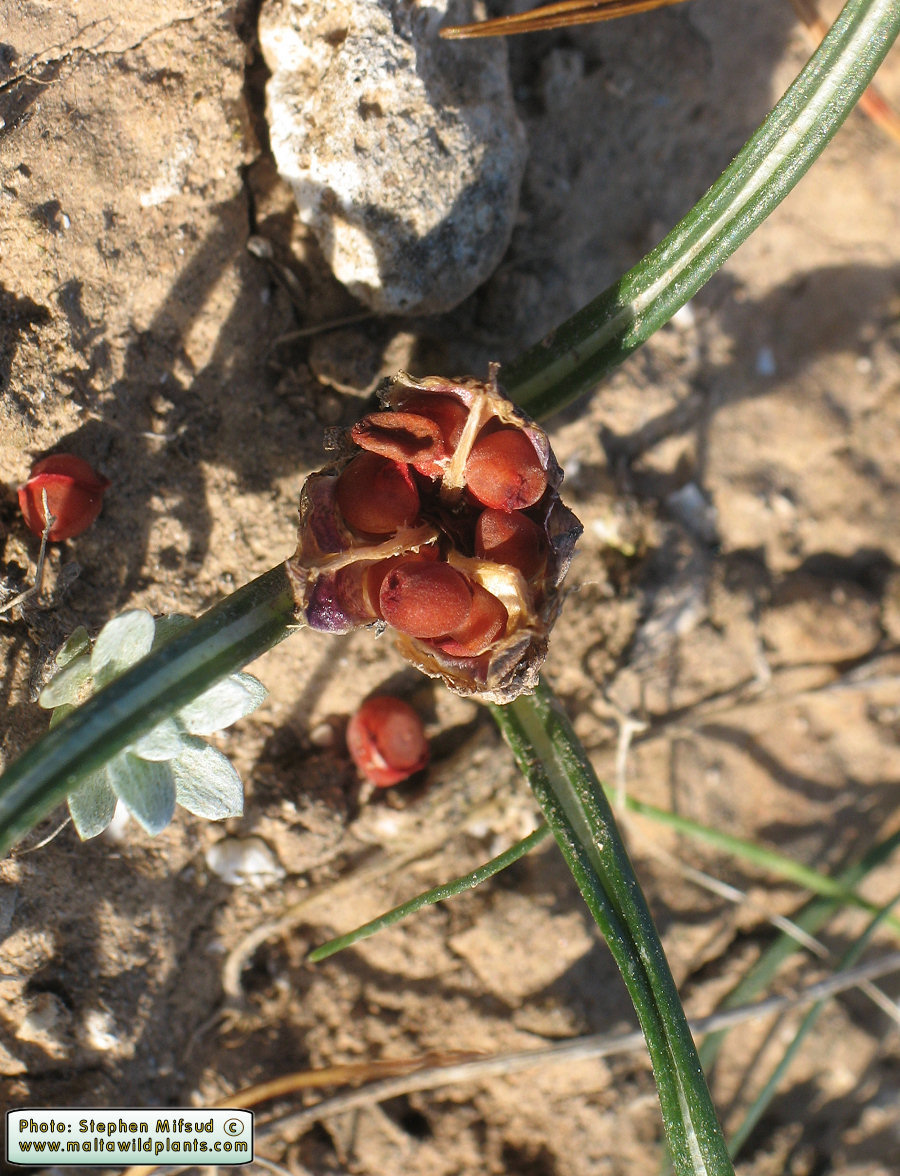
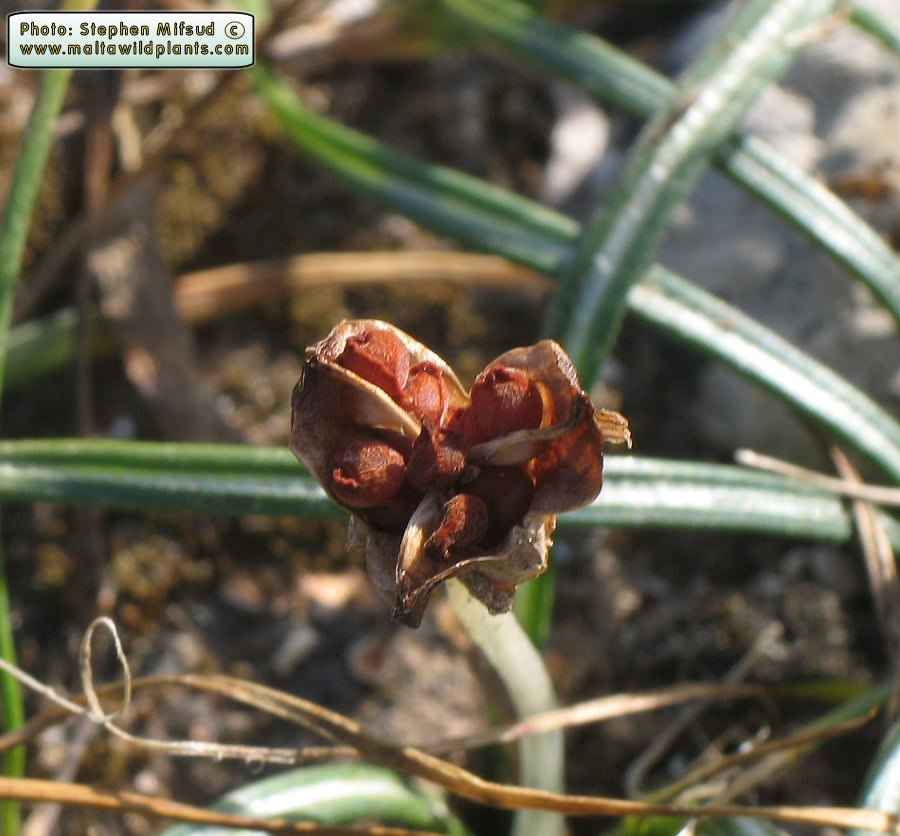
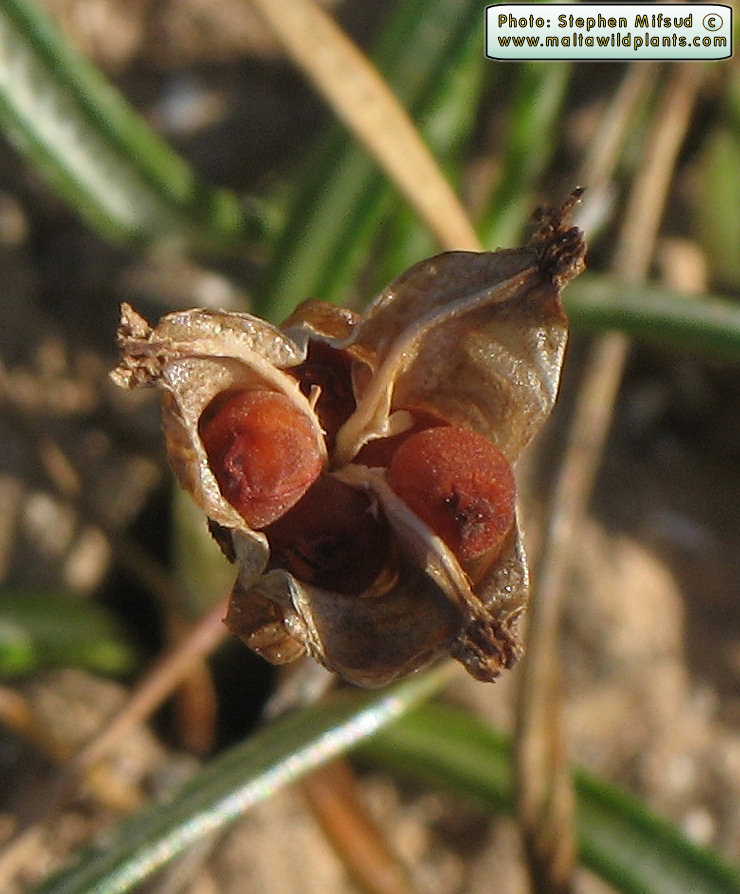
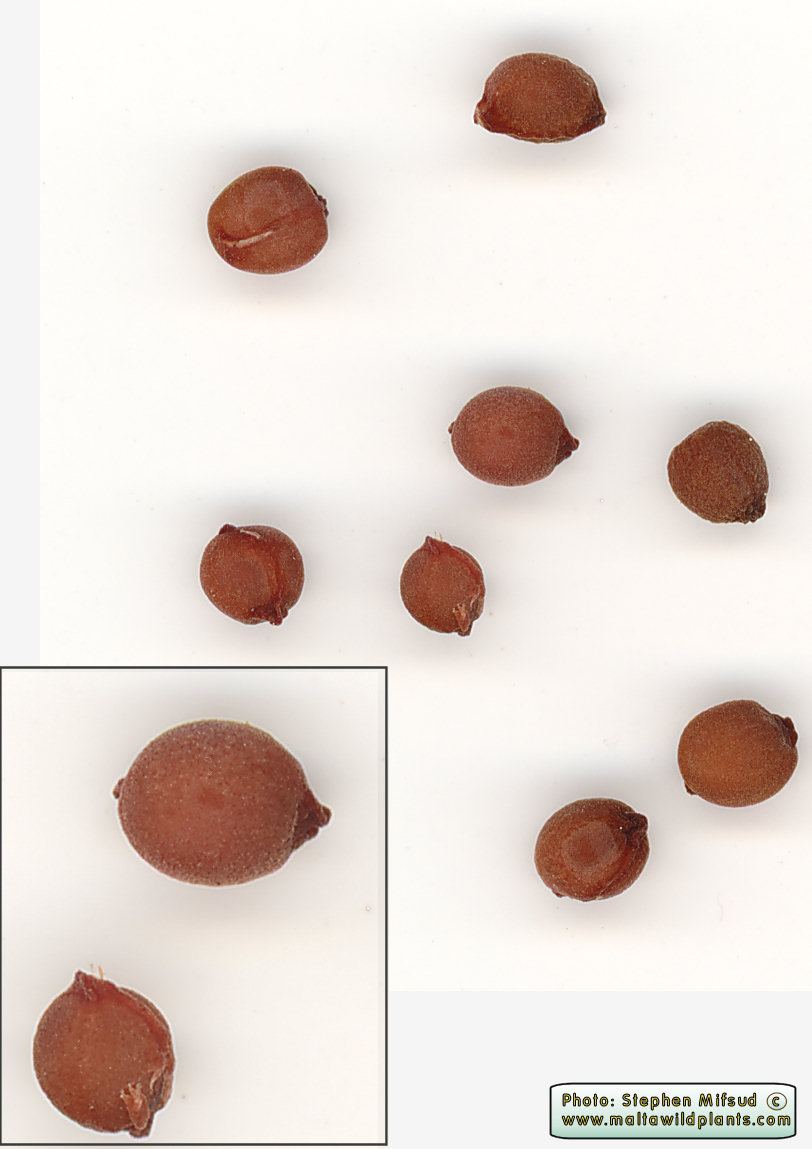
The ovaries develop into the seed capsule (the fruit) which open up in March, when the seeds are ripe. The young fruit can be difficult to locate since it is found at or just above ground level. The fruit capsule is an ovate structure, about 1cm long and dull green. When ripe it splits longitudinally into 3 parts bearing the orange or reddish-brown seeds. The seeds are subspherical in shape and measure about 2mm.


Information and Details


Sub-endemic species

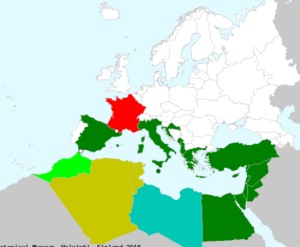
This plant is found in few places around the central Mediterranean region and so it is nearly an endemic species to Malta, or what is referred to as sub-endemic. Apart from Malta it is only found in Egadi islands (West of Sicily), some parts of Sicily and South Italy mostly in Calabria, Murge, Basilic. a Serraneta, Pollino, Sila, Rosarno, Mongiana, Serra S, R nel Salern. (Monte di Stella, Monte Sacro), Bruno and also in Dalmazia. Reports that it was seen in Tunisia, were false. [WWW-42]

Propagation

Once the leaves have died down, the corms can be lifted and separated for replanting. Seeds may also be sown in pots of sandy soil in the fall and placed in a cold frame. The seedlings grow very slowly, however, and will not bloom for several years. [WWW-43]

Uses for Saffron

The spice saffron comes mainly from the stigma of a closely related Crocus, thus the C. sativus. This species is cultivated purposely to extract saffron. However a paper reports that C. longiflorus also have very similar characteristics of producing saffron like the C. sativus. The paper by Casoria et al, 1996 called a preliminary note on an interesting species of crocus (Crocus longiflorus, Iridaceae) similar to Saffron (C. sativus) discusses a wild crocus in the Salerno region of Italy that local people use like saffron. Chemical tests show that C. longiflorus contains some of the same coloring and flavoring agents as true saffron. Interestingly, C. longiflorus reproduces sexually, unlike C. sativus. Further studies might show that the two species are related. [299]

Personal Observations


Species in danger of disappearing from the Maltese islands
It has been reported by many botanists, namely E. Lanfranco [300] that this plant is continually decreasing in number from our islands, mainly due to land management and bad disposing of rubble in the environment. It is very difficult to resist the temptation of not picking up this wonderful, colourful and scented flower, but bear in mind that this species is in danger of disappearing from our country and must NOT BE PICKED UP at all costs. Apart from the fact that the plant is attractive and scented, another factor which acts against the plant is that of growing low and one is more encouraged to cut it up to look closer without bowing down. Additionally each individual plant may develop only 2 - 3 flowers in its life cycle and so it is more important to leave the flowers to perform their reproductive process. Unfortunately, seed production and dispersion in the wild is not much effective for this plant either.

So, avoid picking this wild, sub-endemic and rather endangered, flowering wild plant. [SM]

Photo Gallery   (35 Images)

Crocus longiflorus  (Yellow-throated Crocus) - CLICK TO ENLARGE PHOTO Crocus longiflorus  (Yellow-throated Crocus) - CLICK TO ENLARGE PHOTO Crocus longiflorus  (Yellow-throated Crocus) - CLICK TO ENLARGE PHOTO Crocus longiflorus  (Yellow-throated Crocus) - CLICK TO ENLARGE PHOTO
IMAGE: CRCLF-01
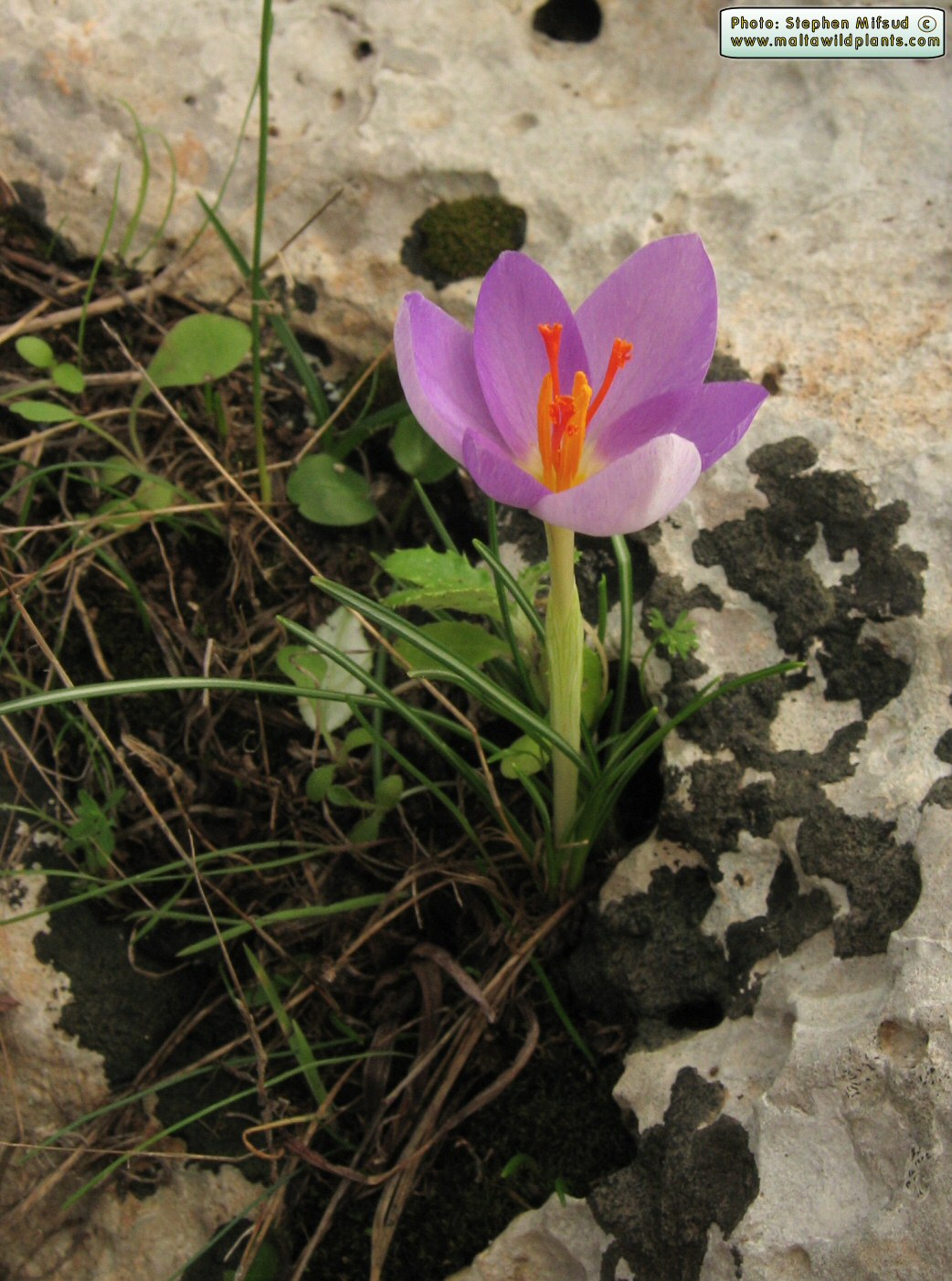
Photo of the whole plant. It consists of few narrow leaves with a central white stripe, and a long necked violet flower, usually having the shape of a cup.
IMAGE: CRCLF-02
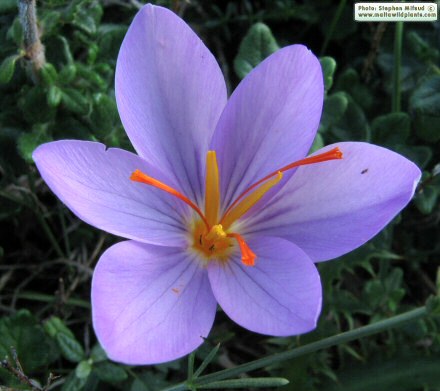
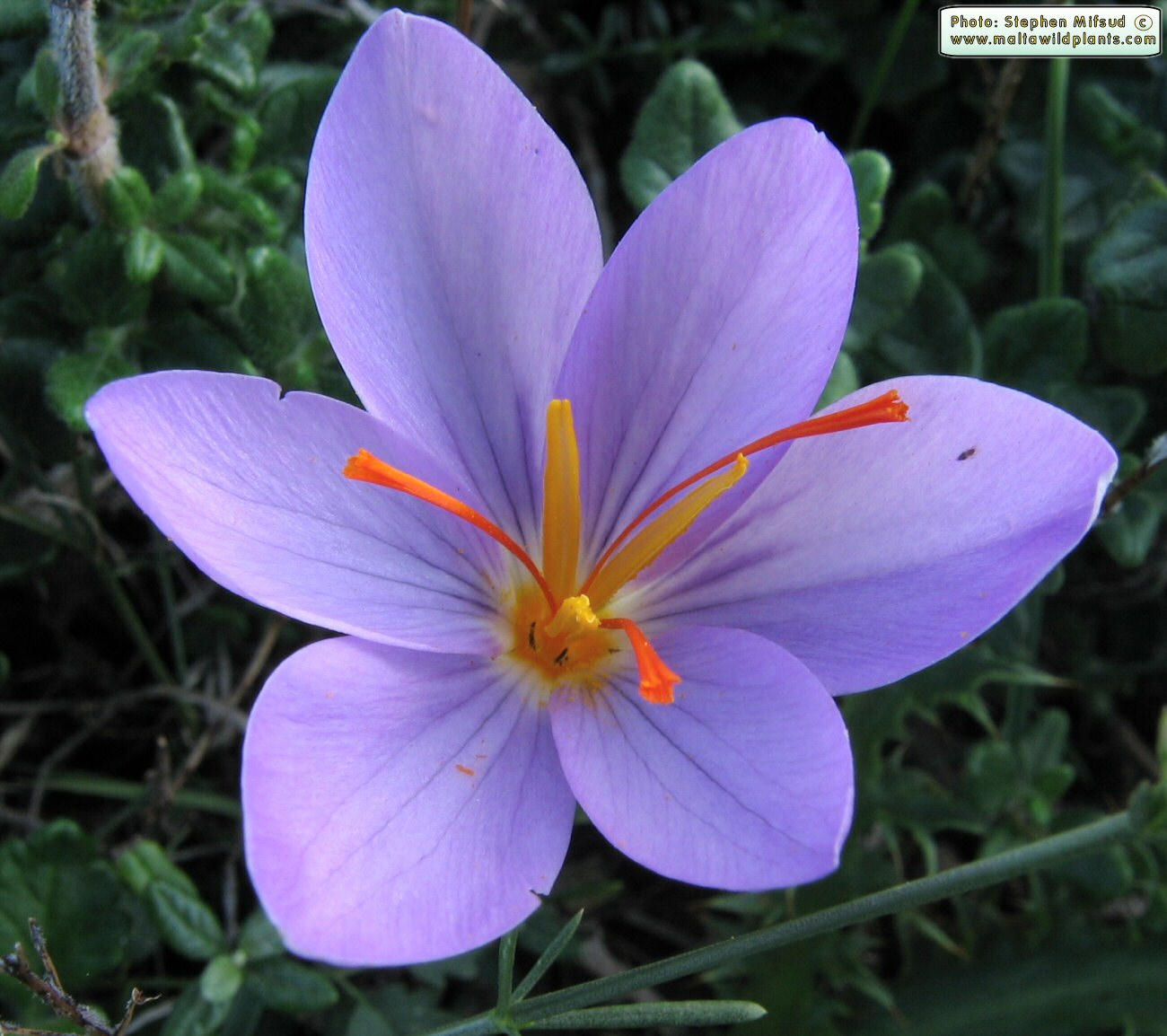
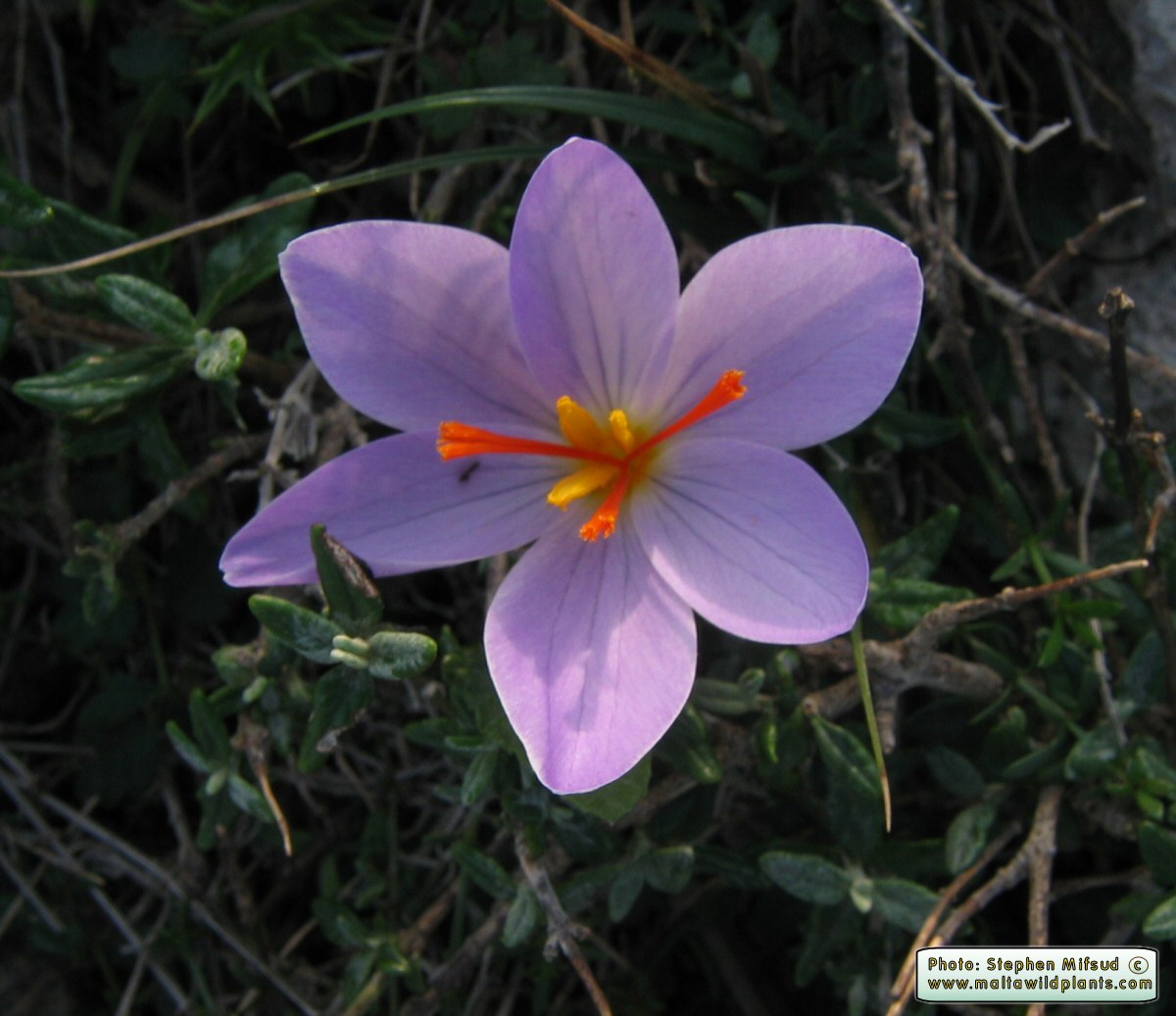
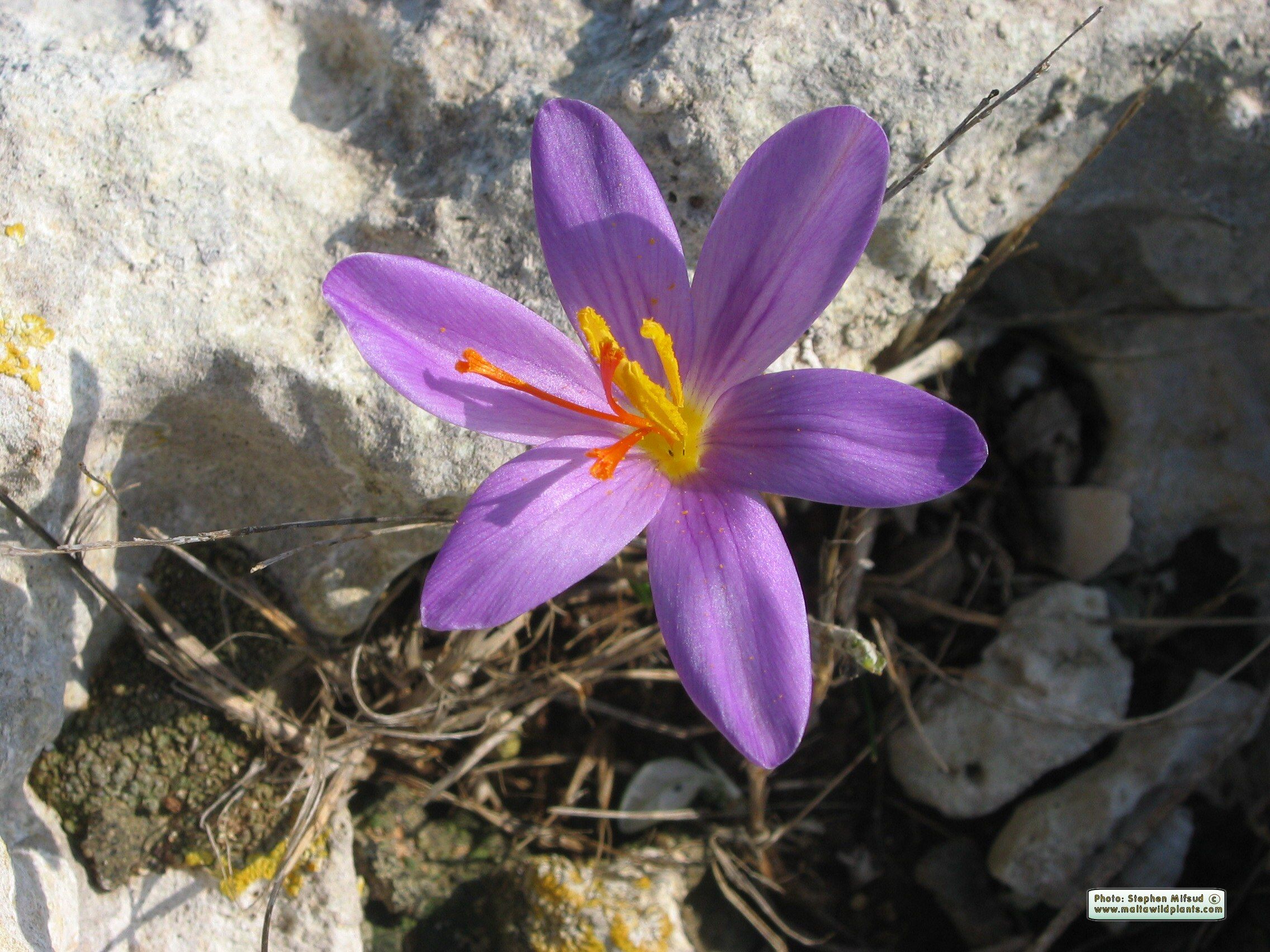
Photo of flower which consists of violet petals, 3 yellow anthers and a bright red (saffron) style which sub-divides into 3 stigma.
IMAGE: CRCLF-03
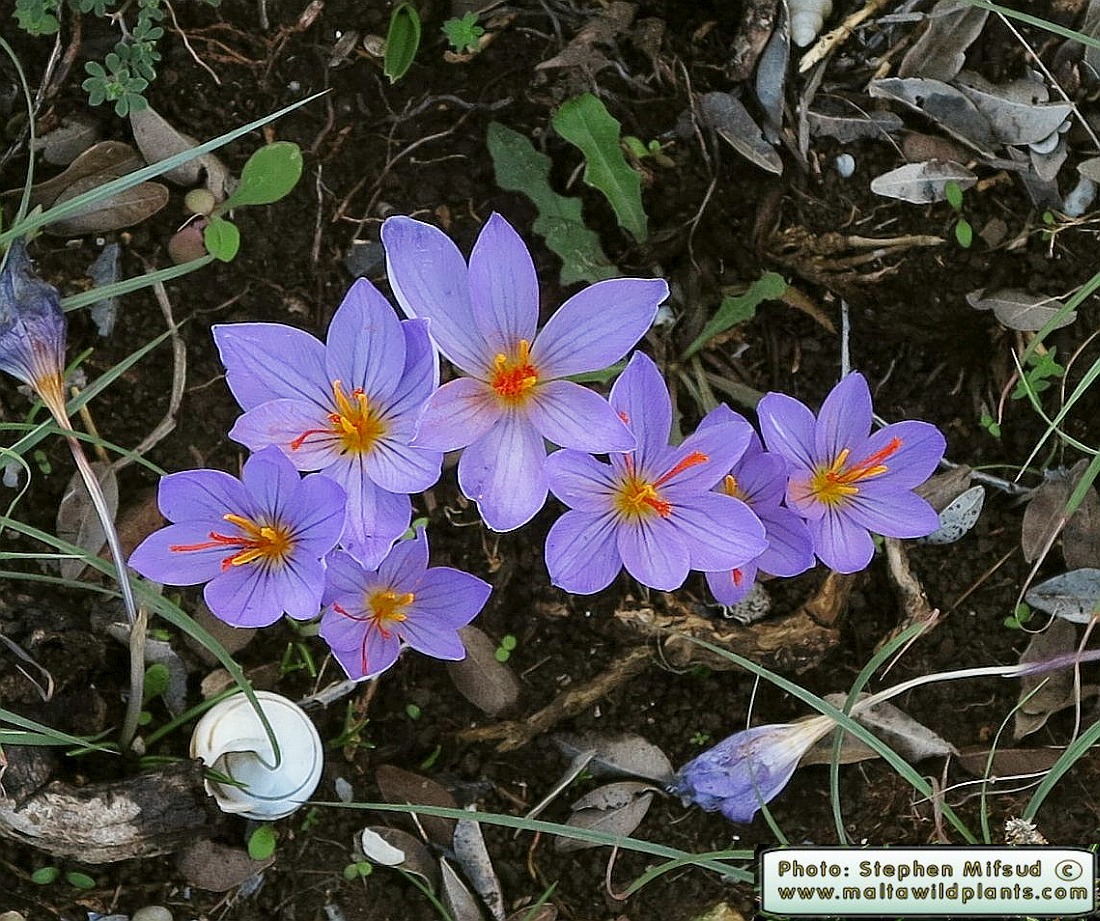
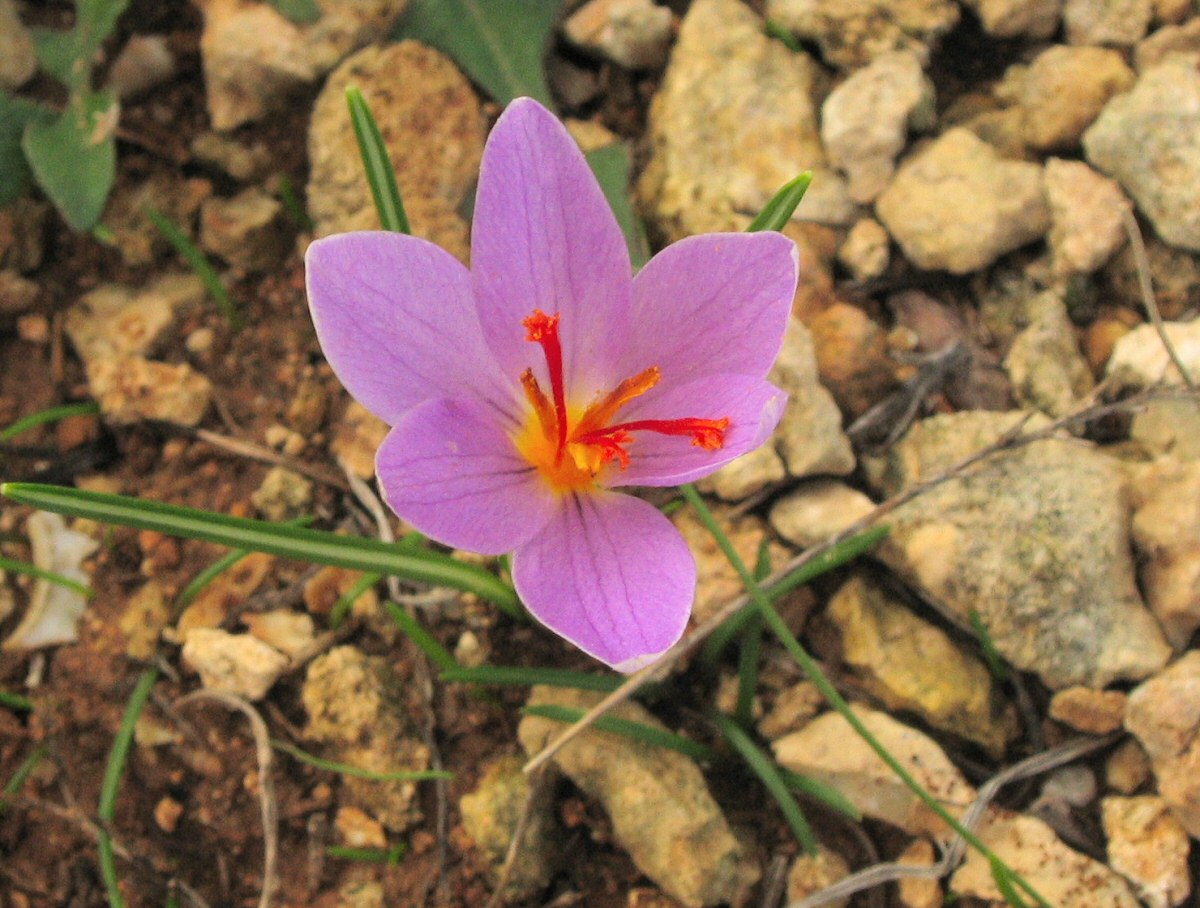
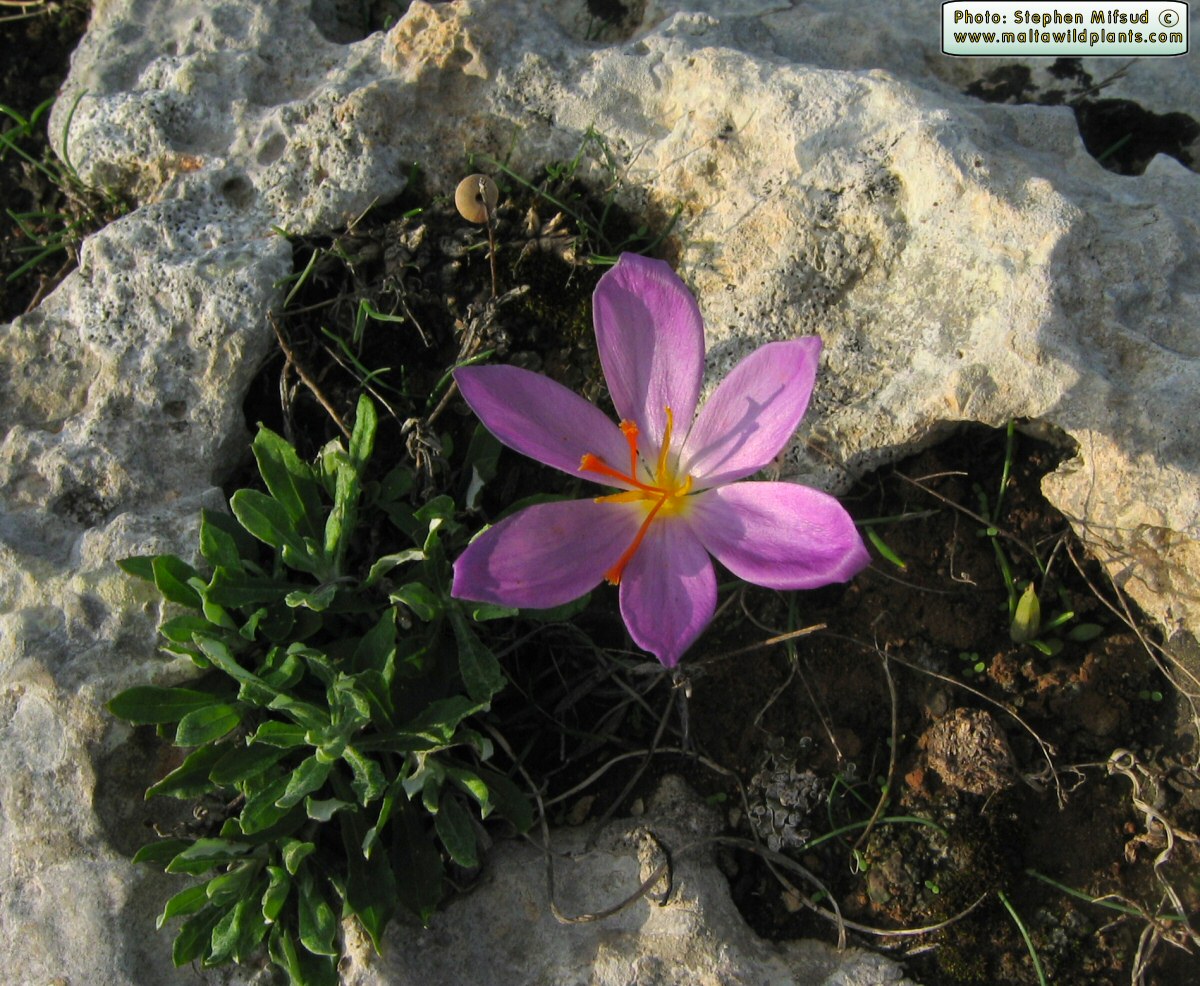
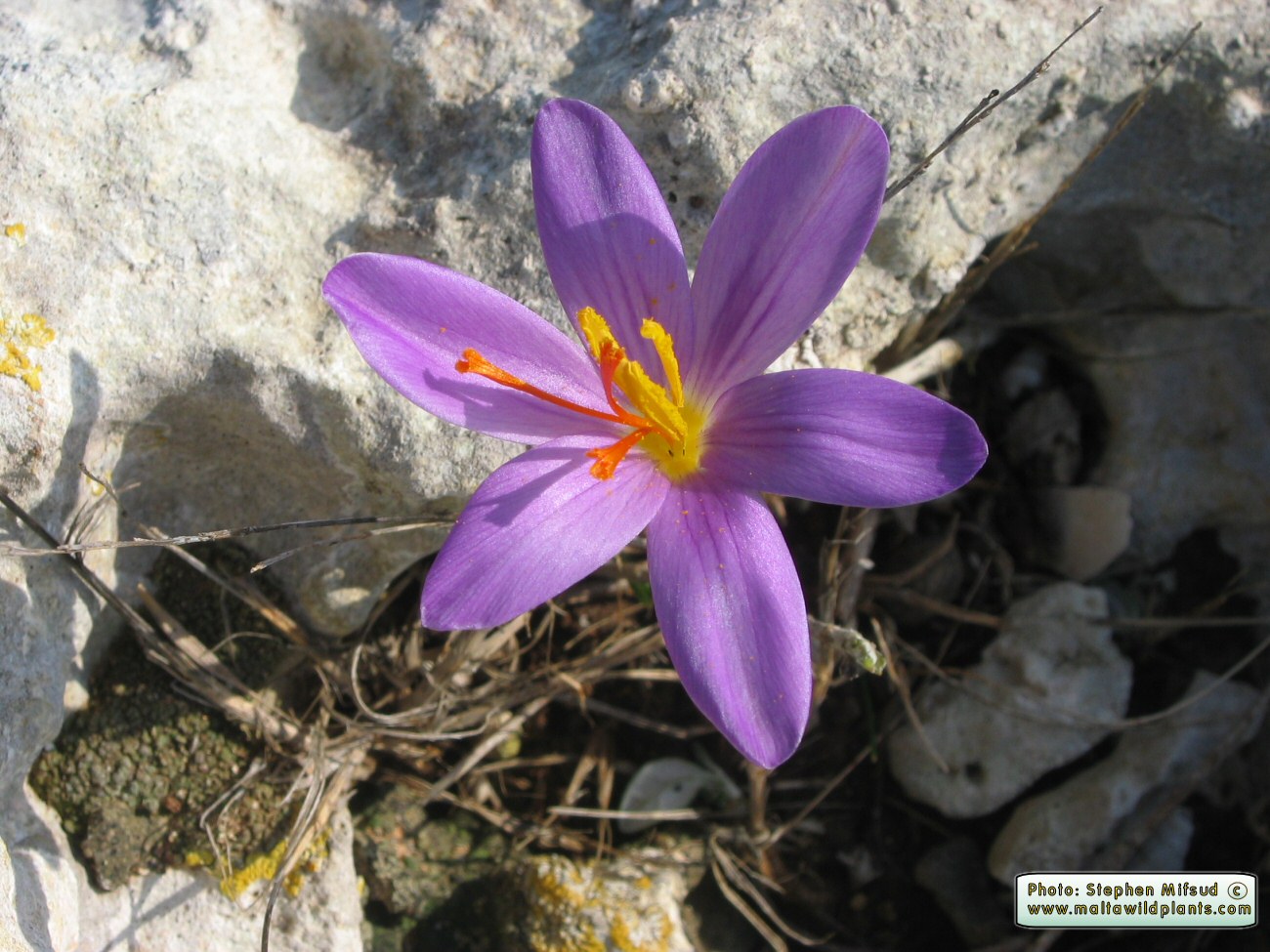
Top view photo of flower taken in November.
IMAGE: CRCLF-04
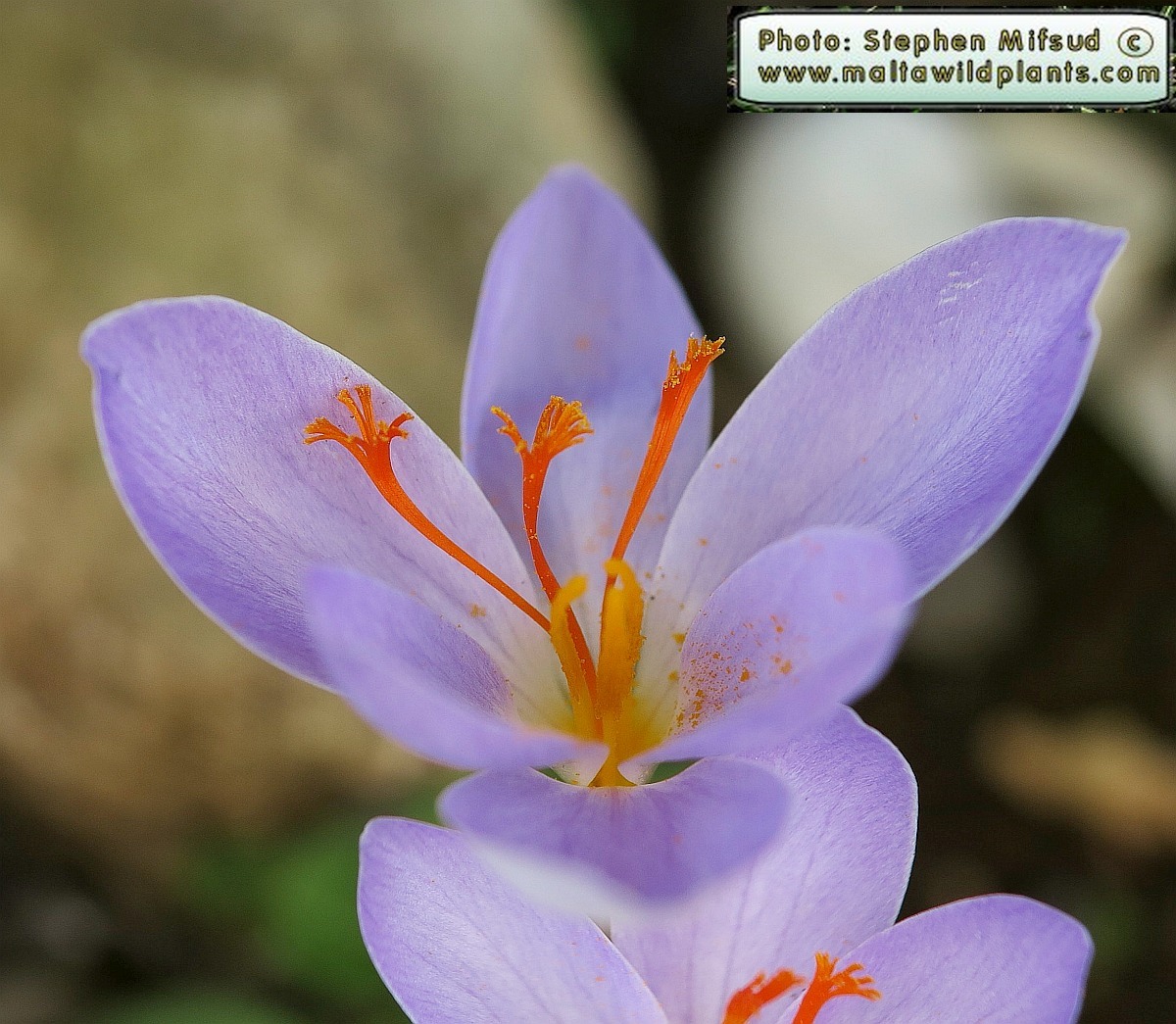
Close up photo of flower showing the detail of the anthers and the feathery stigmas. In the shade, the colour is more towards the bluish hue.
Crocus longiflorus  (Yellow-throated Crocus) - CLICK TO ENLARGE PHOTO Crocus longiflorus  (Yellow-throated Crocus) - CLICK TO ENLARGE PHOTO Crocus longiflorus  (Yellow-throated Crocus) - CLICK TO ENLARGE PHOTO Crocus longiflorus  (Yellow-throated Crocus) - CLICK TO ENLARGE PHOTO
IMAGE: CRCLF-05
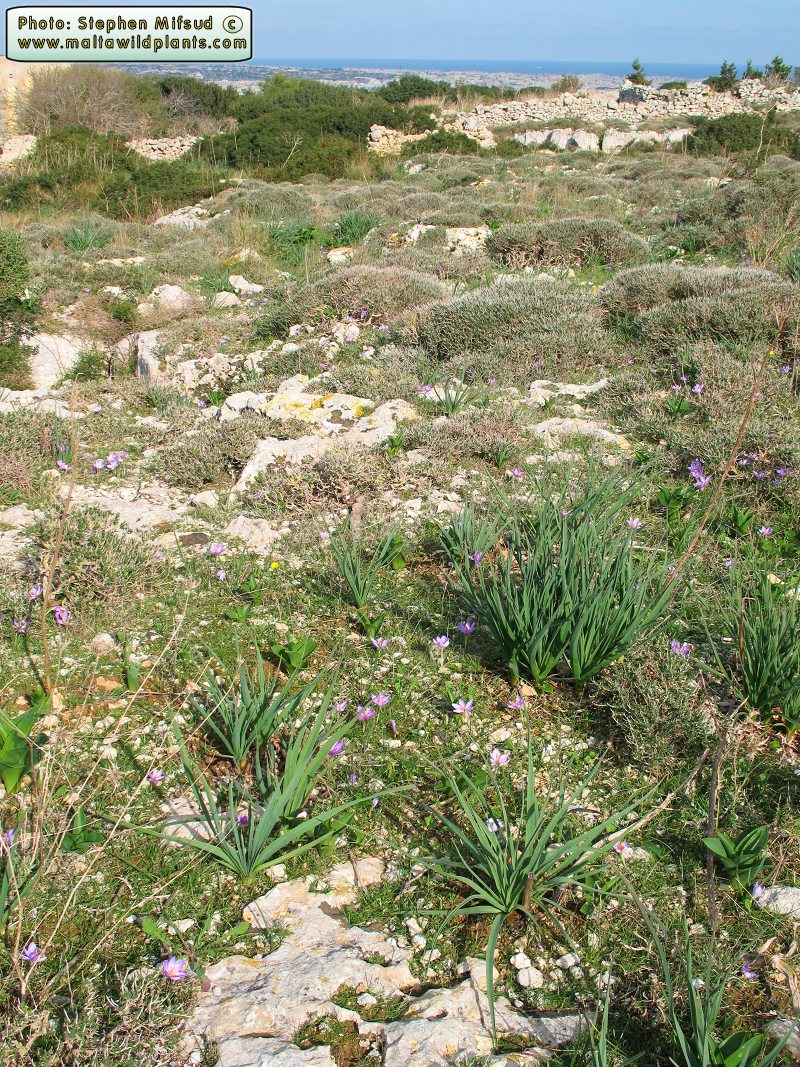
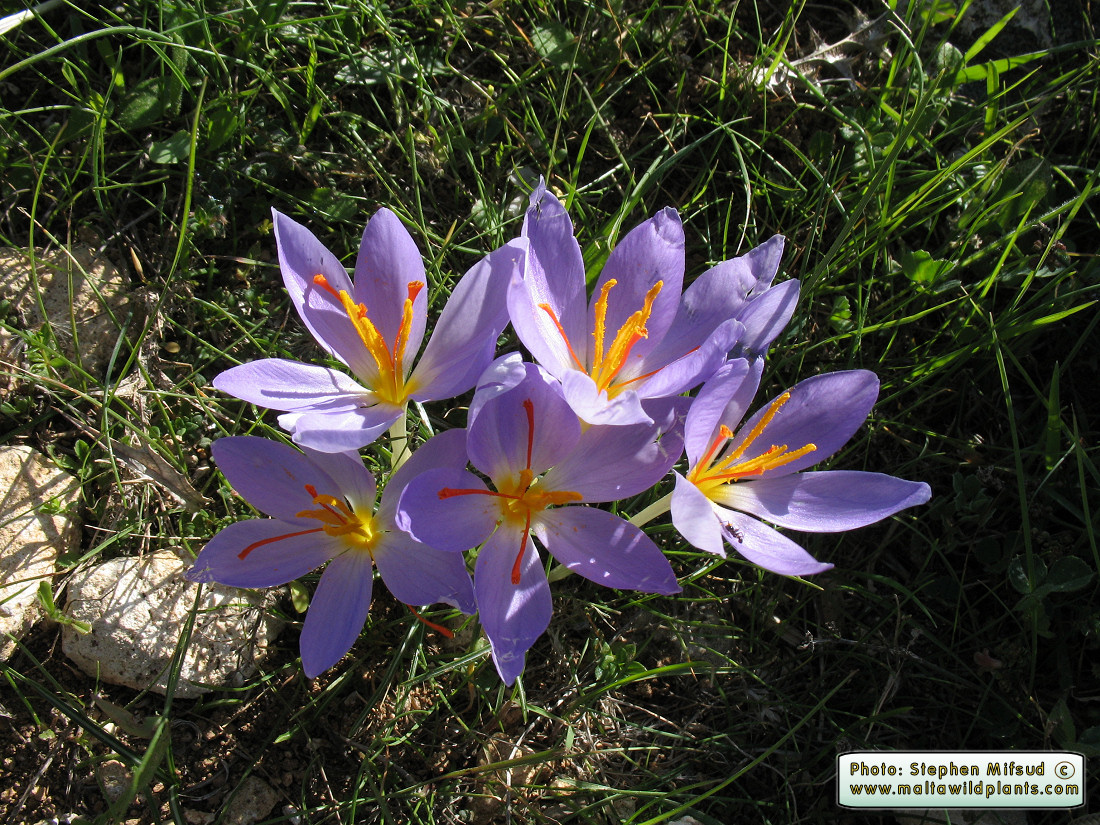
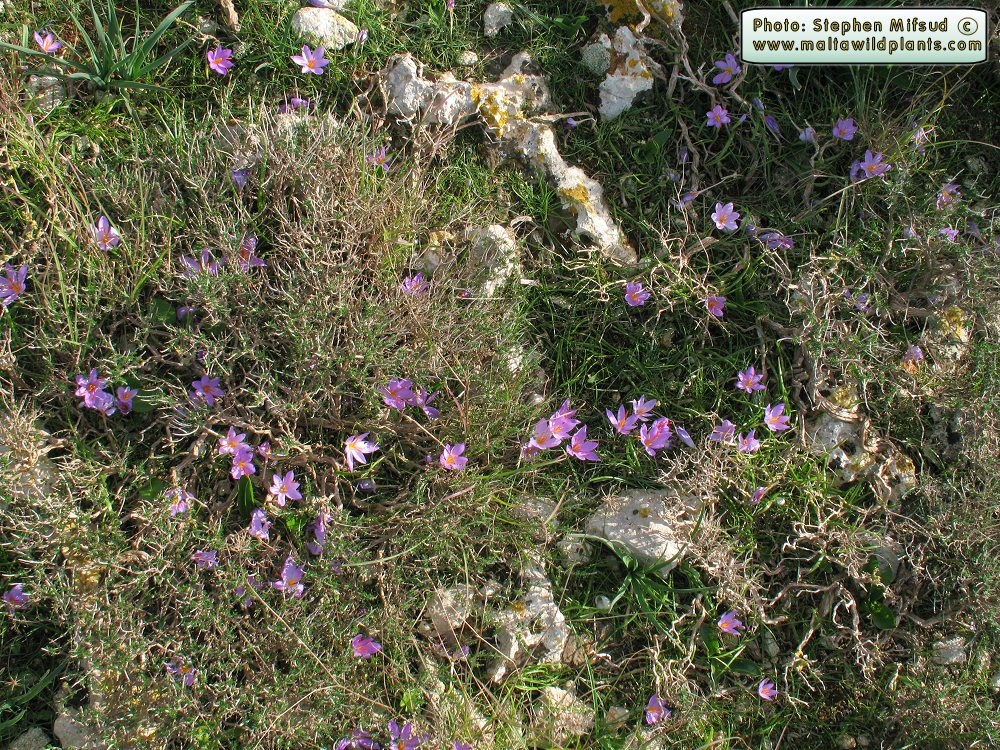
Photo of spectacular flowers which are found in large numbers in only one site at the South-SouthWest of Malta.
IMAGE: CRCLF-06
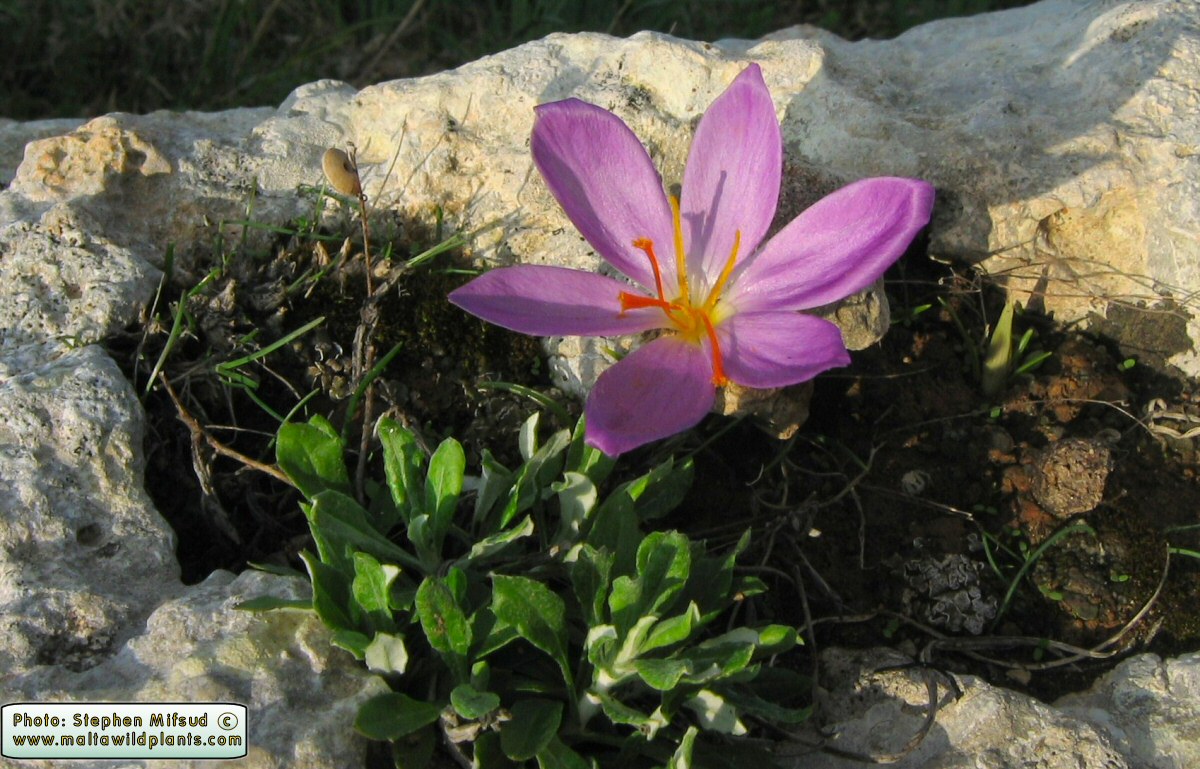
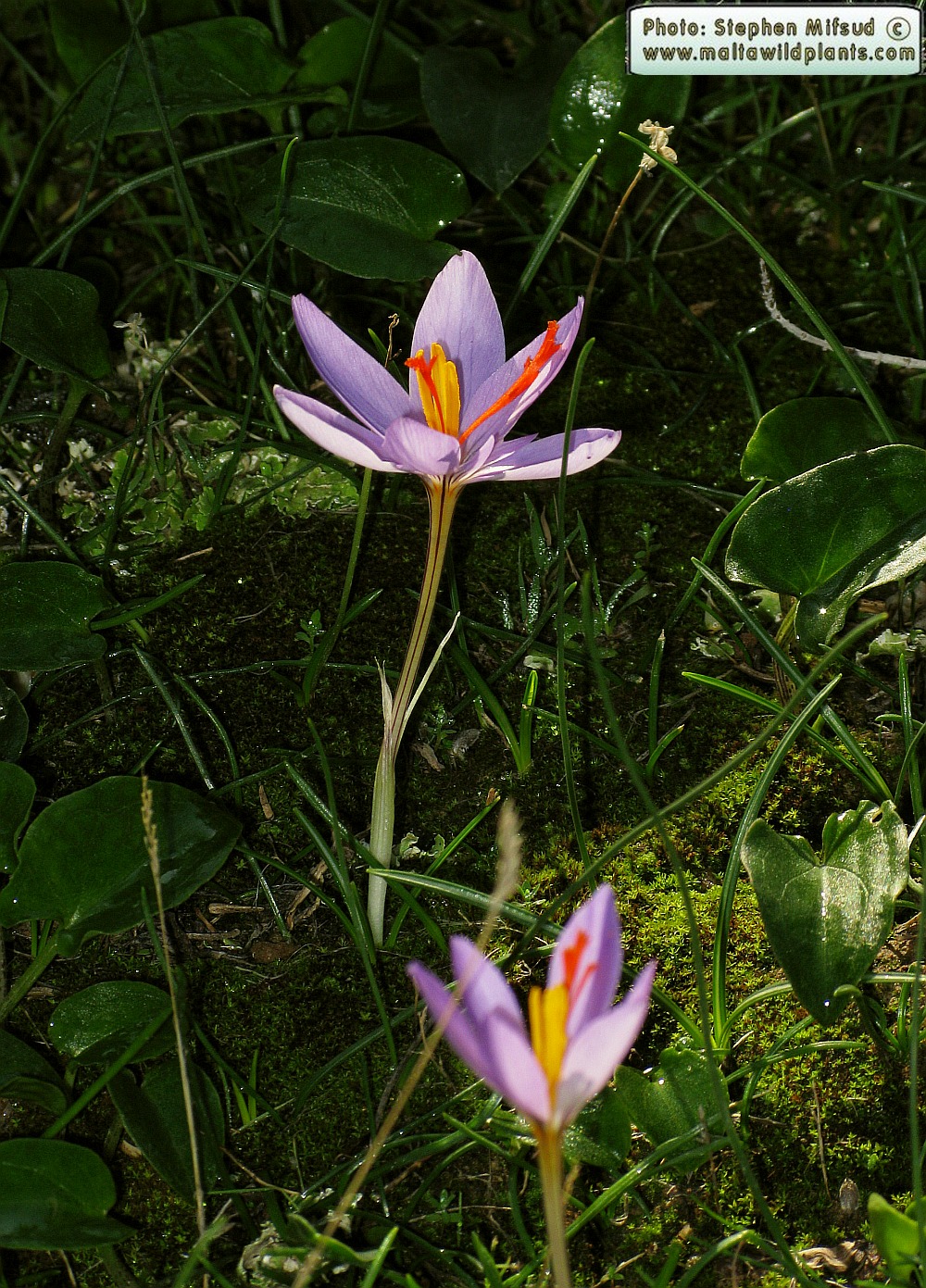
Photo of flower in situ.
IMAGE: CRCLF-07
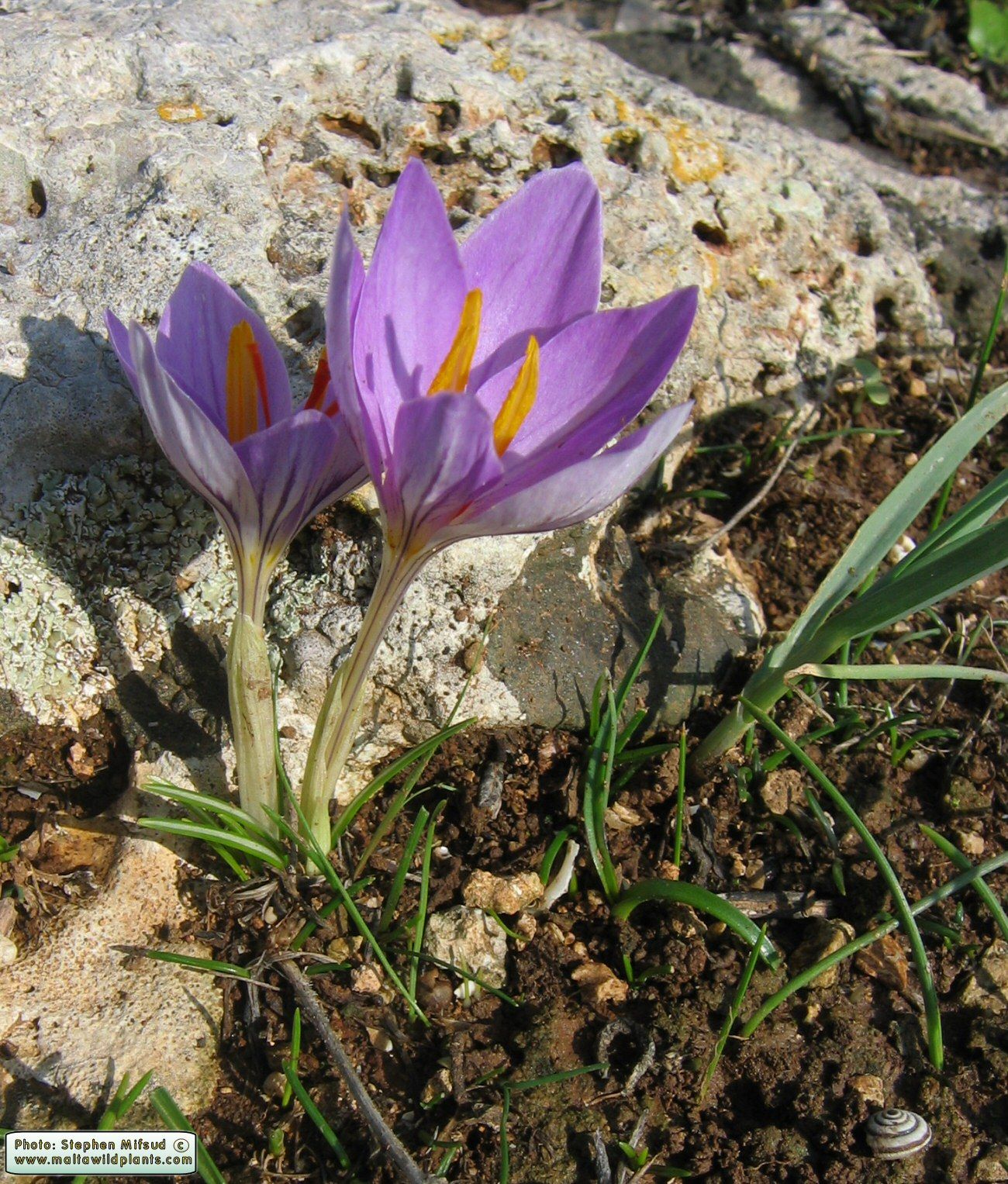
Photo of 2 plants including several leaves sprouting out from the soil.
IMAGE: CRCLF-08
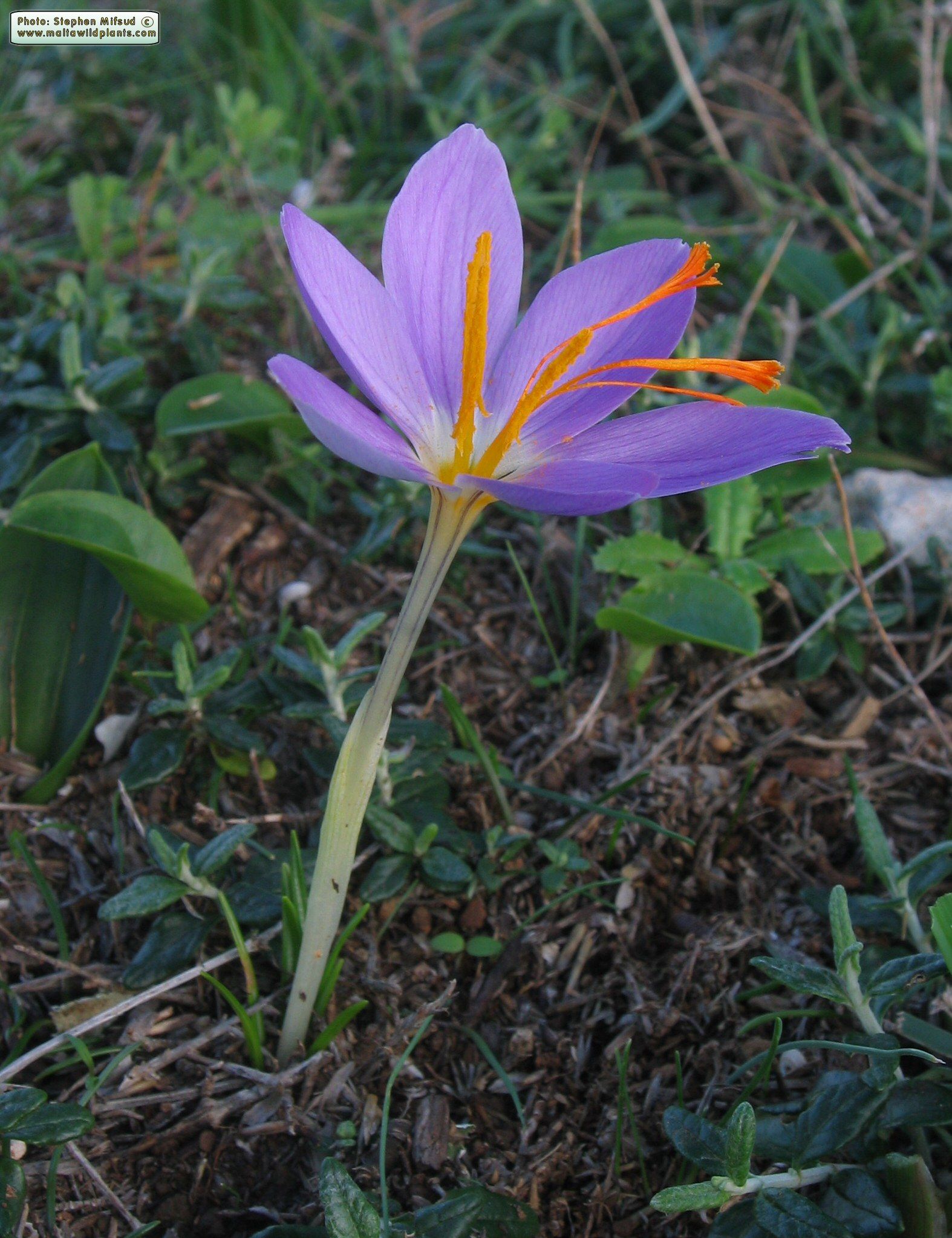
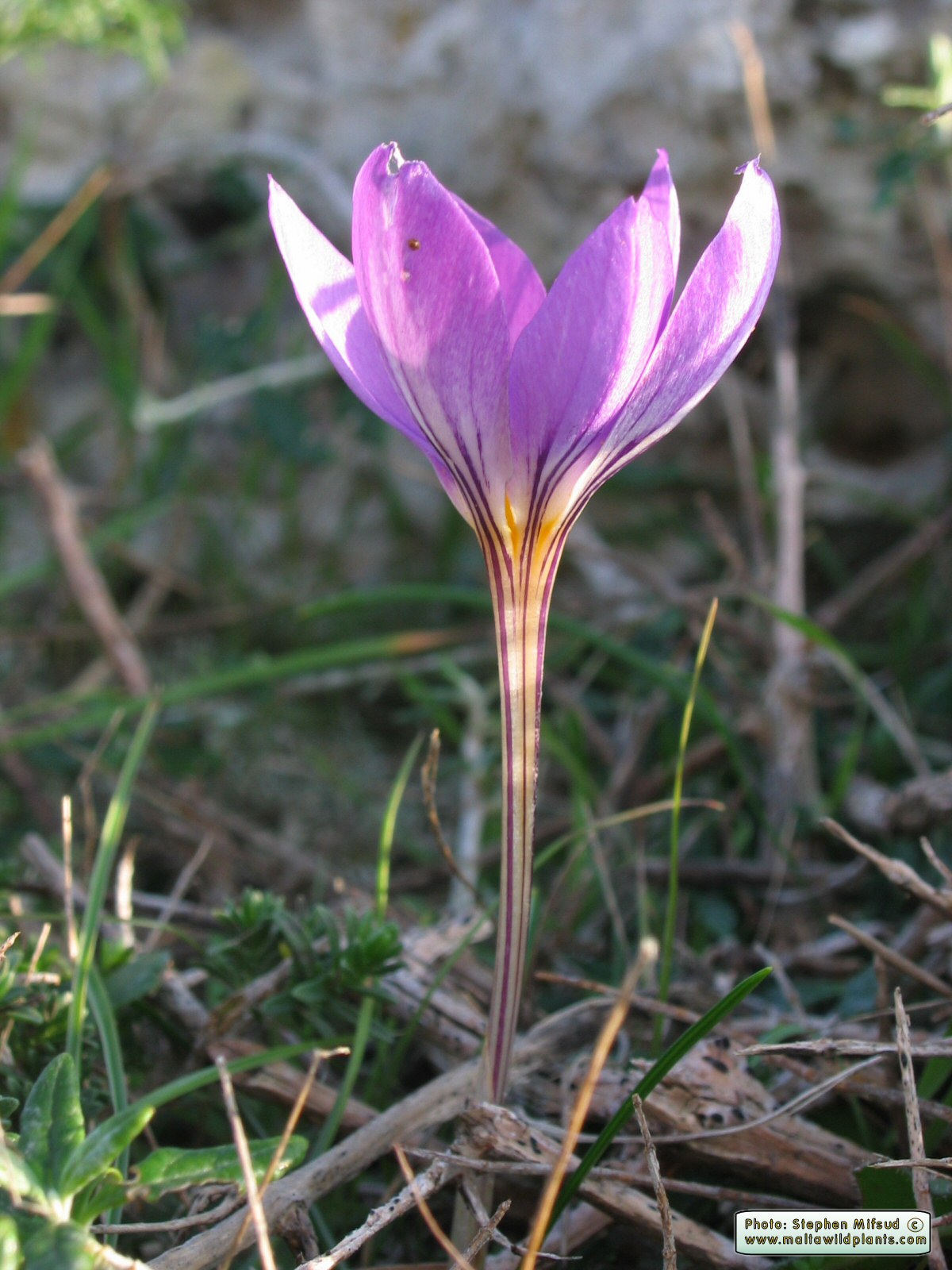
Side view photo of flower showing its slender long neck decorated by white / purple longitudinal stripes. Flower height is about 12cm. The name longiflorus referes to the long neck of the flower.
Crocus longiflorus  (Yellow-throated Crocus) - CLICK TO ENLARGE PHOTO Crocus longiflorus  (Yellow-throated Crocus) - CLICK TO ENLARGE PHOTO Crocus longiflorus  (Yellow-throated Crocus) - CLICK TO ENLARGE PHOTO Crocus longiflorus  (Yellow-throated Crocus) - CLICK TO ENLARGE PHOTO
IMAGE: CRCLF-09
Photo of the colourful flower in situ. Note the fimbriated stigmata.
IMAGE: CRCLF-10
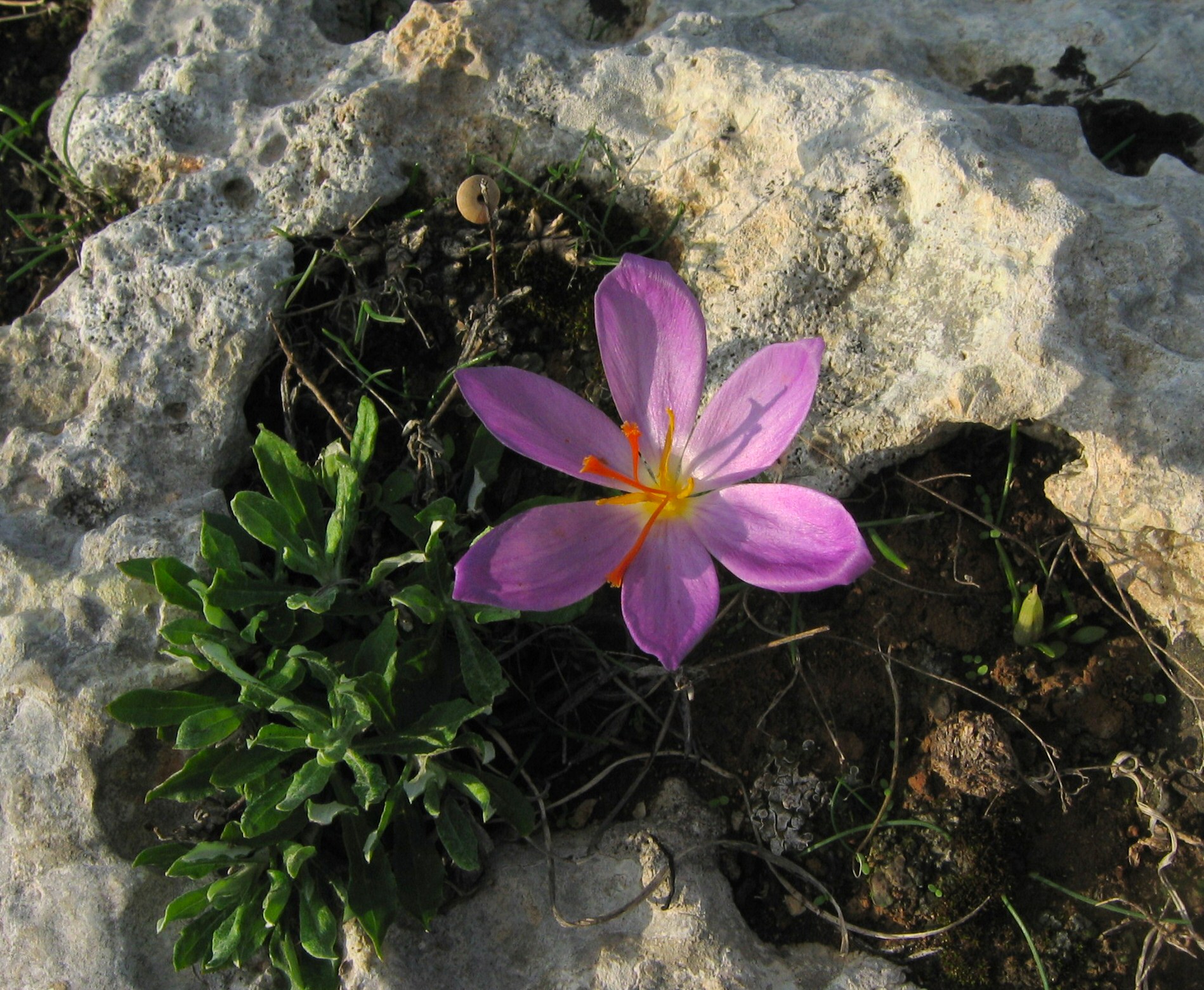
Photo of the colourful 6-petal flower in its rocky habitat.
IMAGE: CRCLF-11
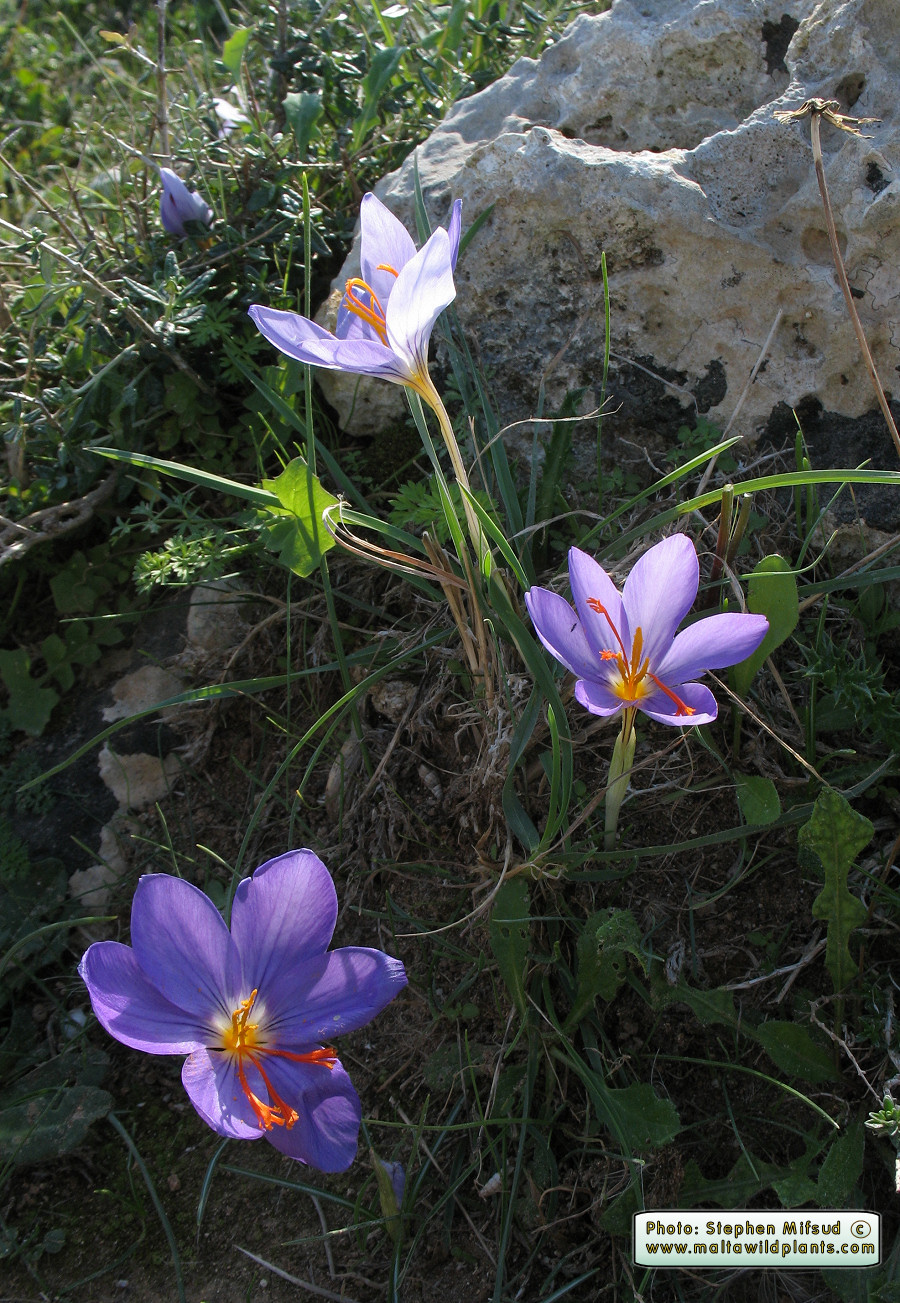
Photo of flower in its habitat, that is small patches of soil in rock gaps and spaces.
IMAGE: CRCLF-12
Photo of flower in its habitat.
Crocus longiflorus  (Yellow-throated Crocus) - CLICK TO ENLARGE PHOTO Crocus longiflorus  (Yellow-throated Crocus) - CLICK TO ENLARGE PHOTO Crocus longiflorus  (Yellow-throated Crocus) - CLICK TO ENLARGE PHOTO Crocus longiflorus  (Yellow-throated Crocus) - CLICK TO ENLARGE PHOTO
IMAGE: CRCLF-13
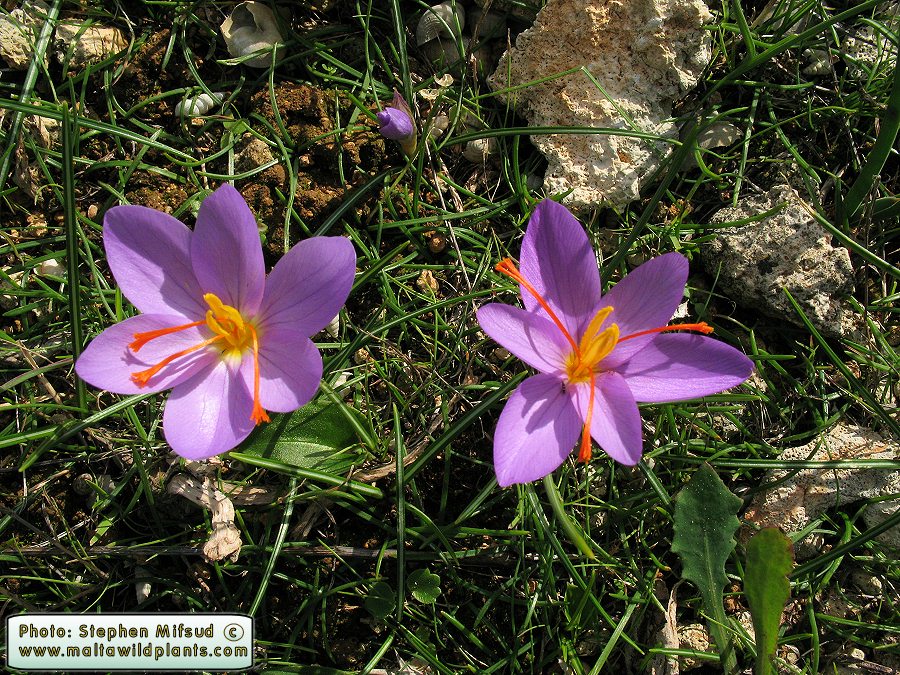
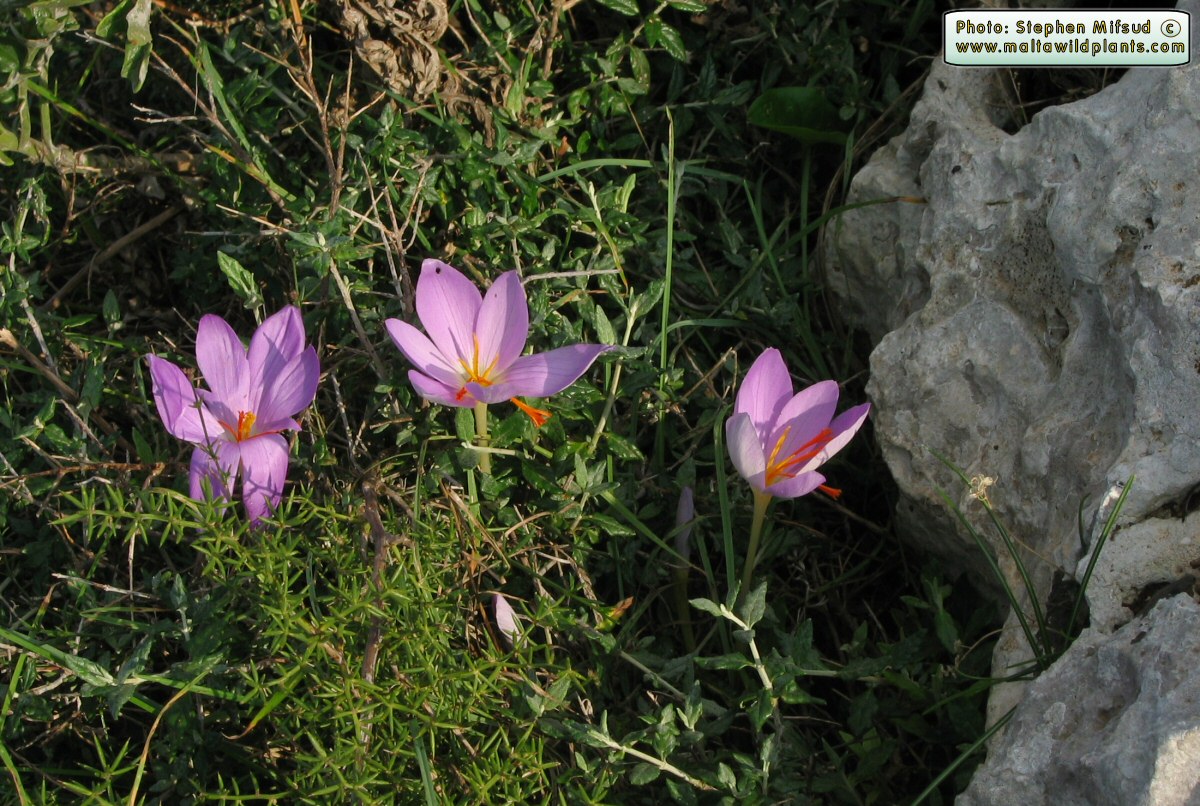
Photo of three flowers in situ. They attain a reddish-purple colour during sunset - that is when this photo was taken.
IMAGE: CRCLF-14
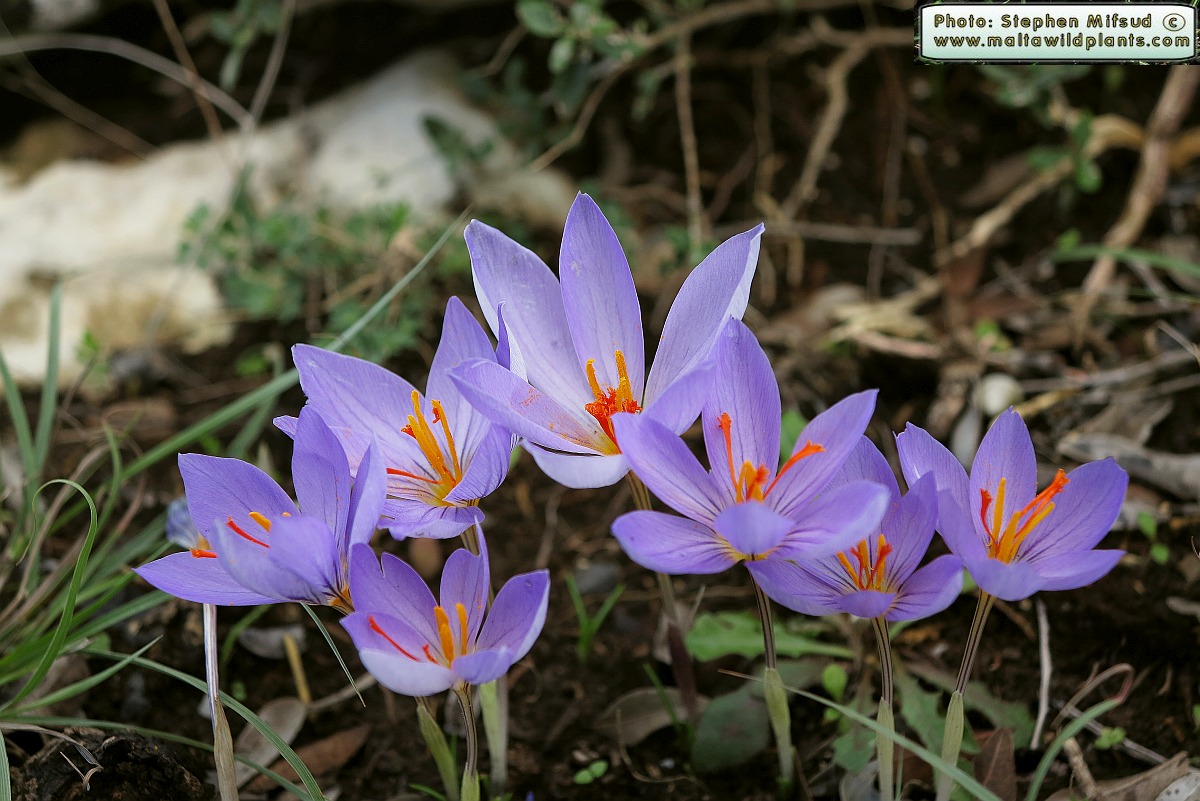
Photo of a bunch of Crocus longiflorus - a delightful display of colours which is something uncommon in Malta!
IMAGE: CRCLF-15
Photo of very rare albino specimen (and with 4 petals only!).
IMAGE: CRCLF-16
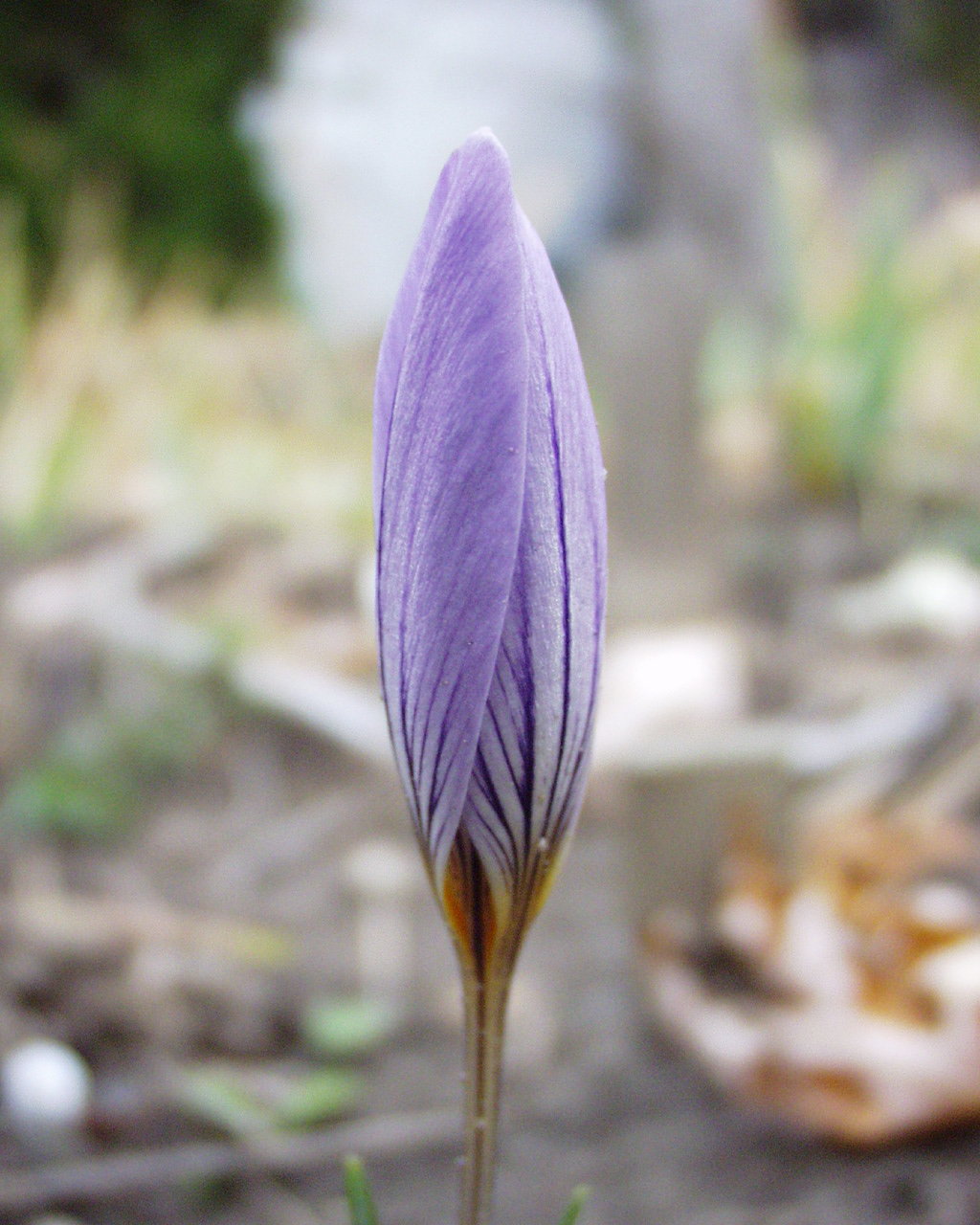
Photo of a bud just before blossoming.
Crocus longiflorus  (Yellow-throated Crocus) - CLICK TO ENLARGE PHOTO Crocus longiflorus  (Yellow-throated Crocus) - CLICK TO ENLARGE PHOTO Crocus longiflorus  (Yellow-throated Crocus) - CLICK TO ENLARGE PHOTO Crocus longiflorus  (Yellow-throated Crocus) - CLICK TO ENLARGE PHOTO
IMAGE: CRCLF-17
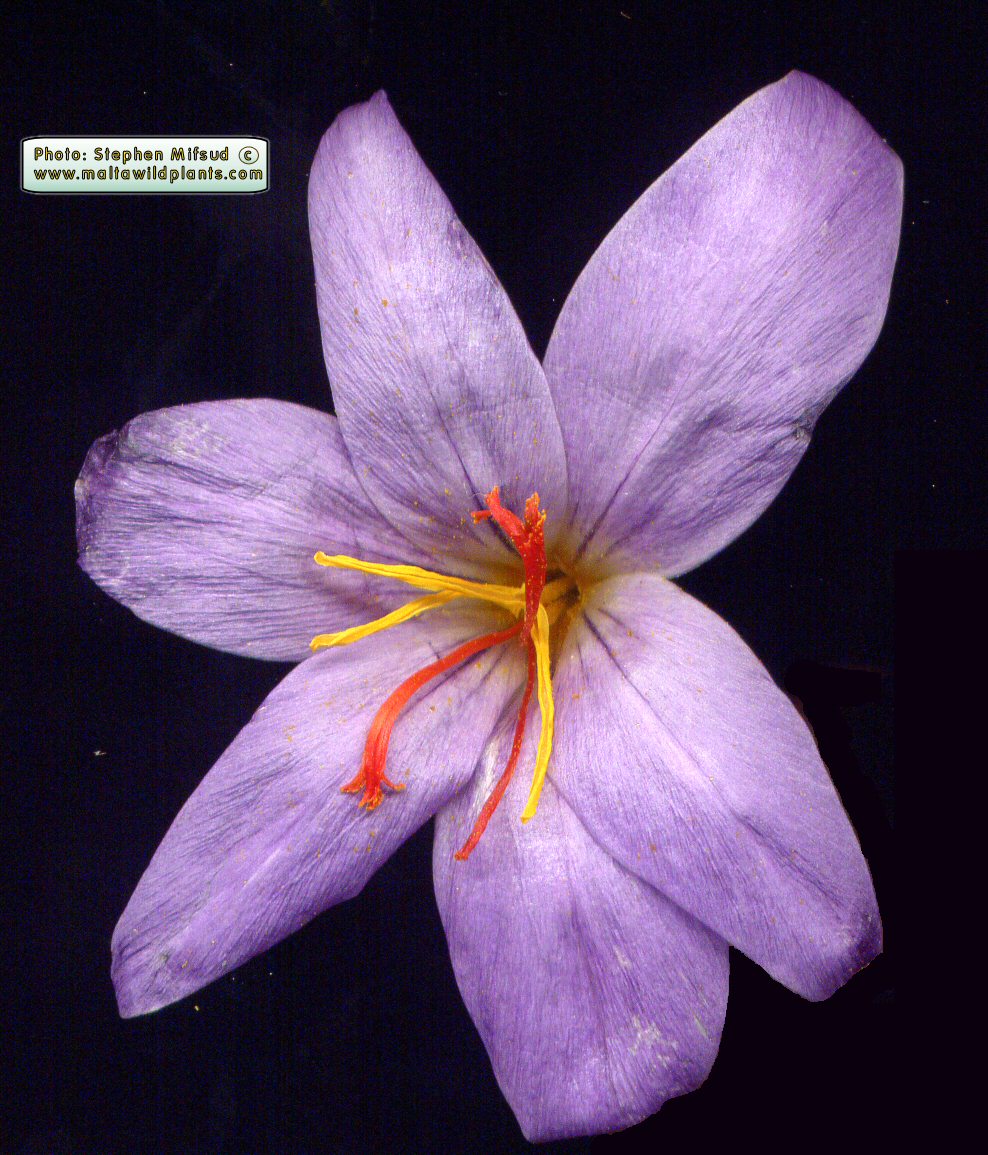
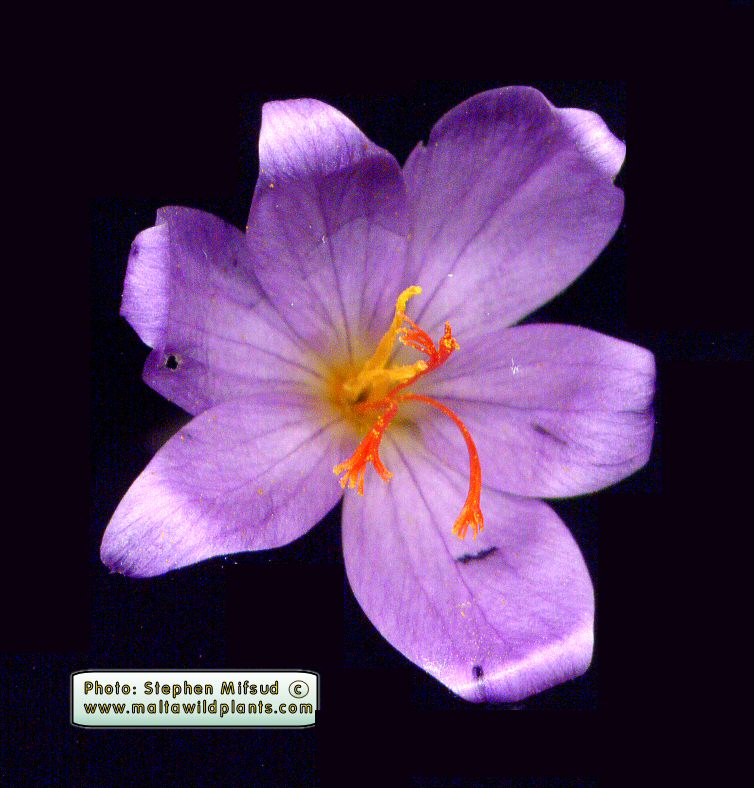
Scanned image of flower against a dark background.
IMAGE: CRCLF-18
Scanned image of young flower.
IMAGE: CRCLF-19
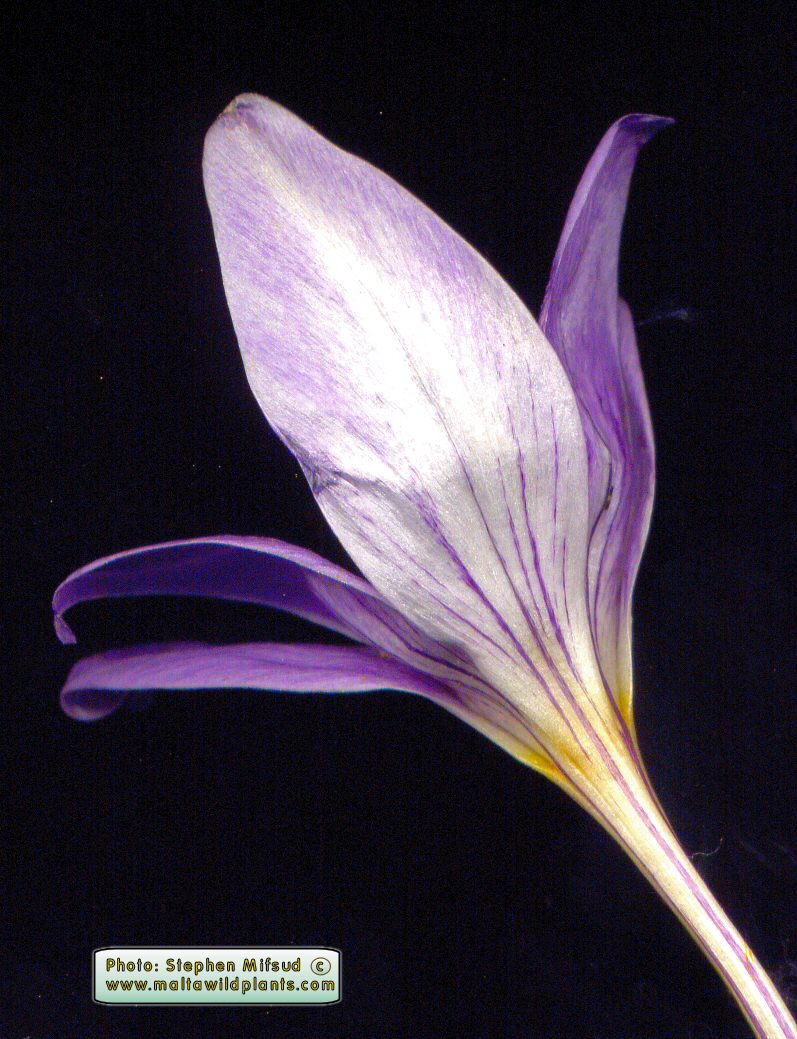
The outer face of the petals is lilac with prominent dark violet veins, which are not so much conspicuous on the inner face. There is also a yellow collar at the constriction of the flower.
IMAGE: CRCLF-20
Scanned image of a full length flower. The dark purple veins on the outer face of the petals persist down towards the flower long neck until it gets covered with a protective white sheath. The aerial flowers do not have a closing base or receptacle but the style keeps going down through the flower neck down to the ovaries located at the underground corm.
Crocus longiflorus  (Yellow-throated Crocus) - CLICK TO ENLARGE PHOTO Crocus longiflorus  (Yellow-throated Crocus) - CLICK TO ENLARGE PHOTO Crocus longiflorus  (Yellow-throated Crocus) - CLICK TO ENLARGE PHOTO Crocus longiflorus  (Yellow-throated Crocus) - CLICK TO ENLARGE PHOTO
IMAGE: CRCLF-21
Magnified scanned image of the flower with some petals dissected off to show arrangement of the 3 stamens and the 3-branched style.
IMAGE: CRCLF-22
Magnified scanned image of flower's reproductive organs, that is the yellow, large stamens and the bright orange style which each has a lobed stigma.
IMAGE: CRCLF-23
Magnified scanned image of stamens. There are 3 per flower and are independent and joined to 3 of the 6 petals alternately. They produce large quantity of yellow pollen which gets easily trapped on the insects body when they visit the flower to search for nectar.
IMAGE: CRCLF-24
Magnified scanned image of the style and stigma. Like many crocuses species the stigma is highly coloured and conspicuous. It subdivides into 3 branches, and each has a terminal complex lobed structure where the stigmata lies. In few crocuses, like the C. sativus the stigmata are the main part of the plant from which saffron is produced.
Crocus longiflorus  (Yellow-throated Crocus) - CLICK TO ENLARGE PHOTO Crocus longiflorus  (Yellow-throated Crocus) - CLICK TO ENLARGE PHOTO Crocus longiflorus  (Yellow-throated Crocus) - CLICK TO ENLARGE PHOTO Crocus longiflorus  (Yellow-throated Crocus) - CLICK TO ENLARGE PHOTO
IMAGE: CRCLF-25
Photo of leaves in situ. They are very thin (3mm max), have a smooth outline, shaped like a sword, and have a white central stripe.
IMAGE: CRCLF-26
Photo of the leaves in situ (pic 2).
IMAGE: CRCLF-27
Photo of bud showing the beautiful pattern of the dark violet/purple veins present on the outer face of the petals. This photo is taken from http://www.bulb.biz/HardyBulbs/.
IMAGE: CRCLF-28
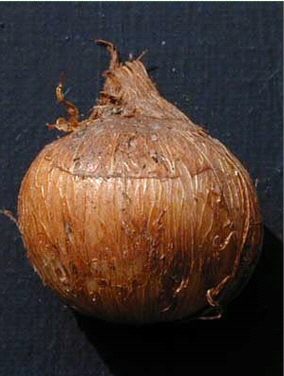
Photo of underground corm. The shape and coating of the corm is an important tool to identify between various crocuses.
Crocus longiflorus  (Yellow-throated Crocus) - CLICK TO ENLARGE PHOTO Crocus longiflorus  (Yellow-throated Crocus) - CLICK TO ENLARGE PHOTO Crocus longiflorus  (Yellow-throated Crocus) - CLICK TO ENLARGE PHOTO Crocus longiflorus  (Yellow-throated Crocus) - CLICK TO ENLARGE PHOTO
IMAGE: CRCLF-29
Photo of the narrow leaves with a characteristical white central stripe.
IMAGE: CRCLF-30
Photo of seed capsule in situ. It splits into 3 parts along the length of the capsule. Seeds are spherical orange-red bodies.
IMAGE: CRCLF-31
Photo of a split-open capsule with some of its reddish-brown seeds.
IMAGE: CRCLF-32
Scanned image of the seeds. 3mm long, reddish brown and sub-spherical.
Crocus longiflorus  (Yellow-throated Crocus) - CLICK TO ENLARGE PHOTO Crocus longiflorus  (Yellow-throated Crocus) - CLICK TO ENLARGE PHOTO Crocus longiflorus  (Yellow-throated Crocus) - CLICK TO ENLARGE PHOTO  
IMAGE: CRCLF-33
Photo of specimen with rather large flowers found near Verdala Palace.
IMAGE: CRCLF-34
Photo of garigue at mid November, showing Crocus longiflorus the dominant flowering plant at this period.
IMAGE: CRCLF-35
Photo of flowers decorating and colouring the Maltese garigue in Autumn.
IMAGE: CRCLF-36

Links & Further info

The Pleasure of Crocuses by Charlie Challenger Photo gallery of several Crocus species 1 (www.alpinegarden.com)
More info on crocuses as a garden ornament plant Photo gallery of several Crocus species 2 (www.bulb.biz)
Information about Saffron More information on saffron from Wikipedia.org
Information about Saffron and crocus by ED-Foods.com General information about the Crocus Genus


Buy Seeds and Docs

Buy Seeds from Maltawildplants.com Buy samples of seeds of certain wild plants for your studies, trials, research, etc. Not all species' seeds can be exported (depending on Maltese regulations), and availability depends on season of species. So, before any payment, you are kindly asked to fill in the online quotation/order form by which I can contact you back for availability and charges. Buy Seeds from Maltawildplants.com   Online Quotation

Buy Seeds from Maltawildplants.com   Online Payment
Buy Documents from Maltawildplants.com Buy documents related to Maltese Wild Plants such as the list of references, full profile, or other docs you request. Buy Documents from Maltawildplants.com   Online Payment
Buy Images  from Maltawildplants.com Buy any of my own copyright images found in this large collection of Maltese flora. You should first select the image you want to buy and input its corresponding code (found beneath each individual photo) in the online ordering form. Buy Seeds from Maltawildplants.com   Online Payment
Buy Seeds from Maltawildplants.com Kindly donate any sum of money (from 2USD / 2Euro) to help us covering some expenses needed to maintain Maltawildplants.com. Please bear in mind how much hard work such a large and up-to-date website needs to arrive directly to you home, office or library. Your kind donations are both greatly appreciated and recorded for future reference. Donors asking help will have first que preference for assistance and special attention. Buy Seeds from Maltawildplants.com   Online Donation


Submit further info on this species

Use the form below to submit more information about this plant or a related species. If the data is taken from a book, journal, website, etc, please provide the corresponding reference / website address as indicated in the form. If it is your own observation, then your name will be cited. Your Email address will never be displayed online, it is just for internal communication.


For plant species that are marked as rare, you can also report other locations in Malta where you have seen this species.

Finally you can report any mistakes or errors found on the plant profile for necessary corrections. This will help to improve the website's accuracy.


To have more details about each particular field, just move your mouse on it and wait for the help message to pop up

* = required fields.
Plant Species:  *
Your name:   *
Your Email:   *
 
Fill any of the 3 sections below (A, B, C) and send the form - Thank you.
 
A:  Additional Information about this plant species
Own observations:
Info from published material (books, journals, website):

Reference of published material:

 
B:   Where have you seen this plant on the Maltese Islands?
Locations in Malta or Gozo where you have encountered this plant.
Mostly applies for rare plants.


1:        2:   
3:       4:   
5:       6:   

Try to be as concise as possible. Examples: Dingli Cliffs (near chapel), Wied Incita (Zebbug side), Triq il-Kbira (Qormi), Barriera ta\' Abdul (Xlendi), Fields near Salib tal-gholja (Siggiewi). GPS bearings are also welcomed!
 
C:  Corrections for mistakes and errors in this plant profile.
Section of this page where you found an error (select one)

What is the error/mistake
What should be its correction


All material and data on this webpage is under the copyright of the author of this site - Stephen Mifsud / www.MaltaWildPlants.com / Malta. (2002-2010)
This research project about the flora of Malta is sponsored by:
Nature Guided Tours in the best countryside areas of Malta The Malta Council for Science and Technology (MCST) is the national advisory body to Government on science and technology policy. The MCST is also the national agency responsible for the management of the local RTDI programme, as well as the national contact organisation for the Seventh Framework Programme (FP7). Advertise in this space Advertise in this space Other sponsors / supporting companies