- Data Updated into Botanical Database Successfully !!
Wild Plants of Malta - Plant Family Index
  Spiranthes spiralis   MaltaWildPlants.com - A website dedicated to the flora of Malta  
        
   Sun 20 May 2012           Google PR= 5
HOME  - Index of Plant FamiliesA to Z INDEX - Species list aided with query filter toolsNEWS - Lateset news from the author & web updatesCOMMUNICATE ( Emails, Comments, Donations, etc)


   (Fam: .)
 /  /
This plant is brought to you by one of the project's sponsors:
Malta Nature Tours
More sponsors are needed for this project [ click here ]

Contents Links   (Short Profile)


Nomenclature & Info

Photo Gallery

Links and further info

Sales, Support and Donations

Submit further info on this species

Give a small Donation Online

Website FORUM

Sponsors & Adverts

Copyright Notes

Funds are needed for a detailed profile of this species


Index

Main Family Index

 
Visitors ():
Profile created on .

Nomenclature

Species name:


Author(s):

;
   

Common names:

Maltese name:

Plant Family:

  ( Family)

Name Derivation:

= Unknown derivation. It is a genus formed by Cassini which now groups 12 species
= Named after Paolo Boccone (1633-1703), an Italian monk and physician (Latin).

Synonyms:

No Main Synonyms

Remarks:

-


Morphology

PLANT STRUCTURE:

Character

Growth Form

Branching

Surface

Description

Erect :

Upright, vertically straight up well clear off the ground.
Moderately Branched :

Considerable number of secondary branches along the main stem.

Glandular Hairs :

Possess hair that bear glands or swellings at their tip. Hairs are short.

General
Picture

Wild Plants of the Mediterranean Islands of Malta  - Copyright Stephen Mifsud / Maltawildplants.com / Malta (2002-2010) Wild Plants of the Mediterranean Islands of Malta  - Copyright Stephen Mifsud / Maltawildplants.com / Malta (2002-2010) Wild Plants of the Mediterranean Islands of Malta  - Copyright Stephen Mifsud / Maltawildplants.com / Malta (2002-2010)

LEAVES:

Character

Arrangement

Attachment

Venation

Description

Alternate :

Growing at different positions along the stem axis.

Sessile :

Growing directly from the stem; without a stalk.

Single :

One central main vein (midrib) along leaf axis.

General
Picture

Wild Plants of the Mediterranean Islands of Malta  - Copyright Stephen Mifsud / Maltawildplants.com / Malta (2002-2010) Wild Plants of the Mediterranean Islands of Malta  - Copyright Stephen Mifsud / Maltawildplants.com / Malta (2002-2010) Wild Plants of the Mediterranean Islands of Malta  - Copyright Stephen Mifsud / Maltawildplants.com / Malta (2002-2010)
 

Character

Leaf Shape

Leaf Margin

Remarks

Description

Oblanceolate :

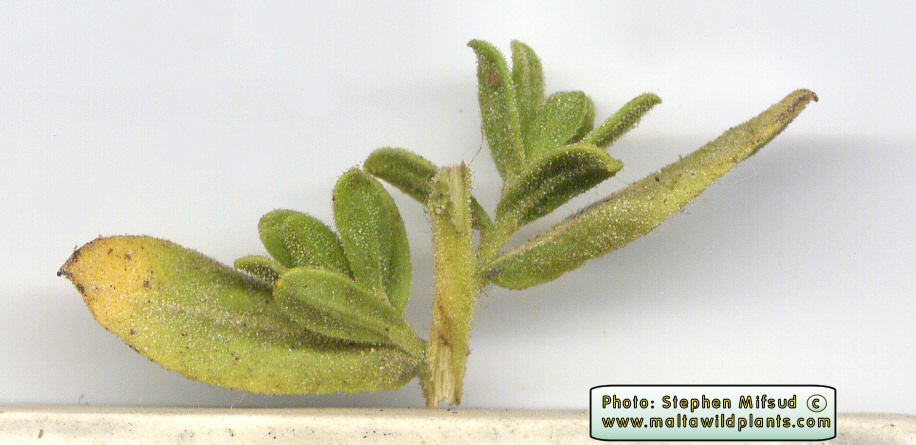
Inverted lance shaped, widest in the upper third part, tapering gradually towards the base of the leaf.

Entire :

Smooth margin without indentations, lobes or any projections.

Aromatic

Leaves give off a highly, pleasant aromatic smell especially when the plant is young in Spring.

General
Picture

Wild Plants of the Mediterranean Islands of Malta  - Copyright Stephen Mifsud / Maltawildplants.com / Malta (2002-2010) Wild Plants of the Mediterranean Islands of Malta  - Copyright Stephen Mifsud / Maltawildplants.com / Malta (2002-2010) Wild Plants of the Mediterranean Islands of Malta  - Copyright Stephen Mifsud / Maltawildplants.com / Malta (2002-2010)

FLOWERS:

Character

Colour

Basic Flower Type

No. of Petals

No. of Sepals

Description

Yellow

(With a green involucre).

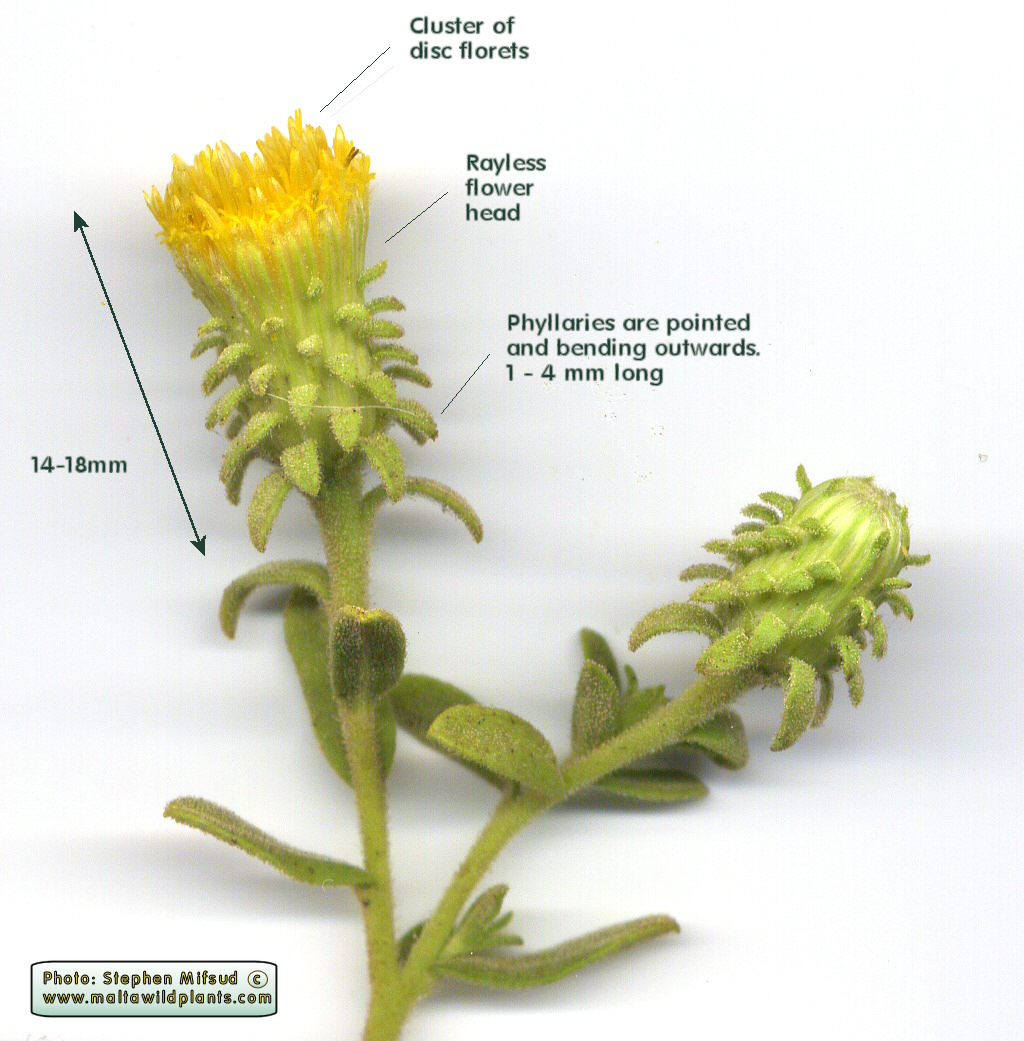
Rayless and Discoid :

Rather inconspicuous flower heads lacking radiating 'petals' (ray florets) and only bear tiny, disc-florets packed on a common receptacle. Such flowerheads normally have a cylindrical, cushion-like or discoid shape.

0

(Rayless flower).

25-40

Referring to the phyllaries of the involucre.

General
Picture

  Wild Plants of the Mediterranean Islands of Malta  - Copyright Stephen Mifsud / Maltawildplants.com / Malta (2002-2010) Wild Plants of the Mediterranean Islands of Malta  - Copyright Stephen Mifsud / Maltawildplants.com / Malta (2002-2010) Wild Plants of the Mediterranean Islands of Malta  - Copyright Stephen Mifsud / Maltawildplants.com / Malta (2002-2010)
 

Character

Inflorescence

Description

Ovary

Stamens

Description

Corymb :

False umbel formed by individual pedicels of different lengths originating from stem alternately and forming a flat-top cluster.

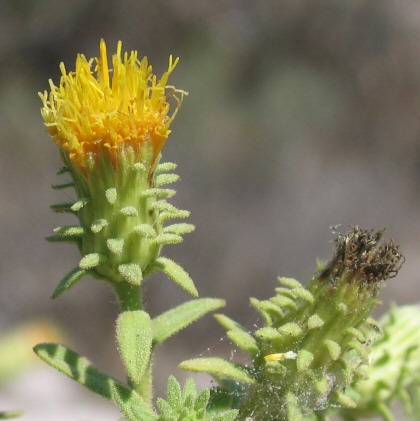
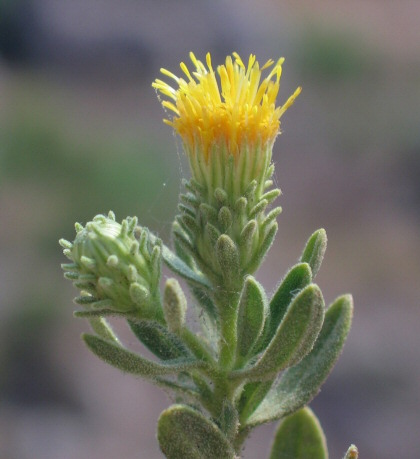
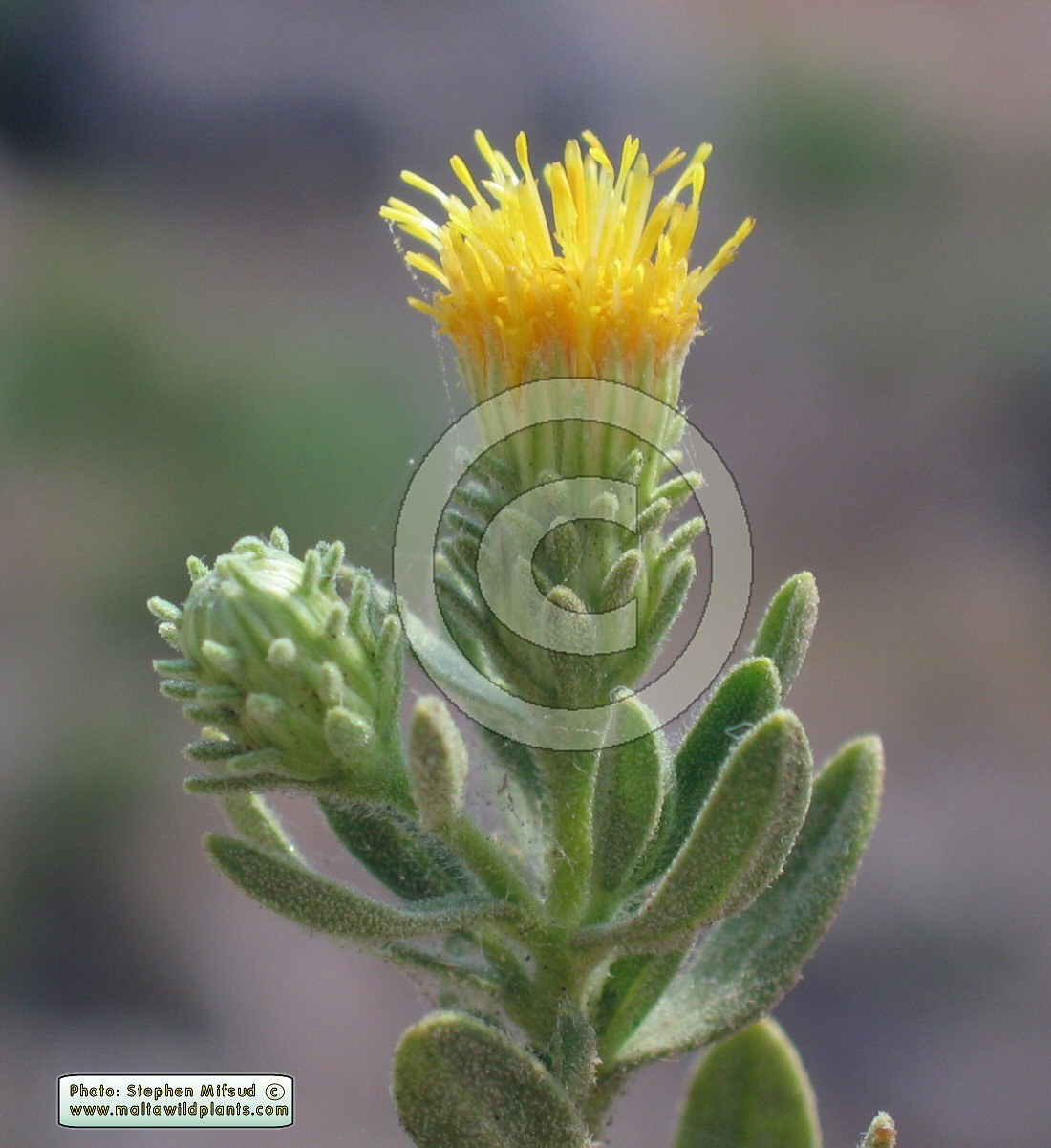
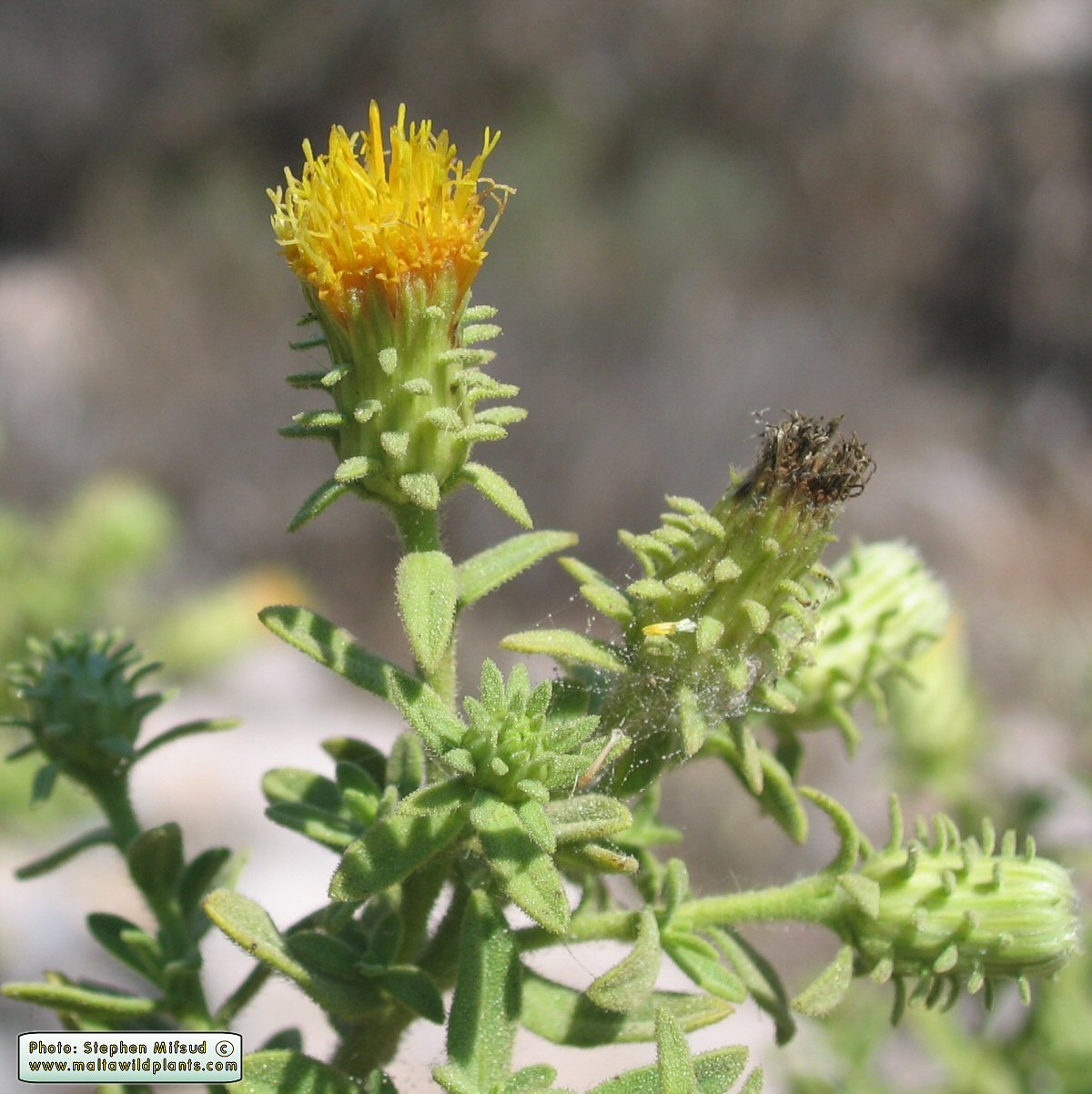
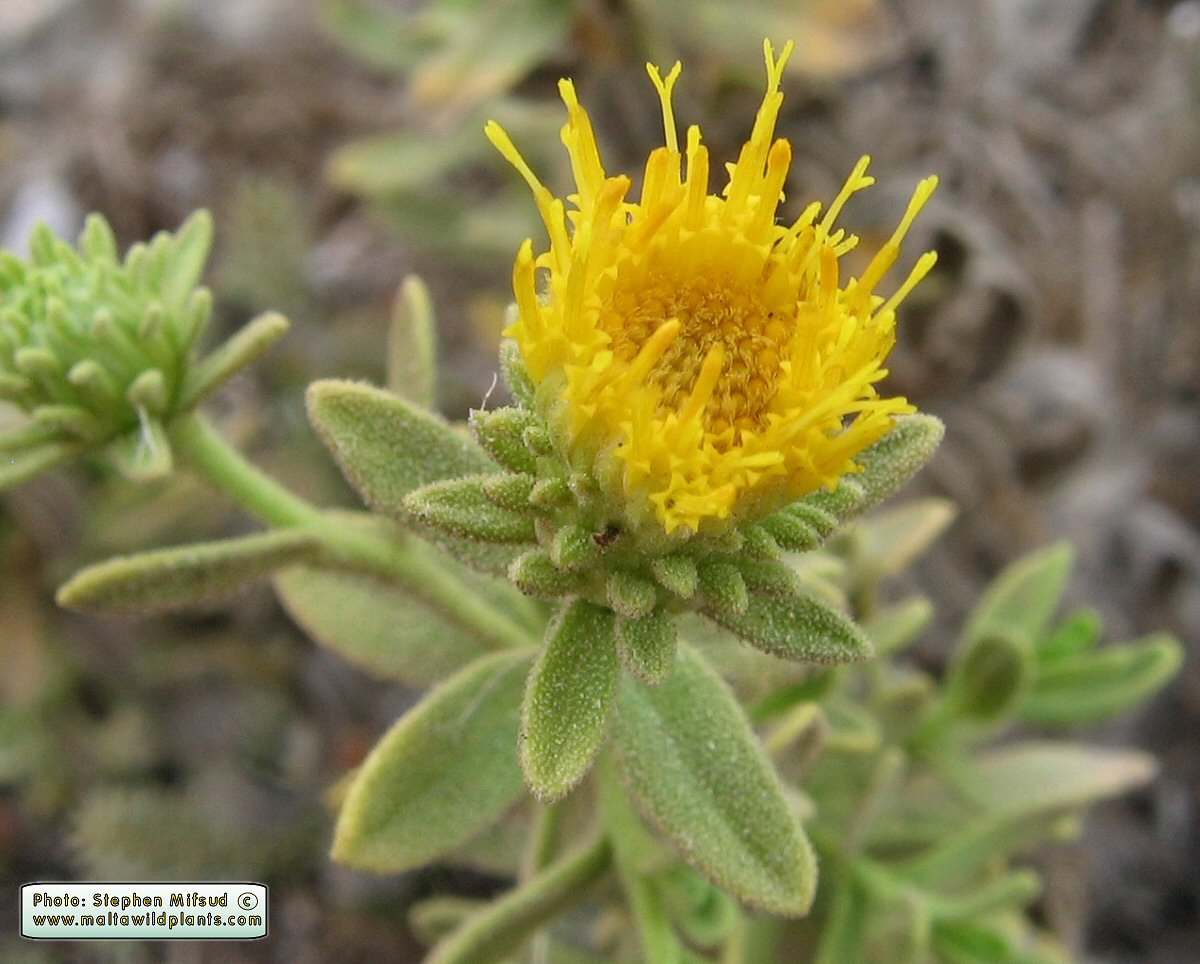
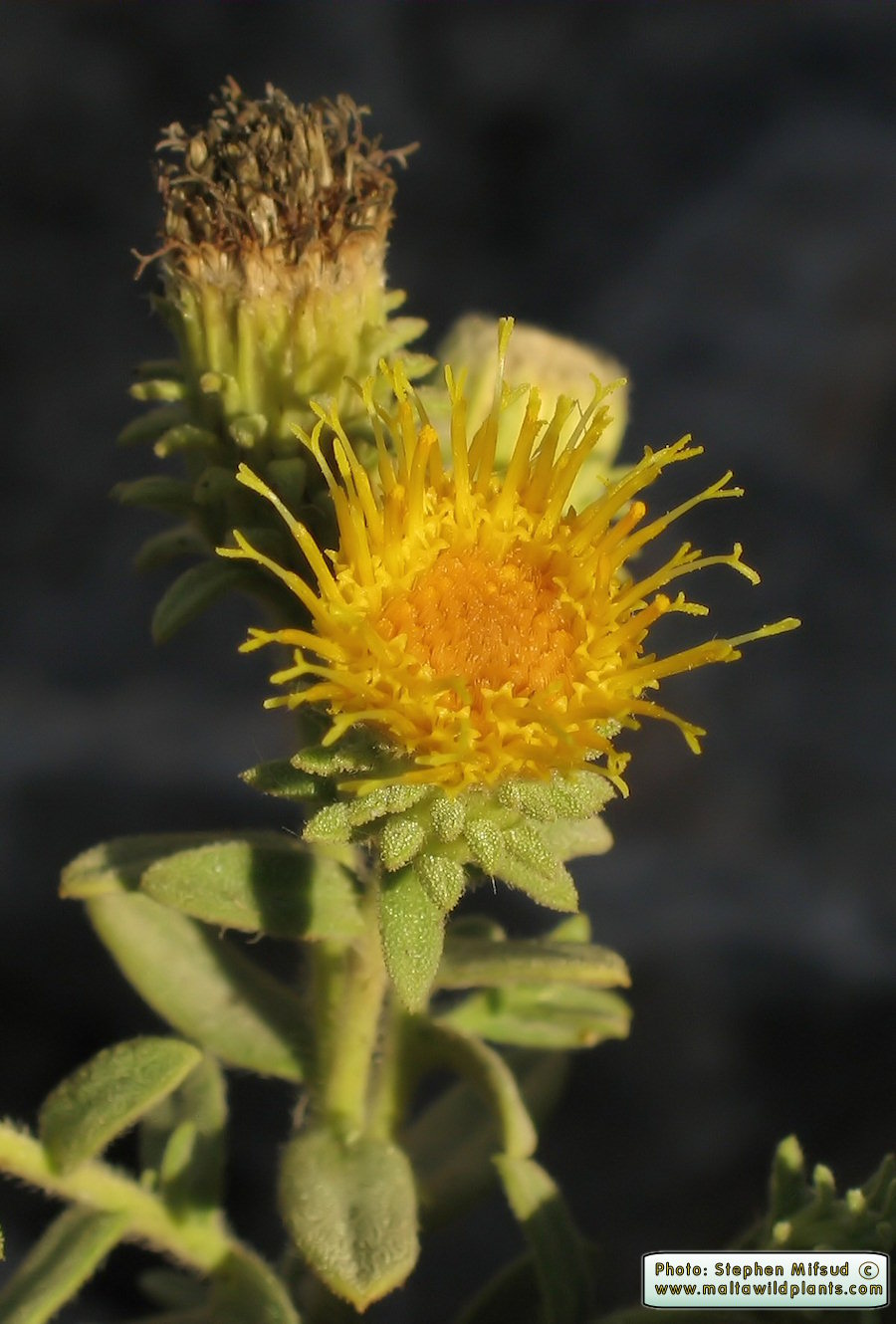
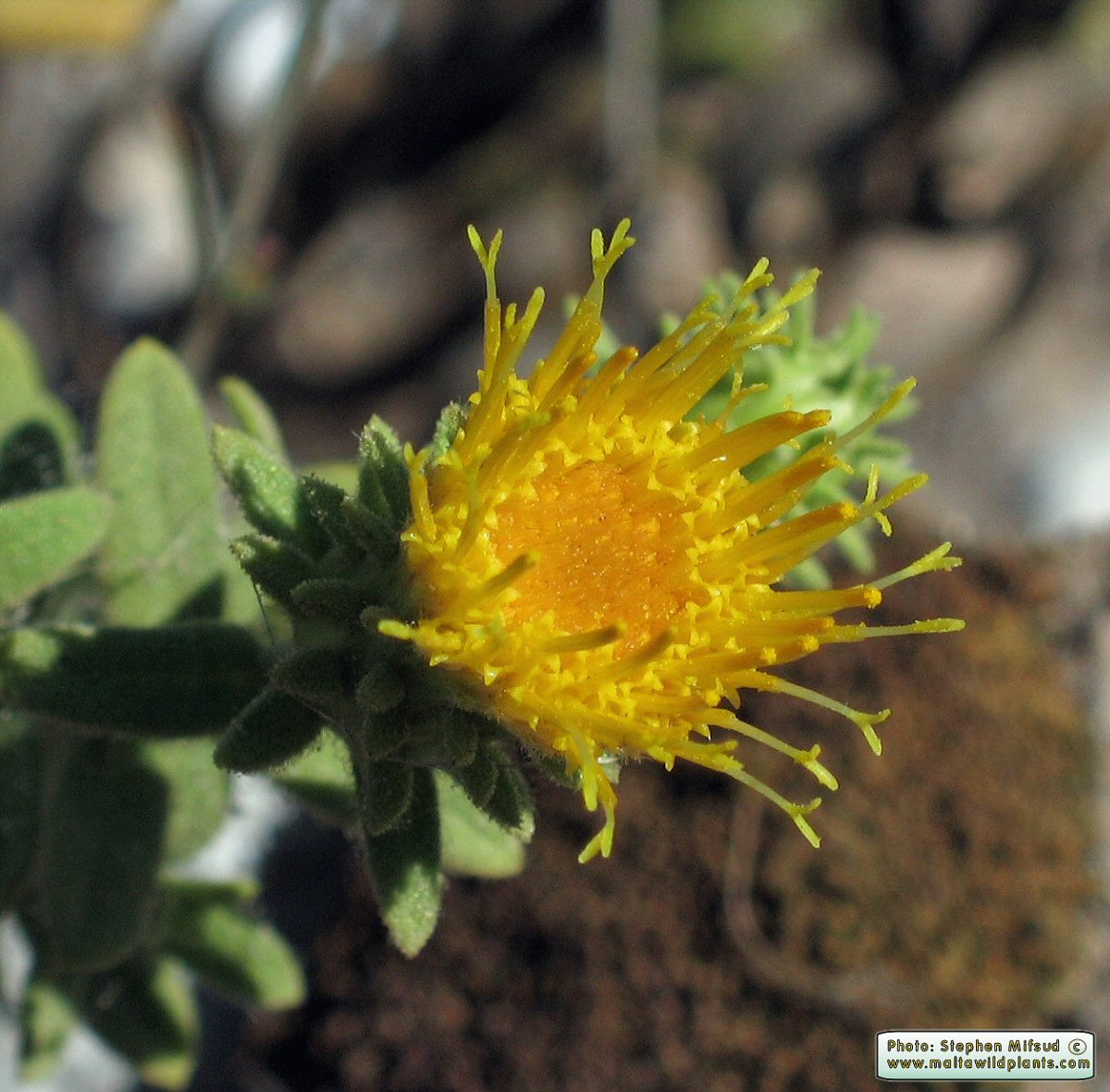
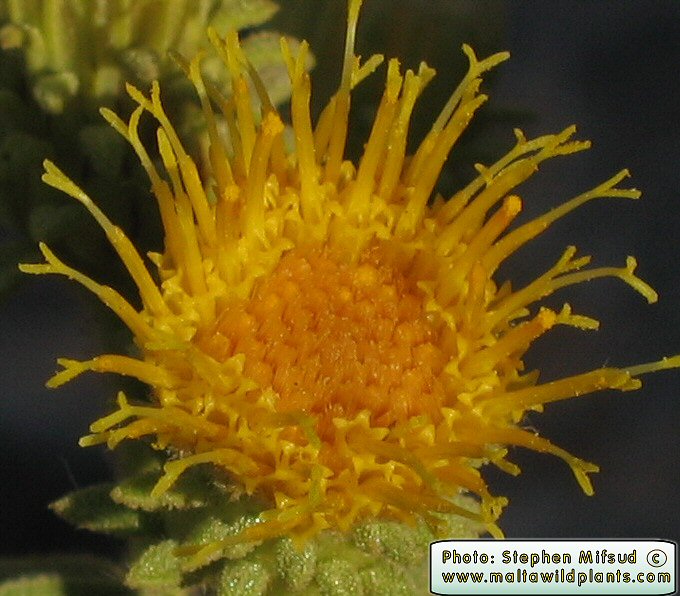
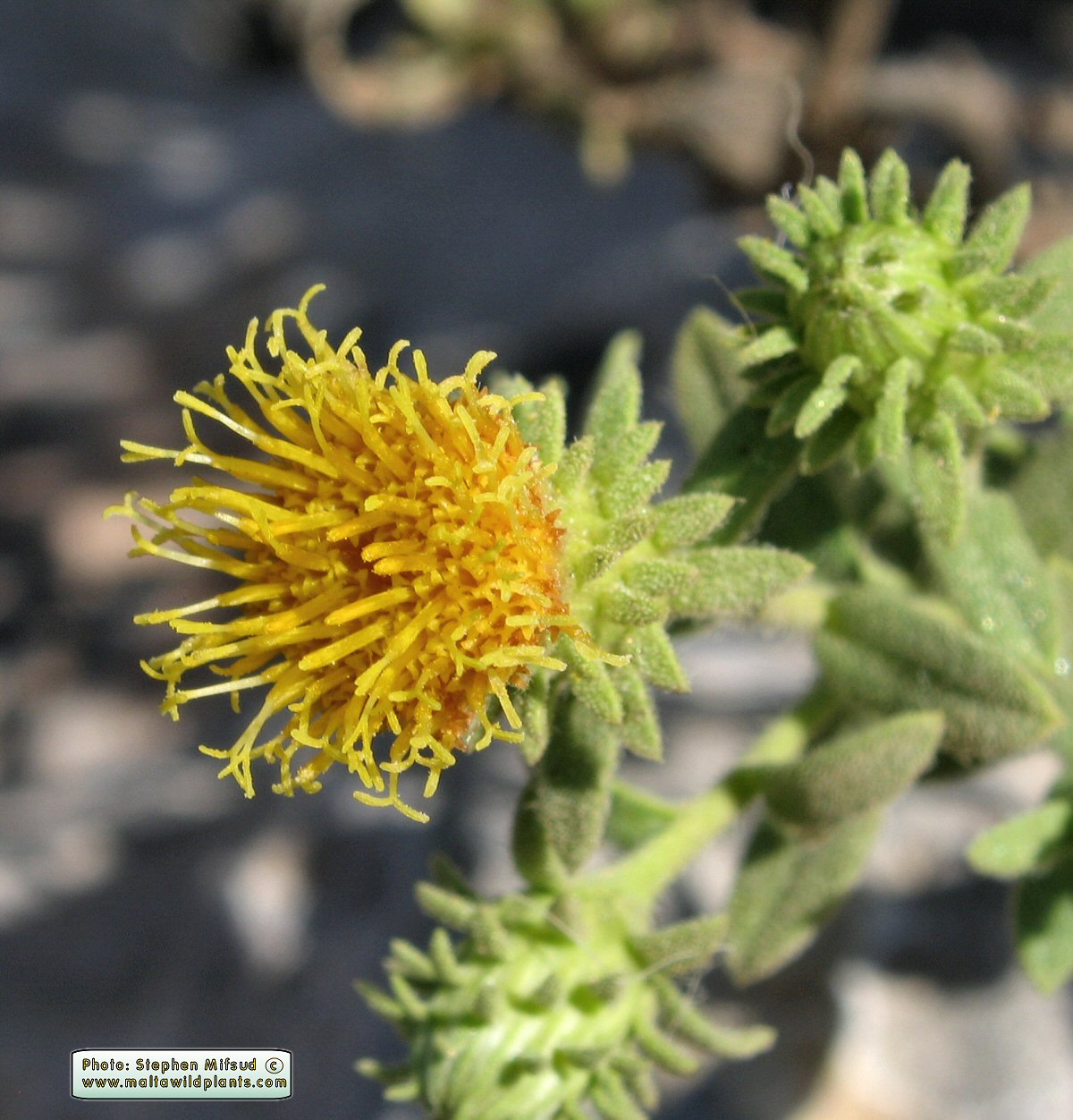
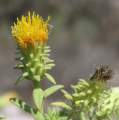
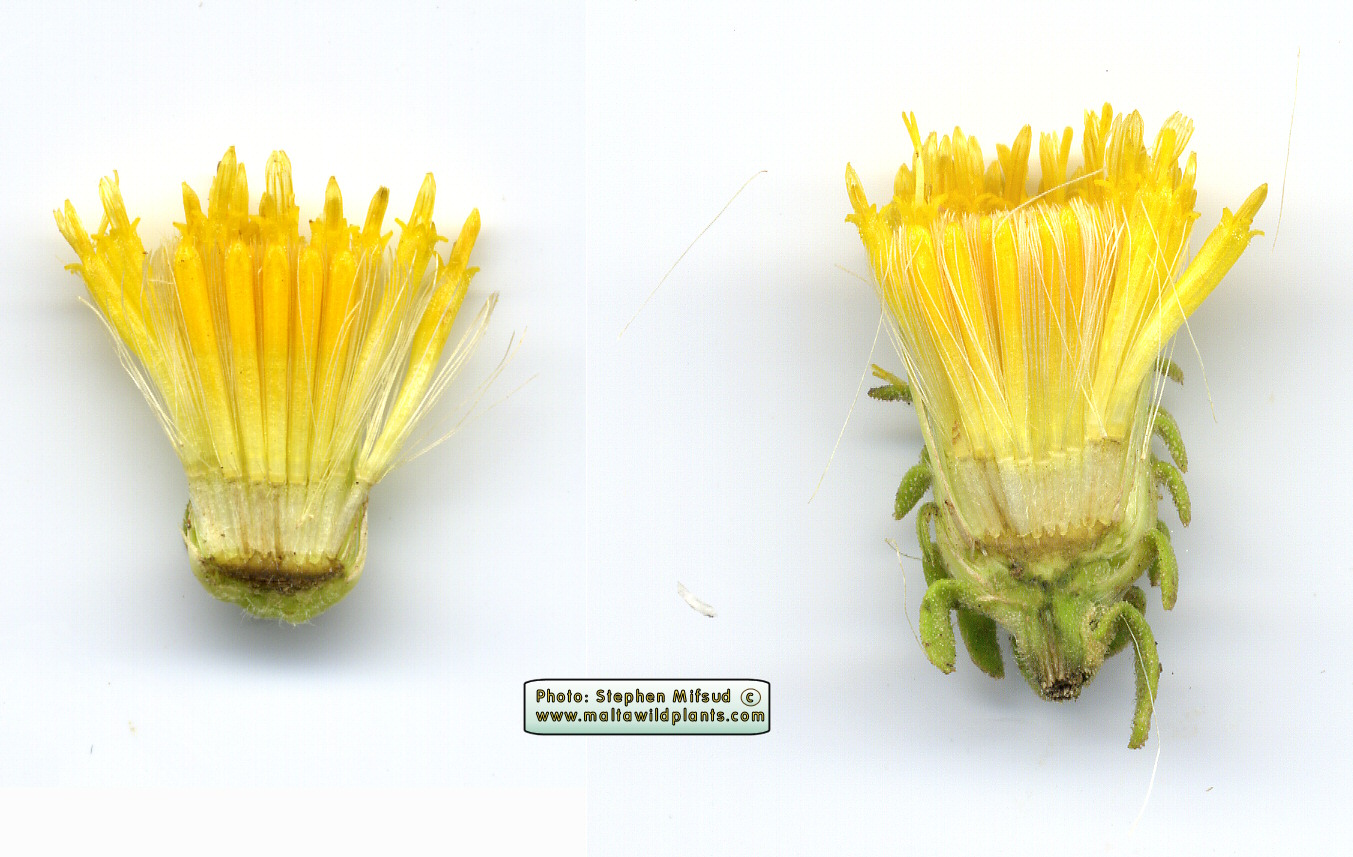
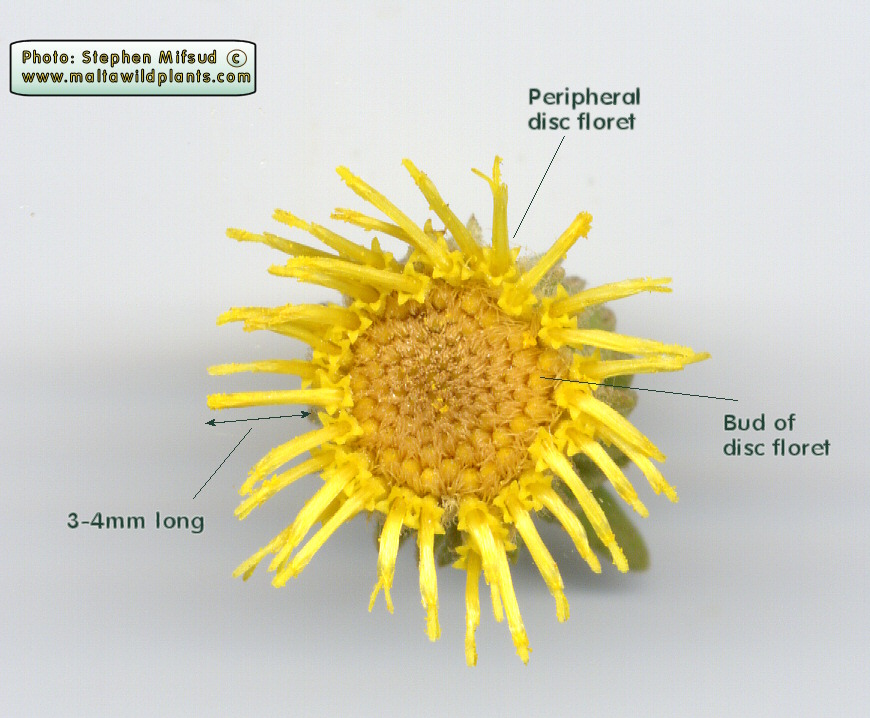
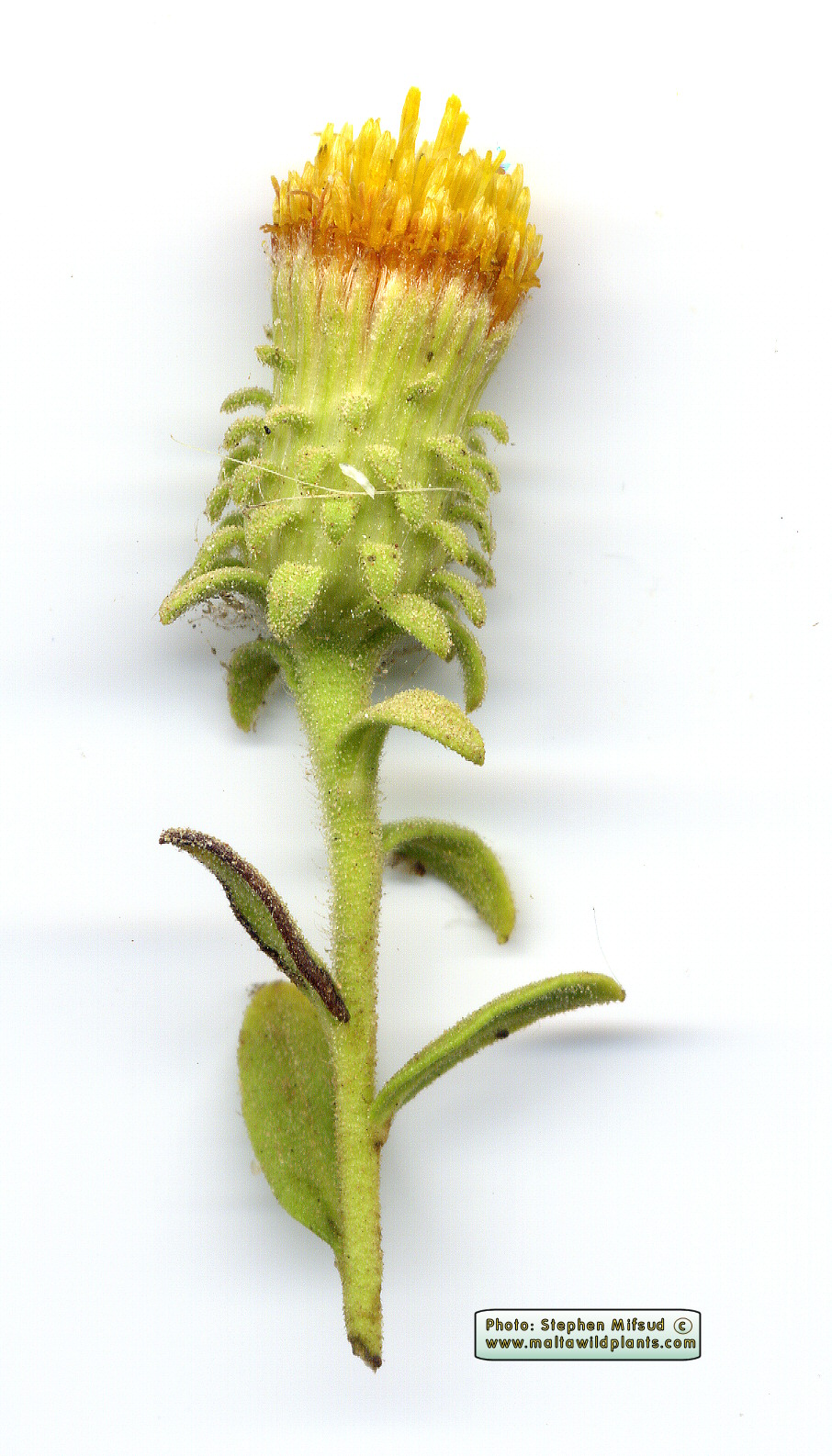
The flower is basically a group of about 50-80, rayless, yellow disc-florets enclosed in a rather cylindrical green involucre which its numerous phyllaries (more than 3 rows) have their pointed tip bending outwards. The stamens/style column of each disc floret is particularly long, about 5mm above the floret petals.

Inferior :

Ovary situated below the flower parts (the calyx, corolla, and androecium). In other words, these are attached above the ovary.

5, Syngenesious :

Anthers fused together, forming a ring or collar around the central style of every disc floret. Filaments are usually free. Stamens are usually not visible by the naked eye.

General
Picture

Wild Plants of the Mediterranean Islands of Malta  - Copyright Stephen Mifsud / Maltawildplants.com / Malta (2002-2010) Wild Plants of the Mediterranean Islands of Malta  - Copyright Stephen Mifsud / Maltawildplants.com / Malta (2002-2010) Wild Plants of the Mediterranean Islands of Malta  - Copyright Stephen Mifsud / Maltawildplants.com / Malta (2002-2010) Wild Plants of the Mediterranean Islands of Malta  - Copyright Stephen Mifsud / Maltawildplants.com / Malta (2002-2010)
 

Character

Scent

Average Flower Size

Pollen Colour

Other Notes

Description

YES

Sweet scent which is masked by the aromatic scent of the leaves.

12-15mm

(not including the out-bending phyllaries).

Yellow

-


SEEDS:

Character

No. Per Fruit

Shape

Size

Colour

Description

50-80

Seeds closely packed on a common receptacle.

Achene with Pappus :

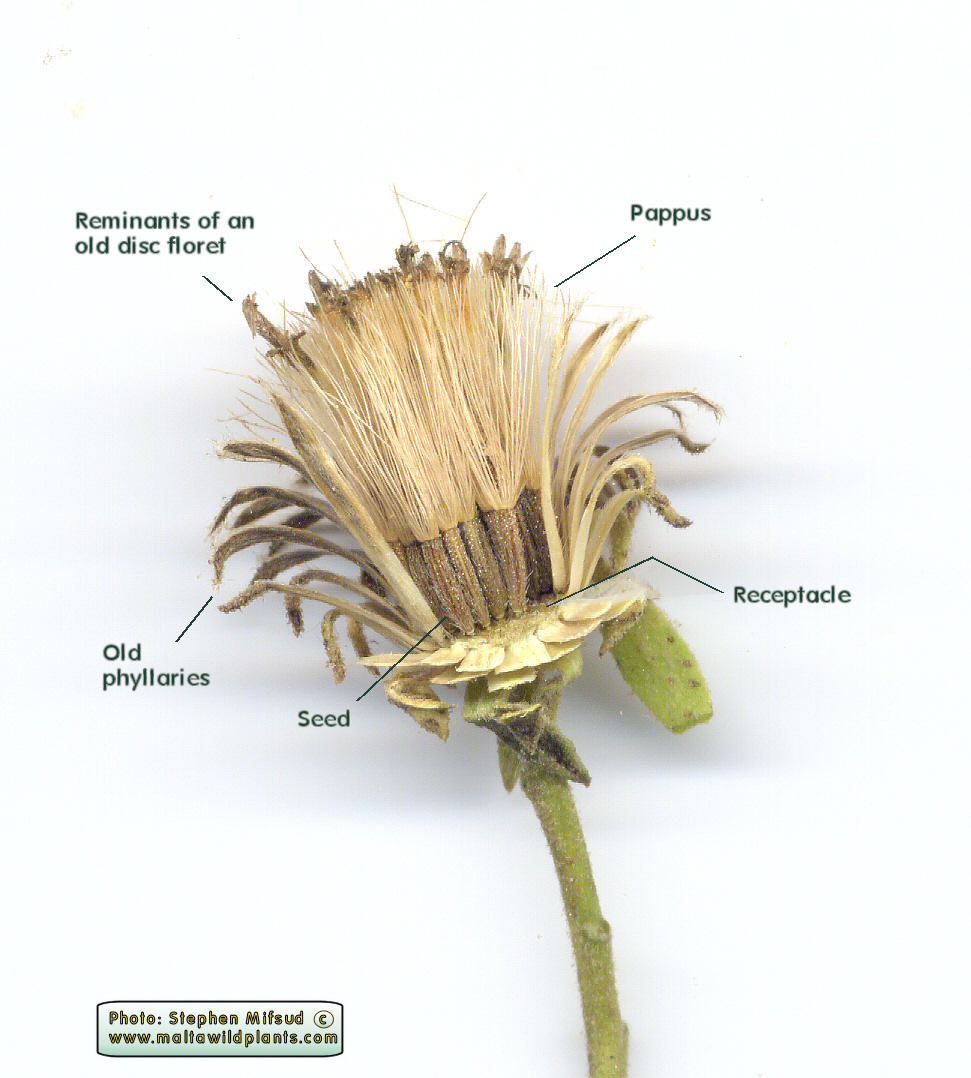
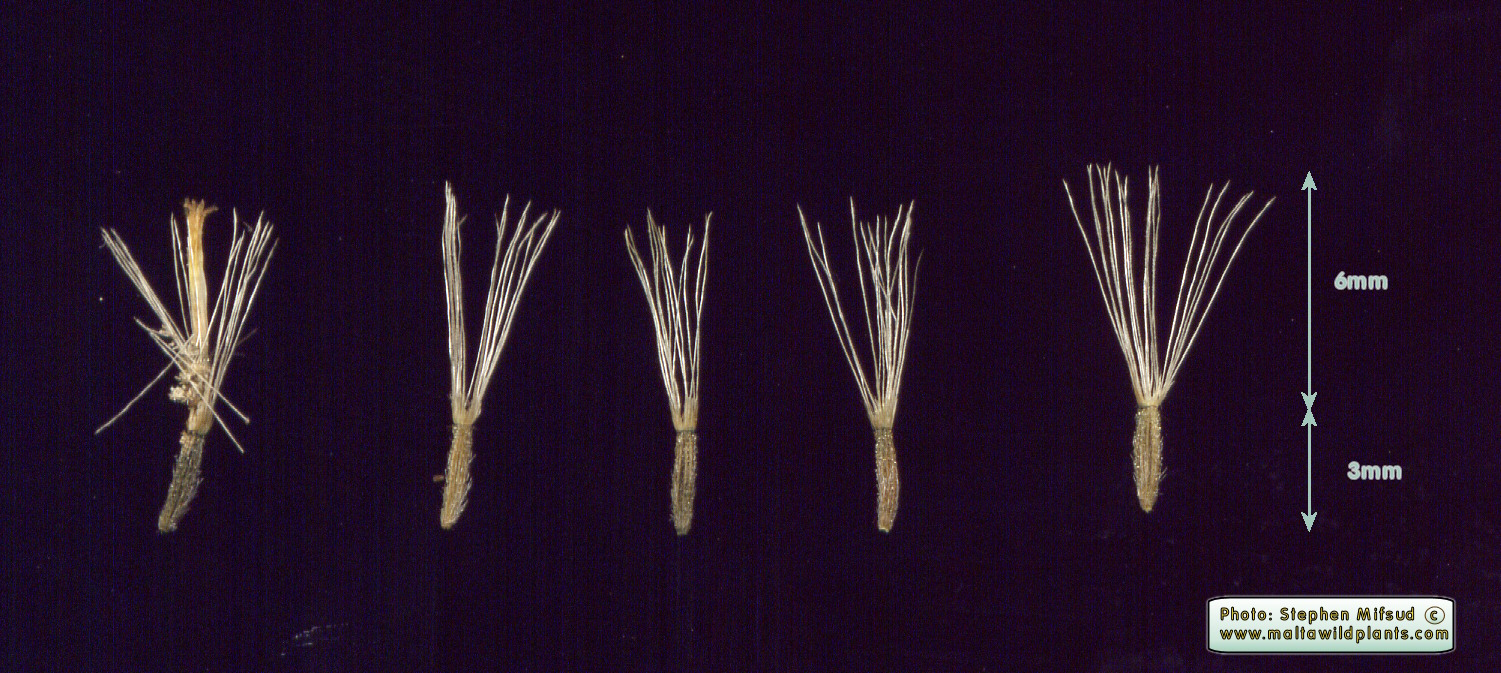
A simple one-seeded fruit which has an apical structure of radiating fine light bristles (called pappus) which aid the seed to disperse away by wind. Fruit are found in collective numbers attached to a common receptacle.

3mm c.

(excluding pappus).

Greyish brown

(Pappus straw or beige coloured).

General
Picture

Wild Plants of the Mediterranean Islands of Malta  - Copyright Stephen Mifsud / Maltawildplants.com / Malta (2002-2010) Wild Plants of the Mediterranean Islands of Malta  - Copyright Stephen Mifsud / Maltawildplants.com / Malta (2002-2010) Wild Plants of the Mediterranean Islands of Malta  - Copyright Stephen Mifsud / Maltawildplants.com / Malta (2002-2010) Wild Plants of the Mediterranean Islands of Malta  - Copyright Stephen Mifsud / Maltawildplants.com / Malta (2002-2010)

FRUIT AND OTHER BOTANICAL DATA:

Character

Fruit Type

Colour of Fruit

Subterranean Parts

Other Notes

Description

Numerous achenes with pappus :

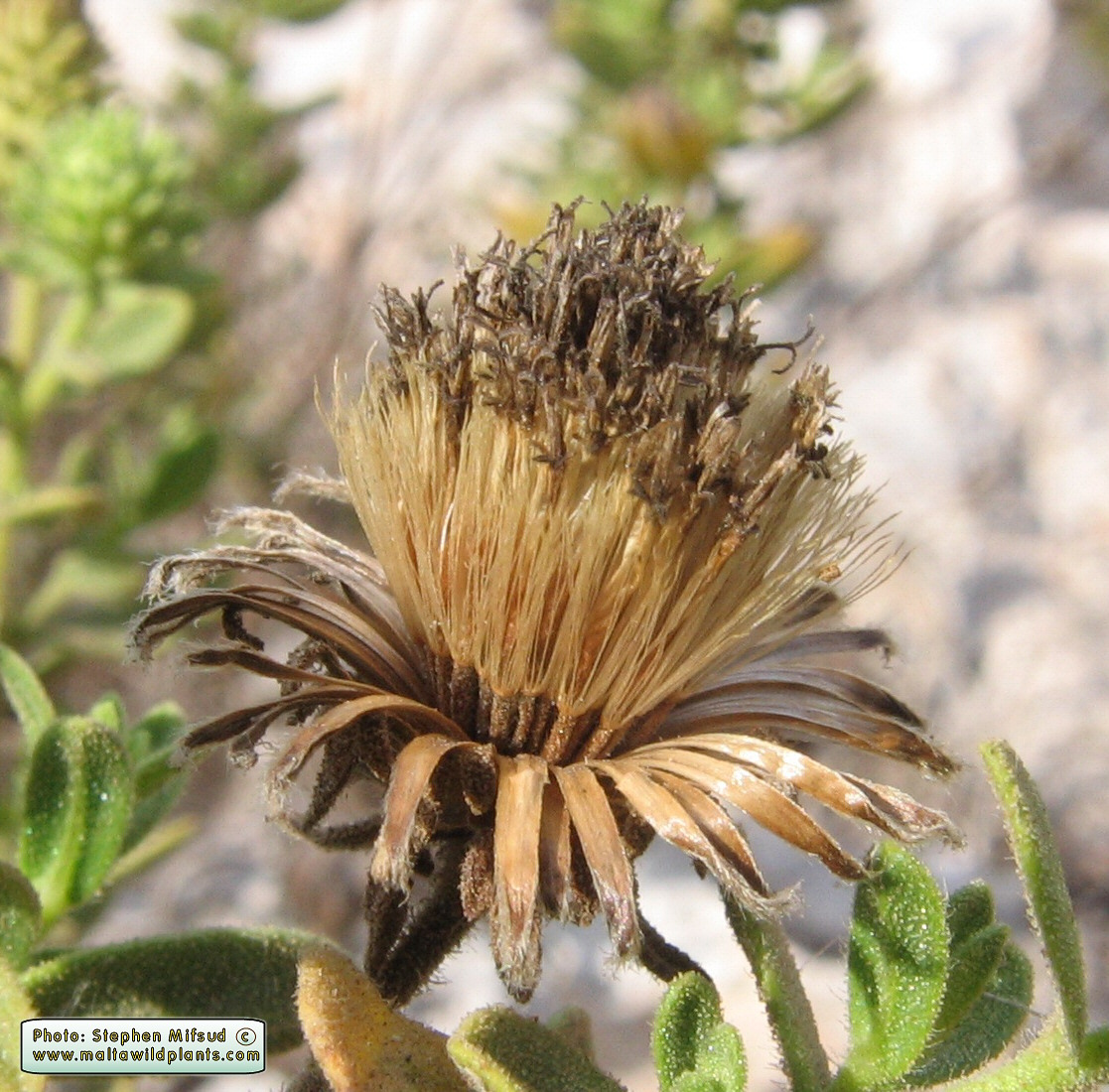
A collection of achenes with a bristly pappus forming a soft spherical structure. The radiating achenes are attached to a common receptacle and when mature they detach and get dispersed by wind.

Straw colour / Beige

Taproot :

A rooting system where there is the main descending root of a plant having a single dominant large structure from which a network of smaller and long roots emerge.

Pilosity

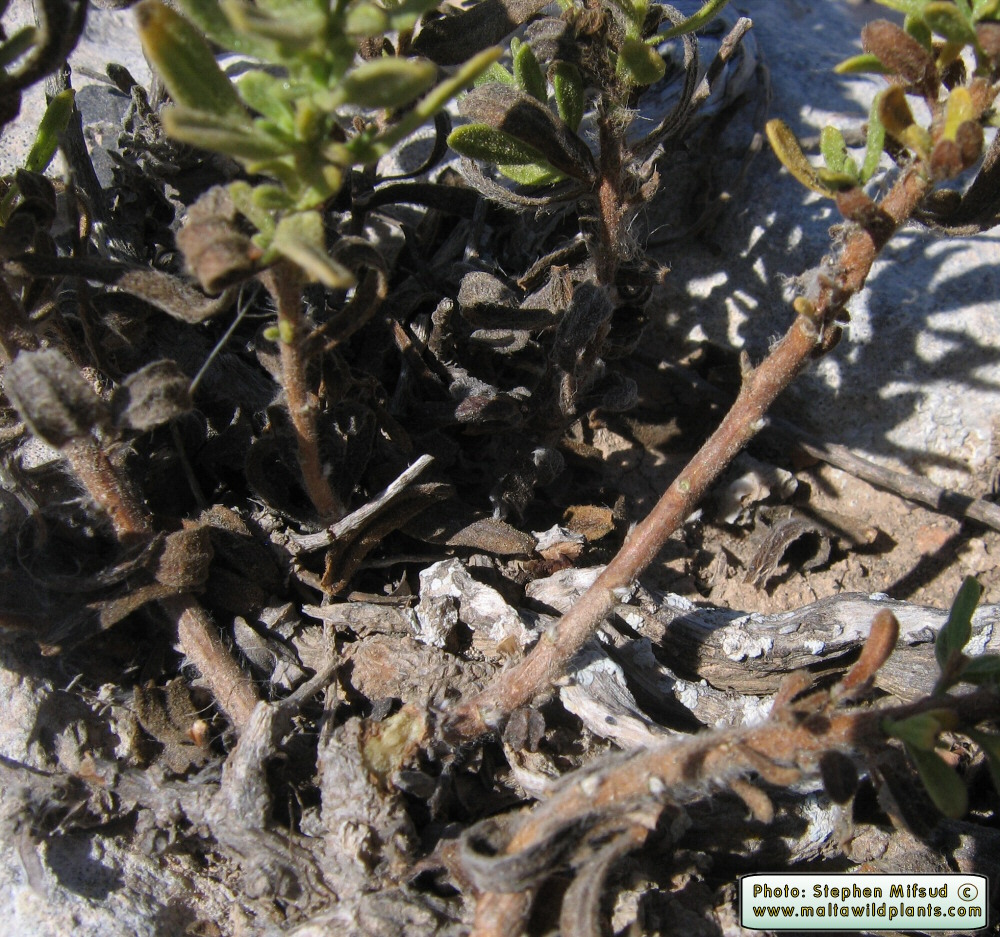
When young, the pilosity of the leaves is dense and cosnsists of long hairs.

General
Picture

Wild Plants of the Mediterranean Islands of Malta  - Copyright Stephen Mifsud / Maltawildplants.com / Malta (2002-2010) Wild Plants of the Mediterranean Islands of Malta  - Copyright Stephen Mifsud / Maltawildplants.com / Malta (2002-2010) Wild Plants of the Mediterranean Islands of Malta  - Copyright Stephen Mifsud / Maltawildplants.com / Malta (2002-2010) Wild Plants of the Mediterranean Islands of Malta  - Copyright Stephen Mifsud / Maltawildplants.com / Malta (2002-2010)

Specifications & Description

Life Cycle:

Growth Form:

Soon to be updated...

Habitat:

Frequency:

Undetermined

Localities in Malta:

Plant Height:

Flowering Period:

Protection in Malta:

Not Protected by Law (LN200/2011 or LN311/2006)

Red List 1989:

Not listed in the Flora section of the National Red Data Book (Lanfranco, 1989)

Poison:

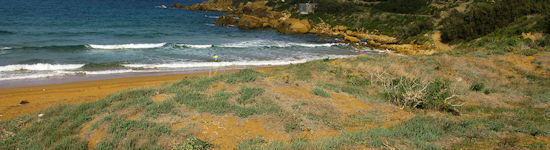
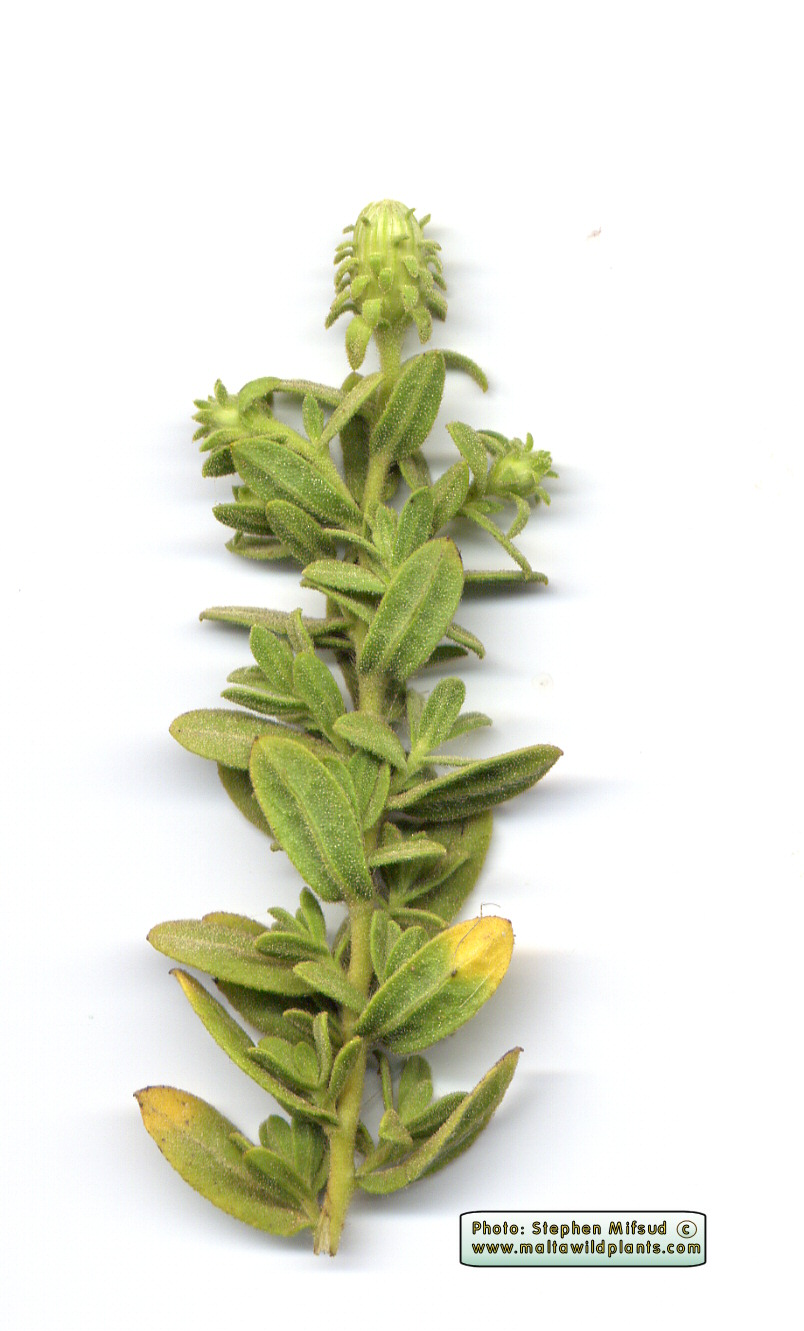
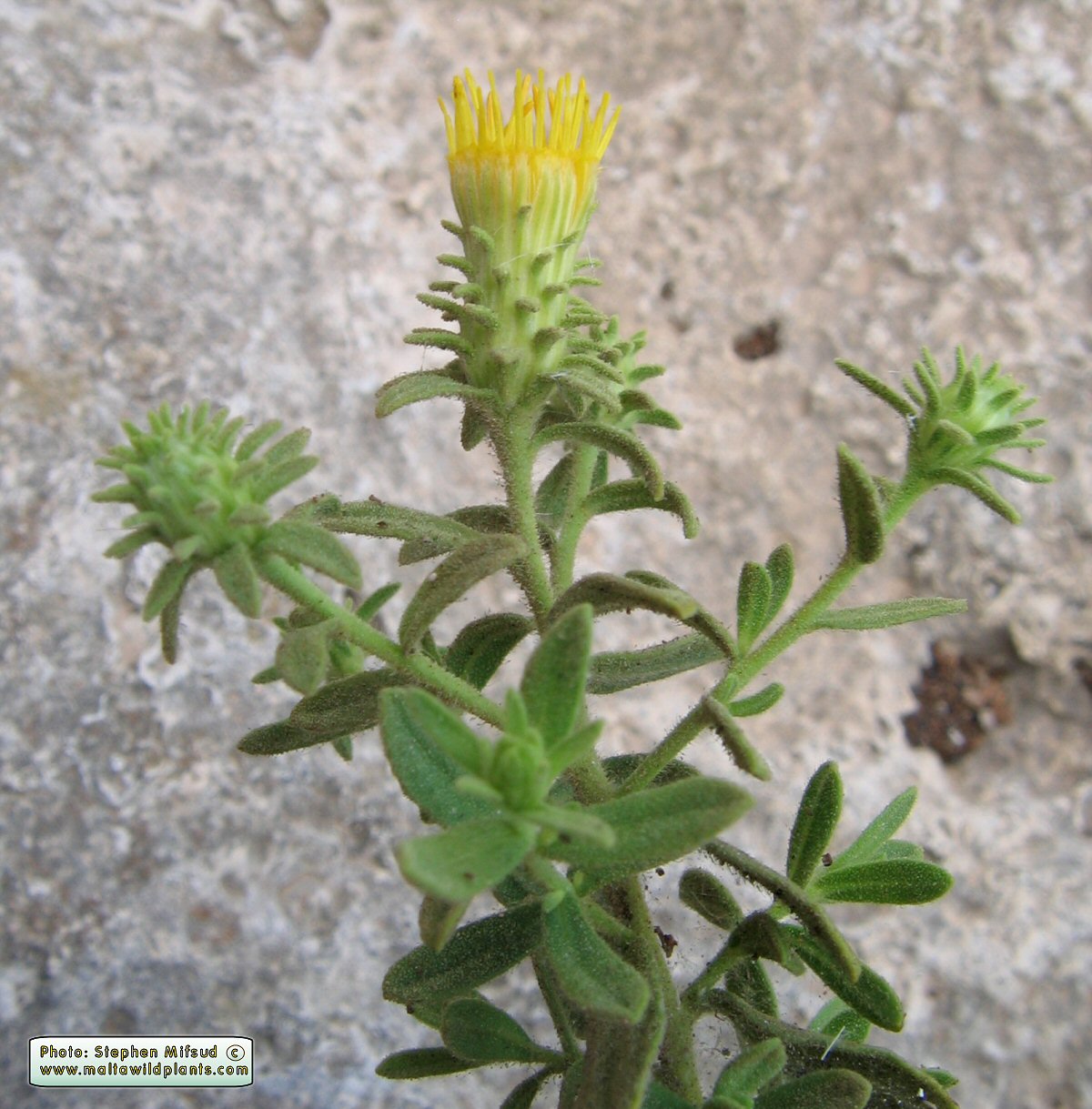
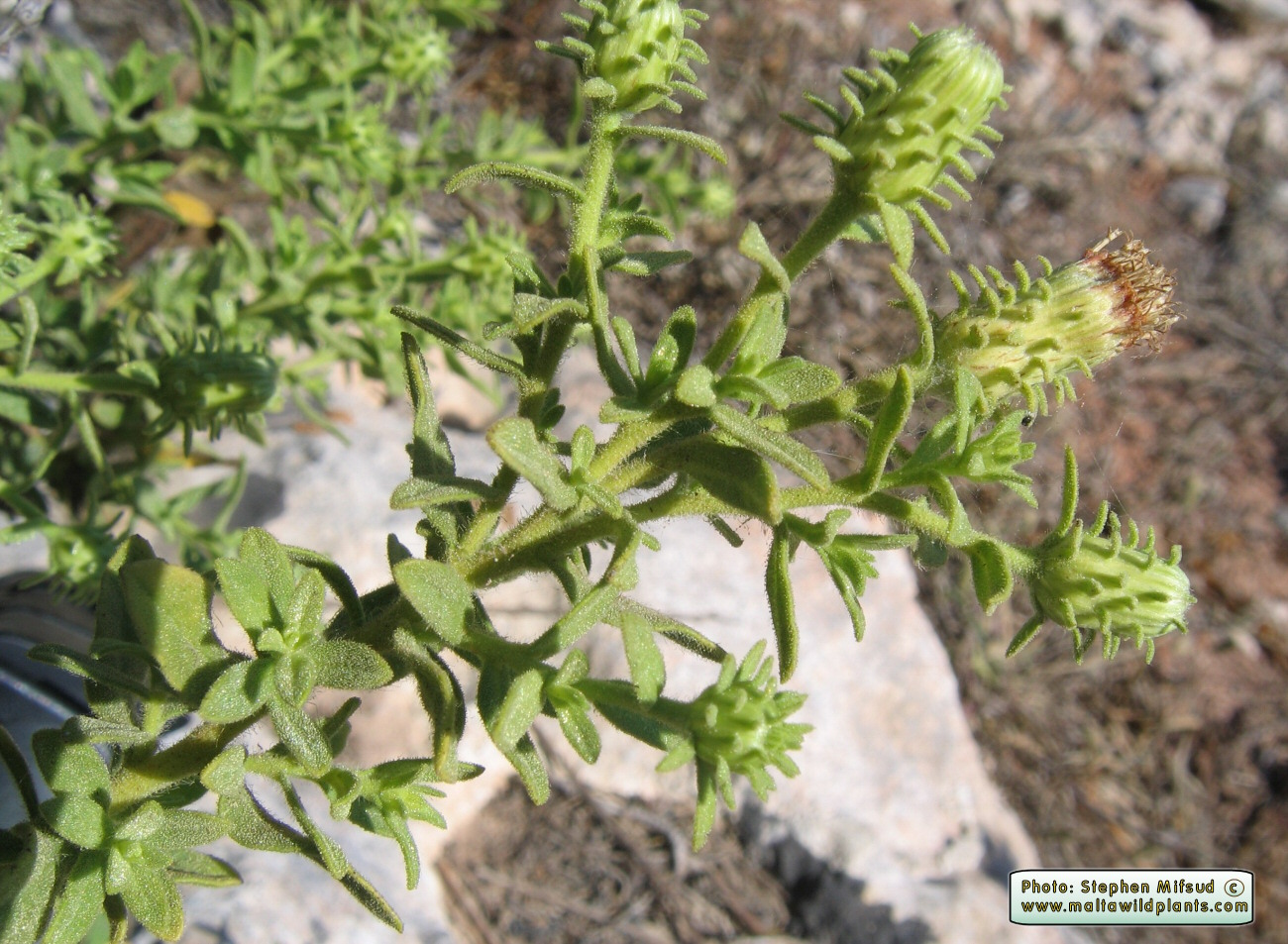
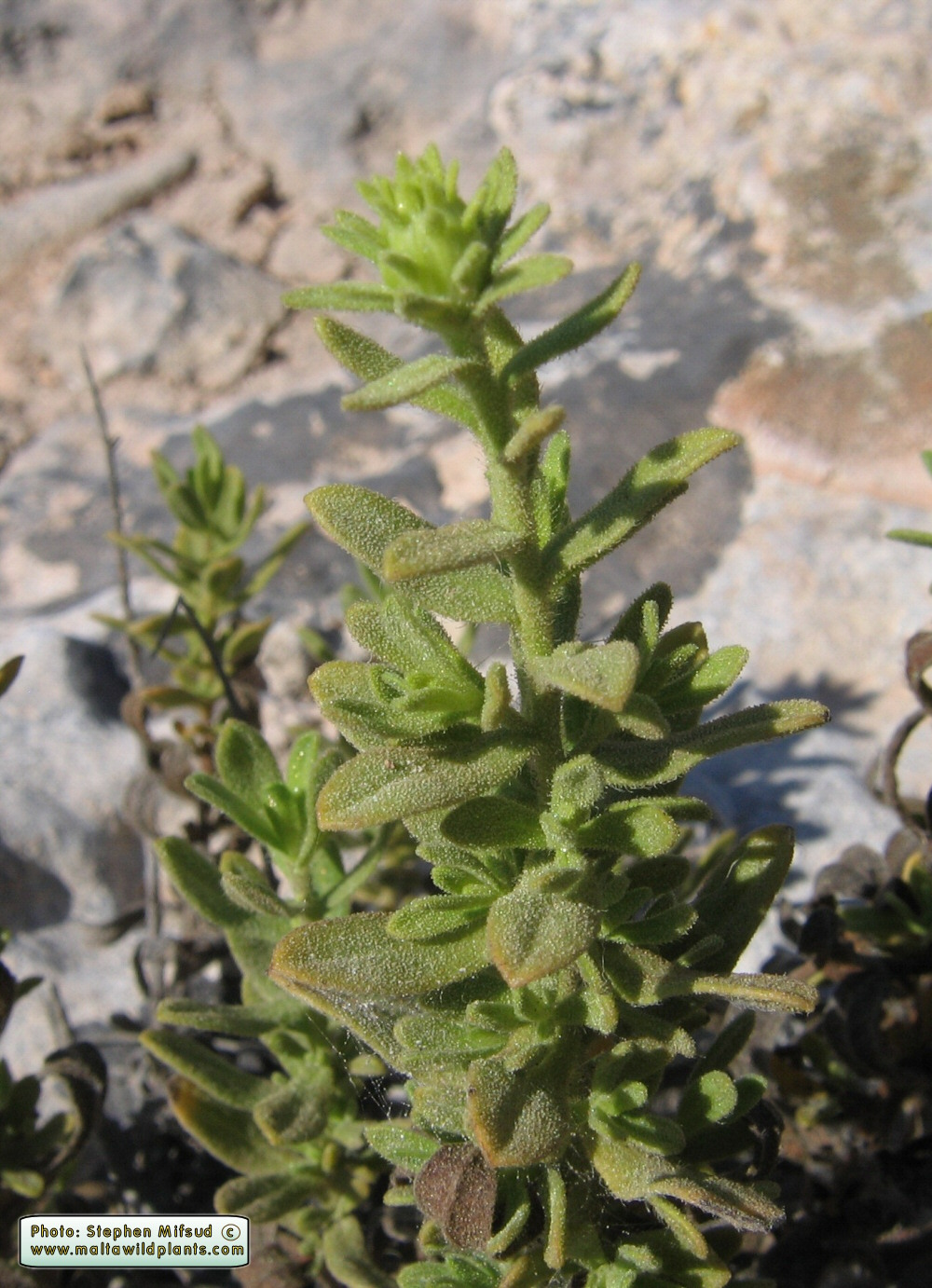
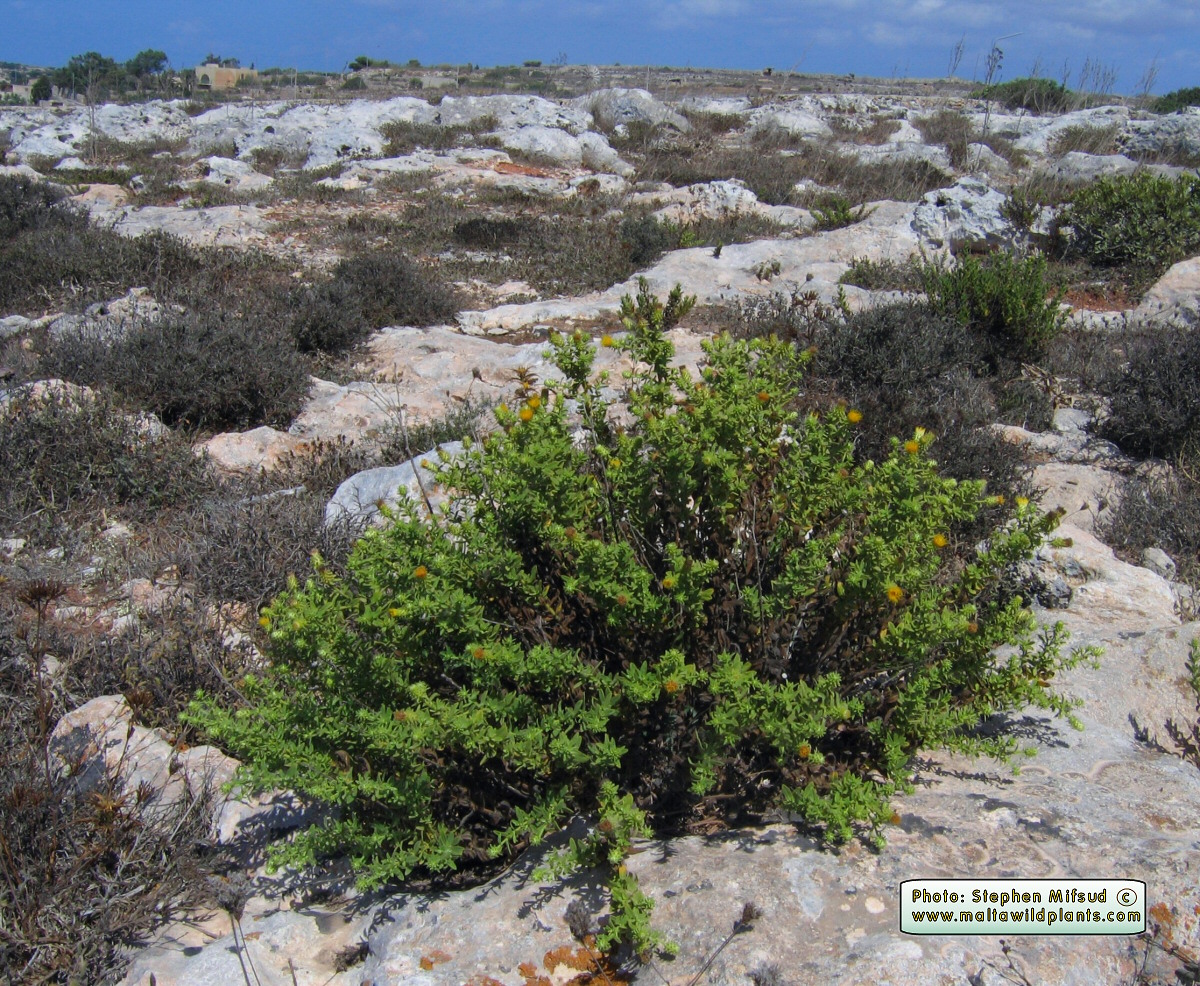
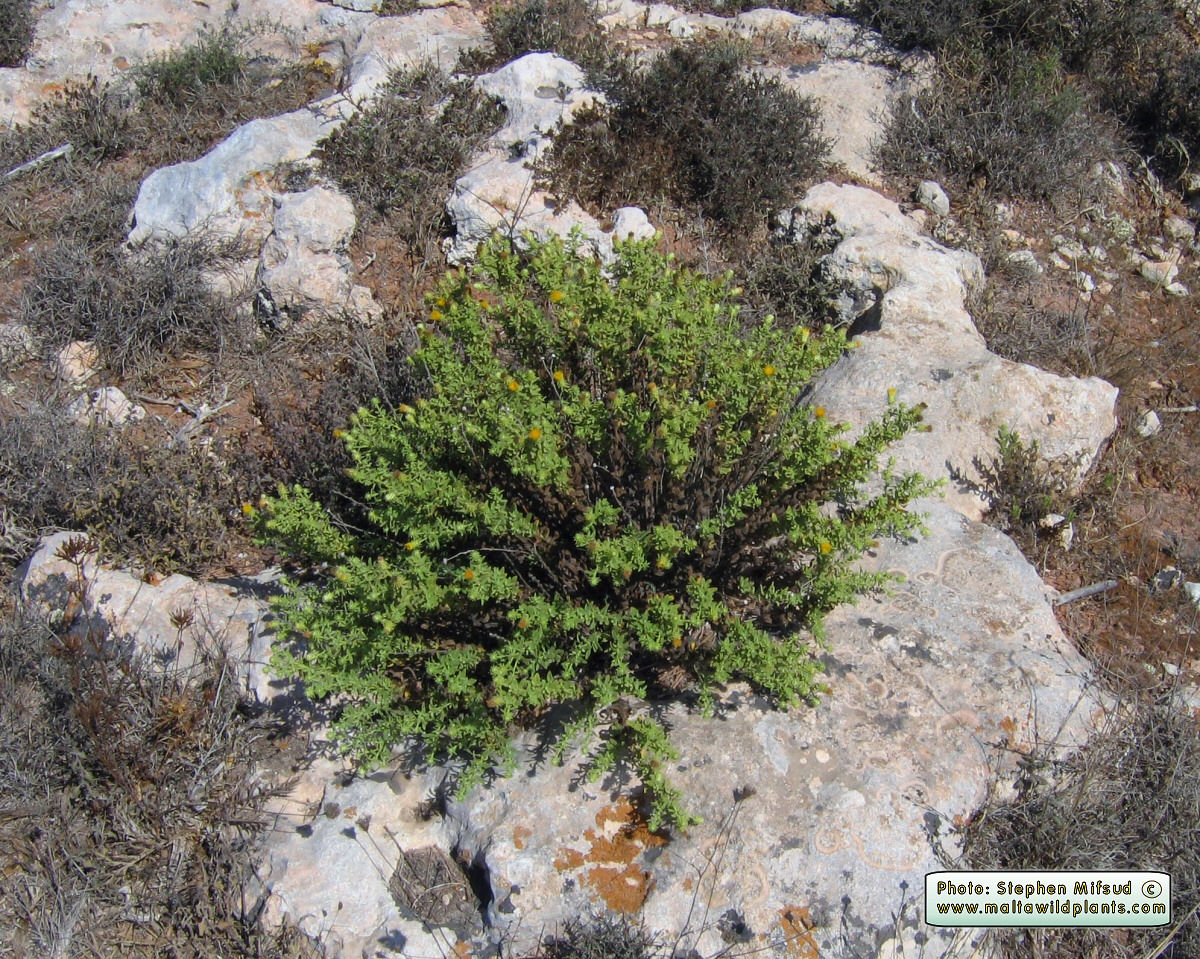
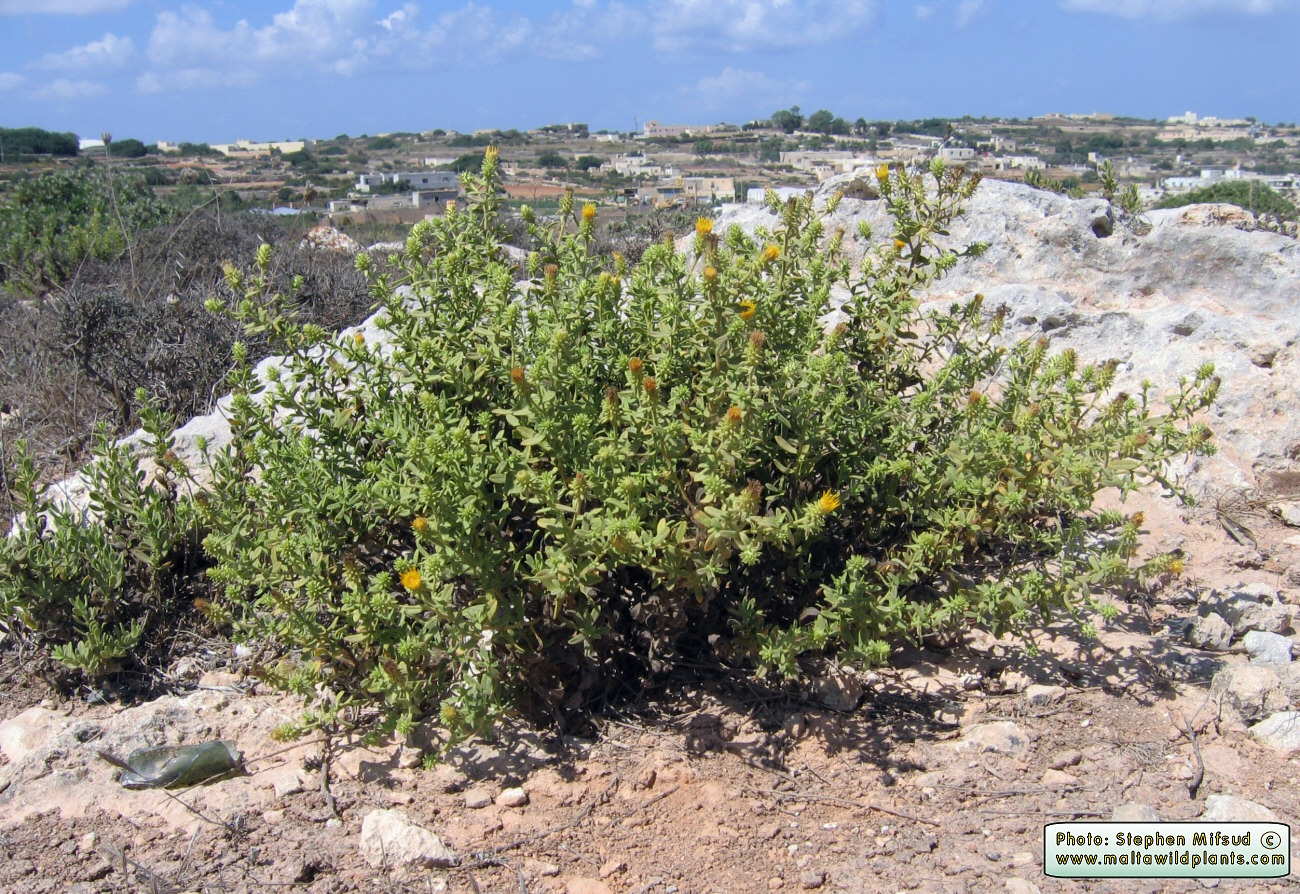
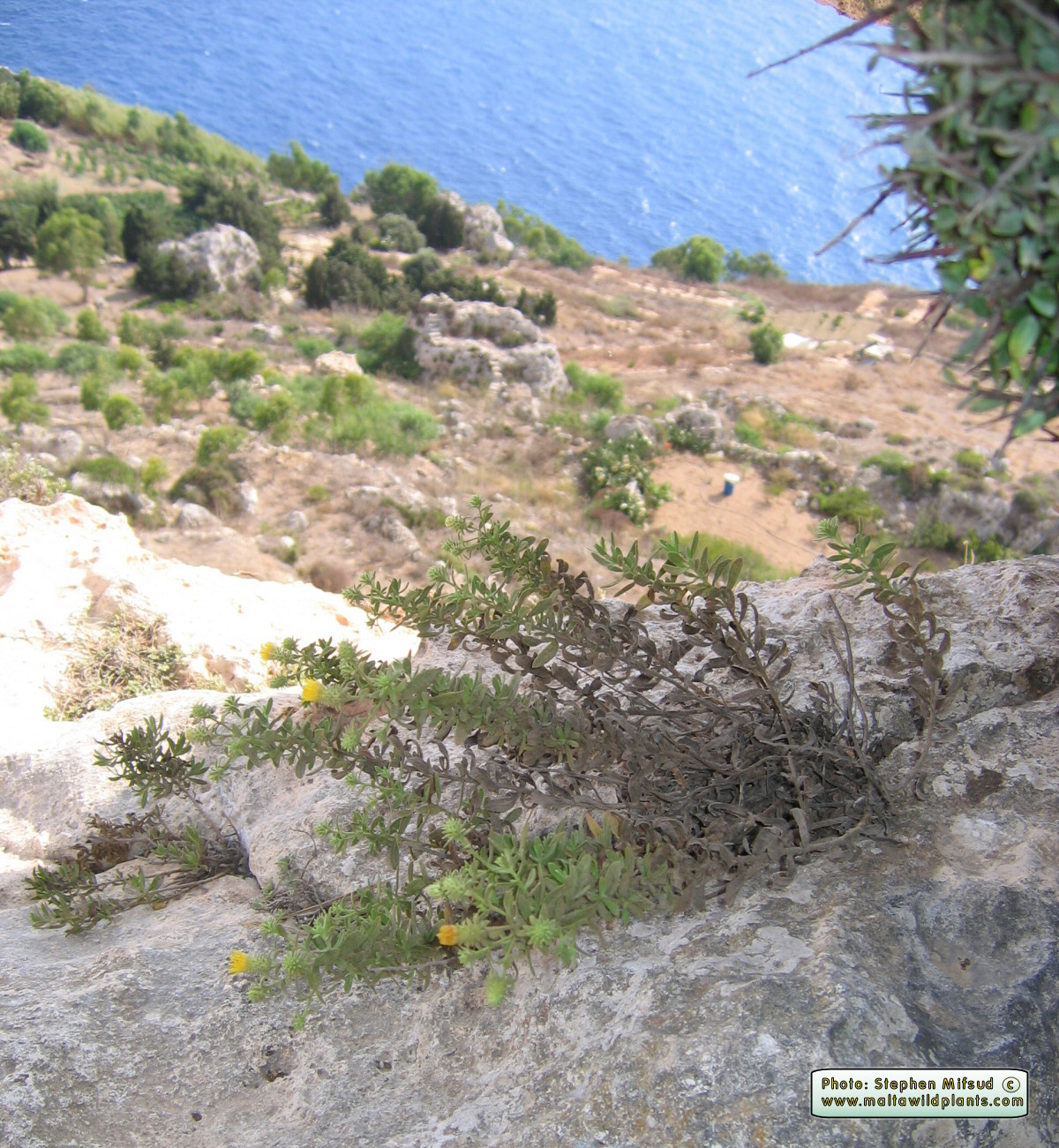
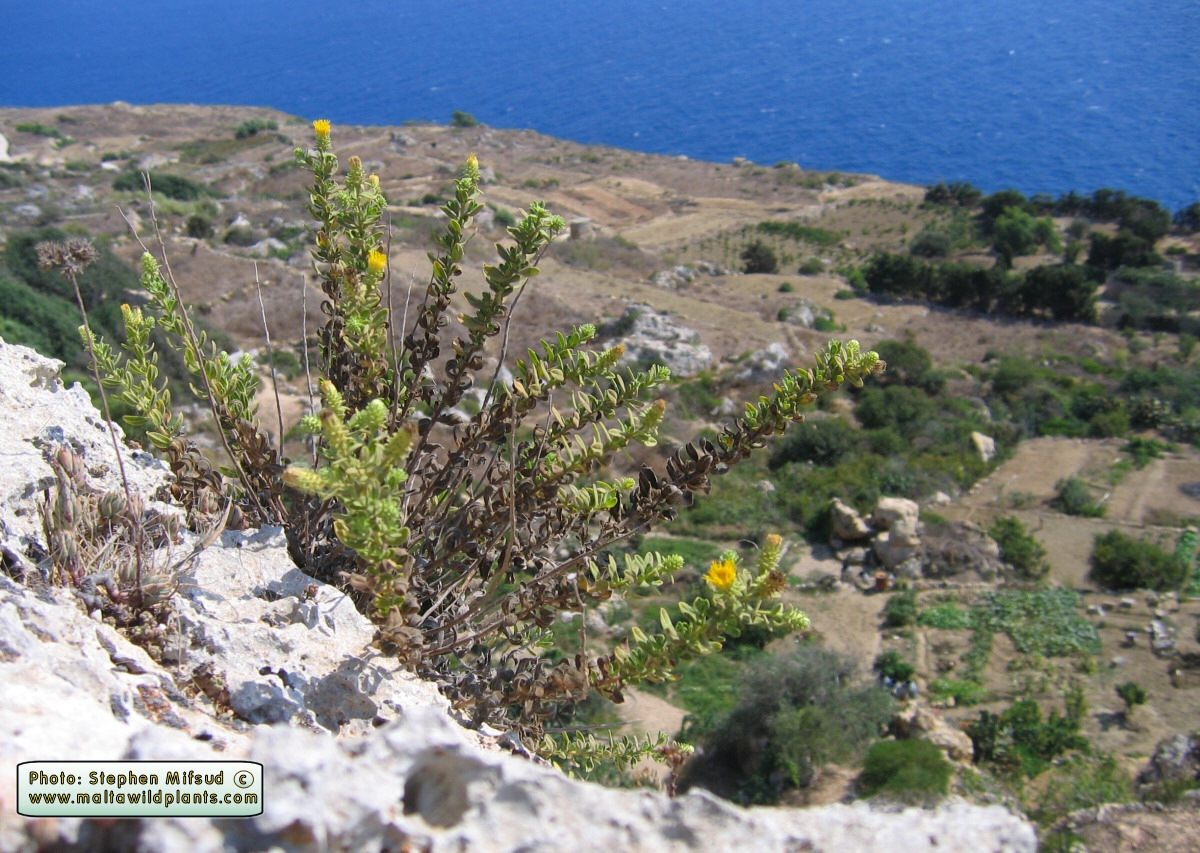
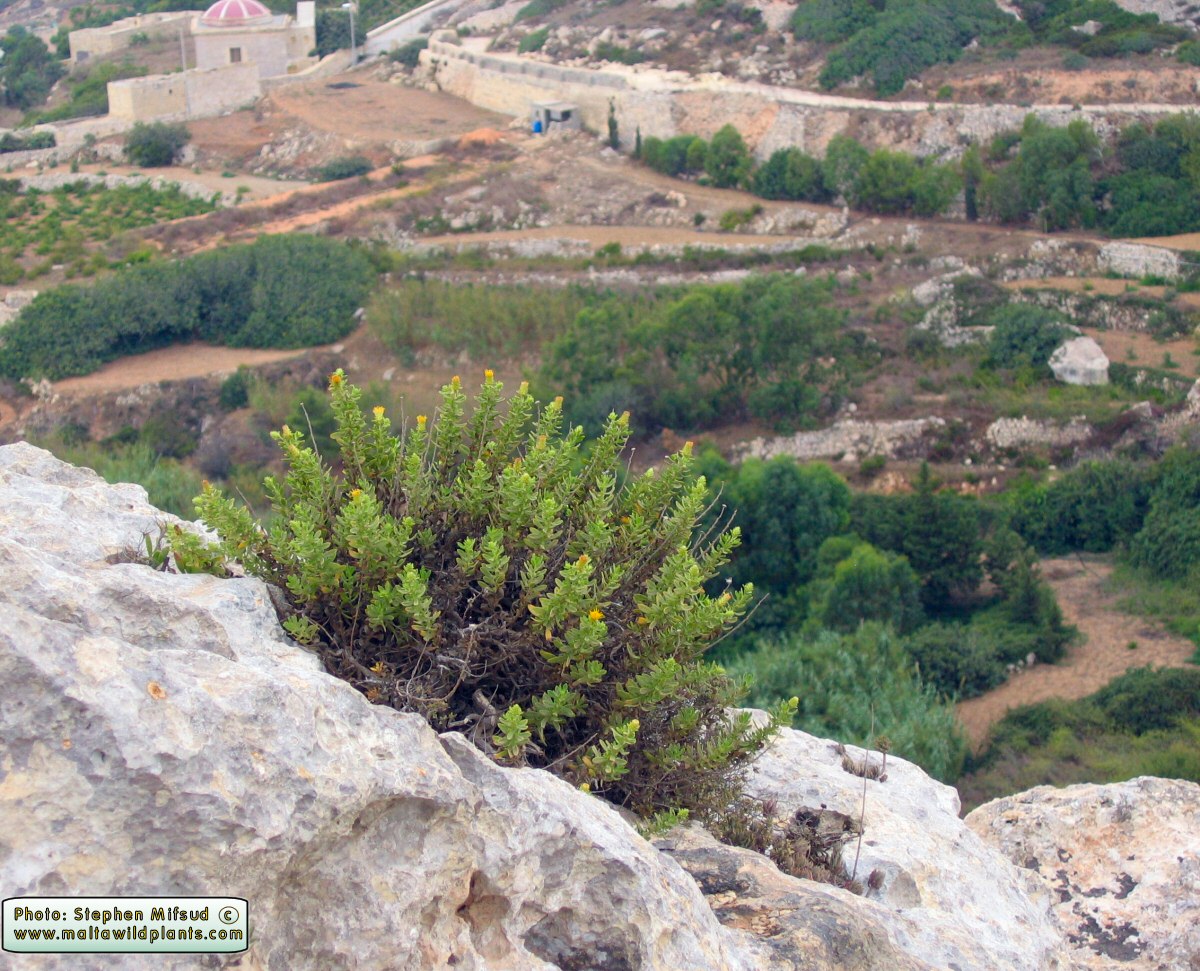
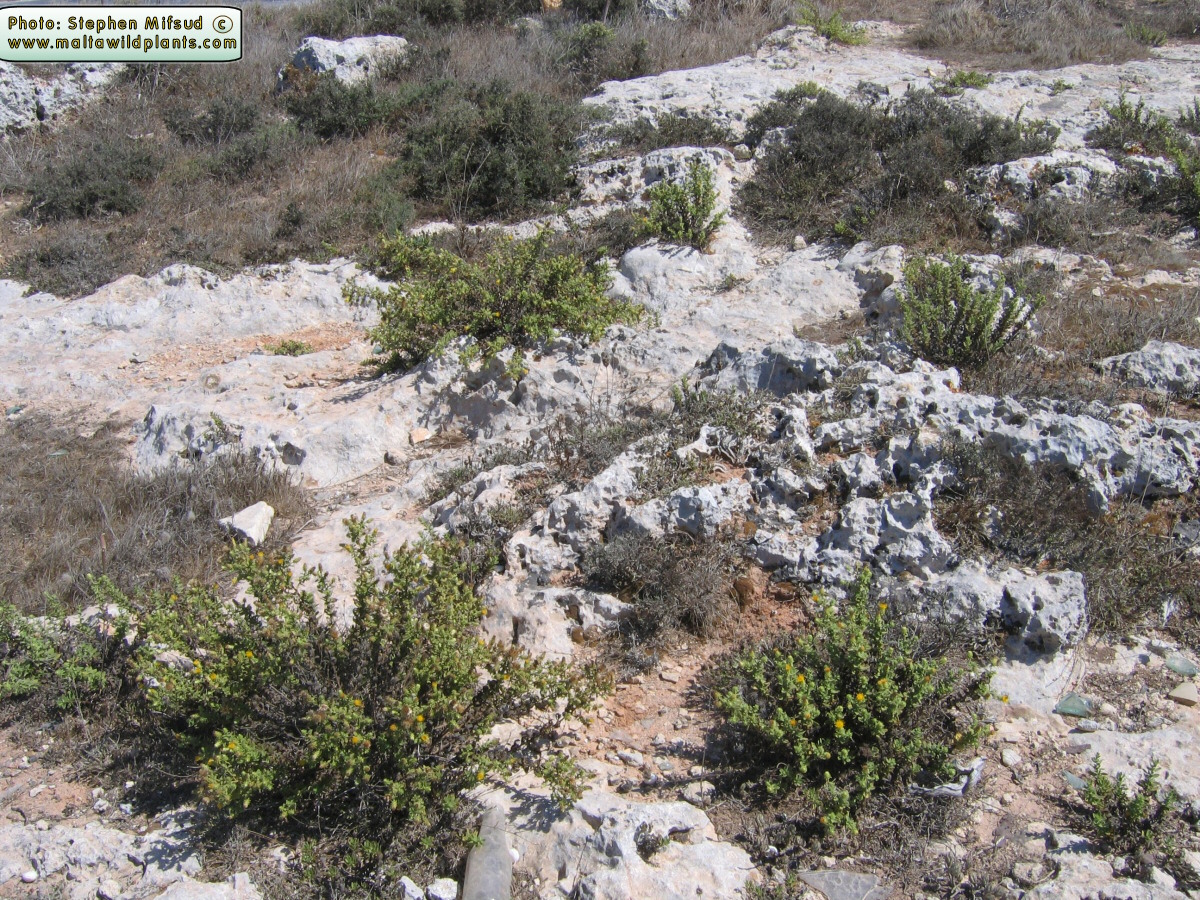
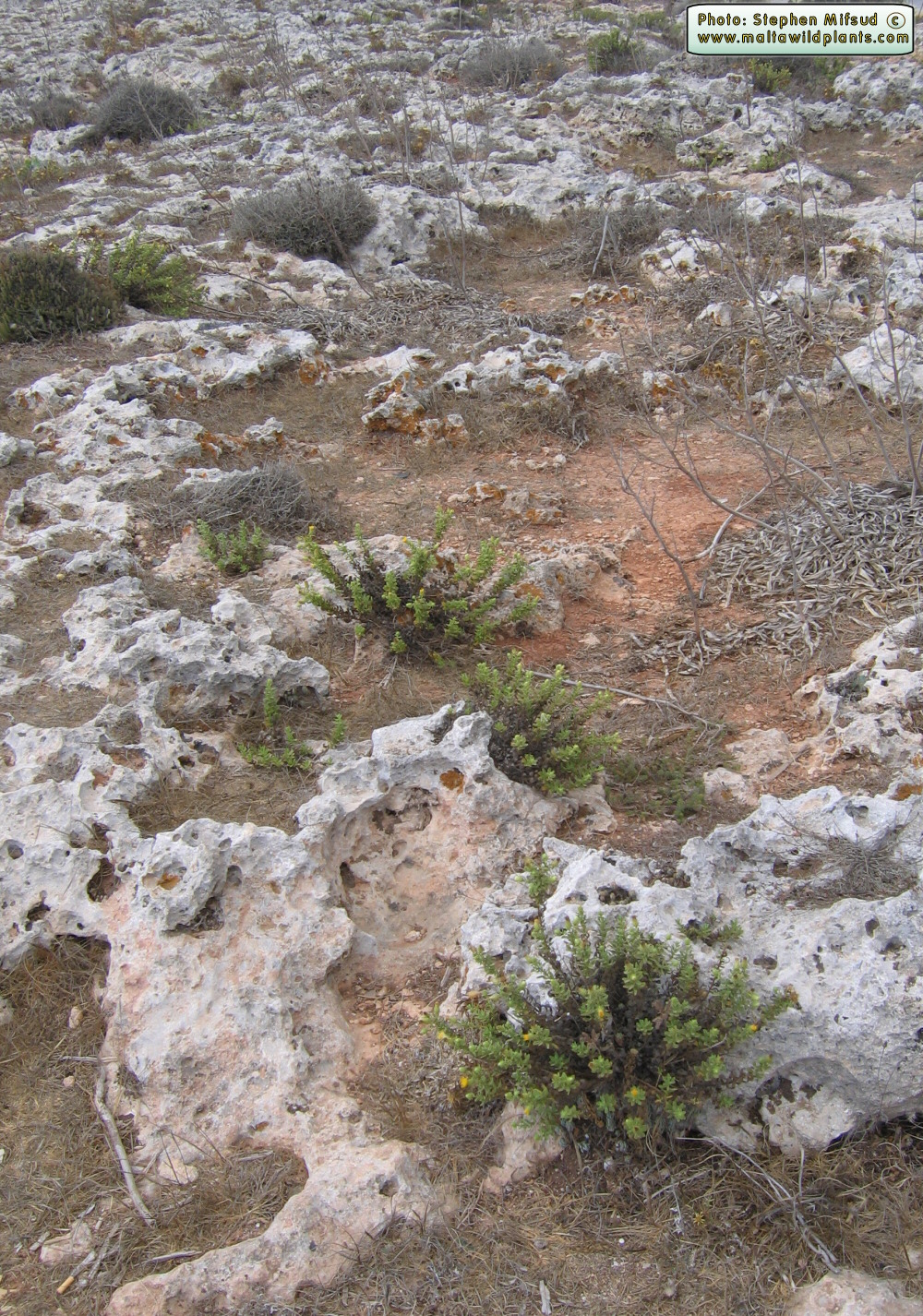
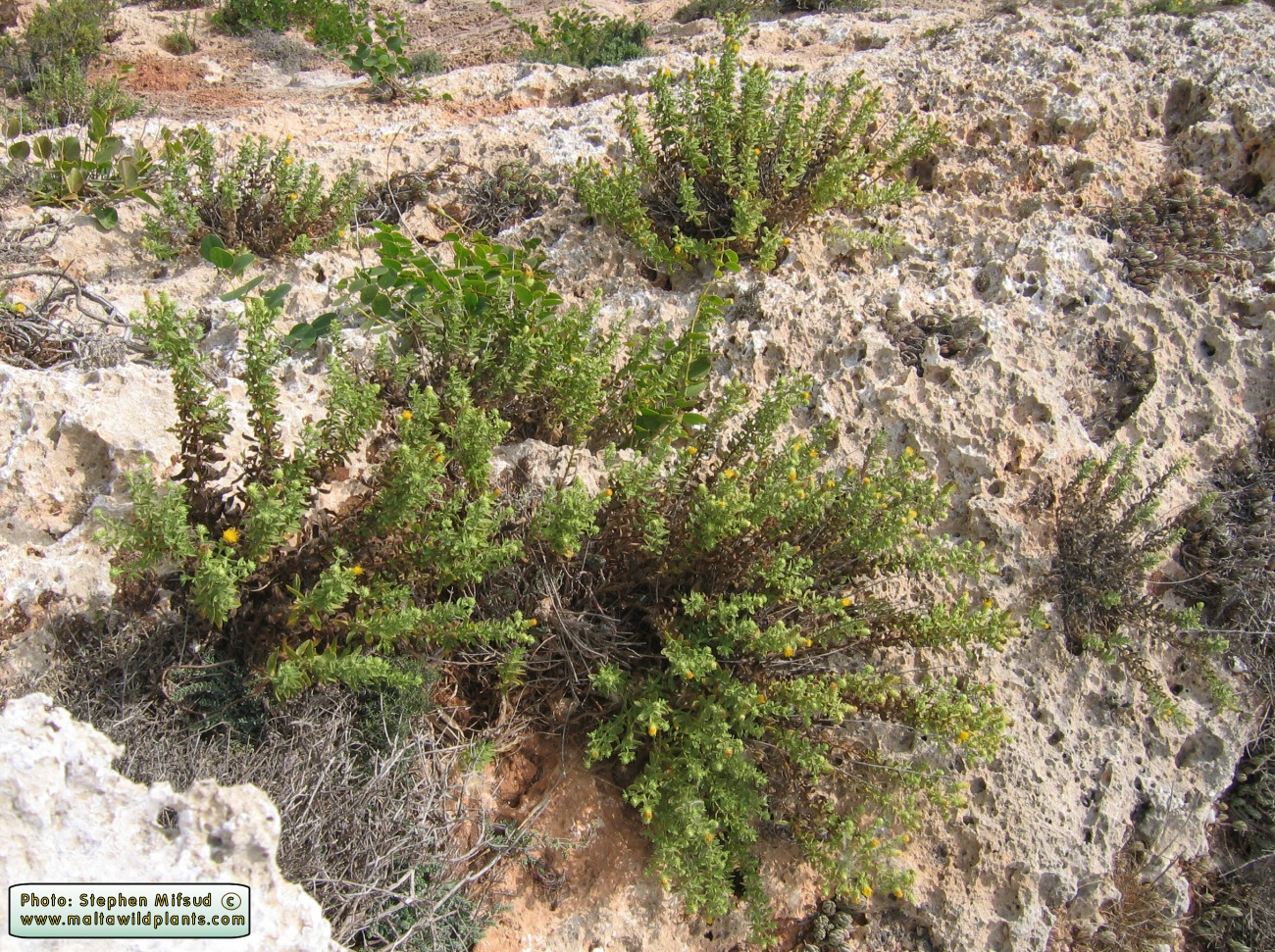
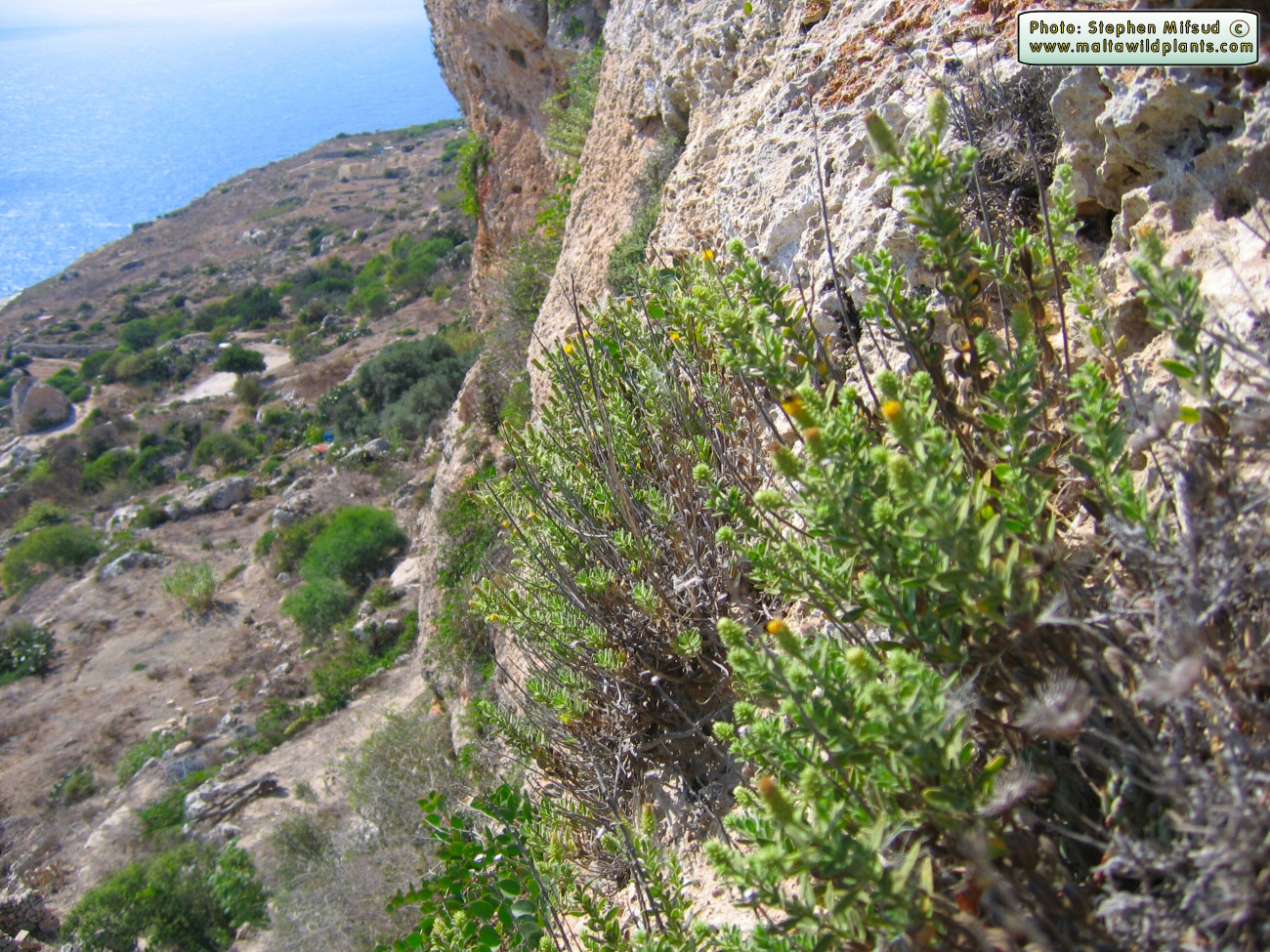
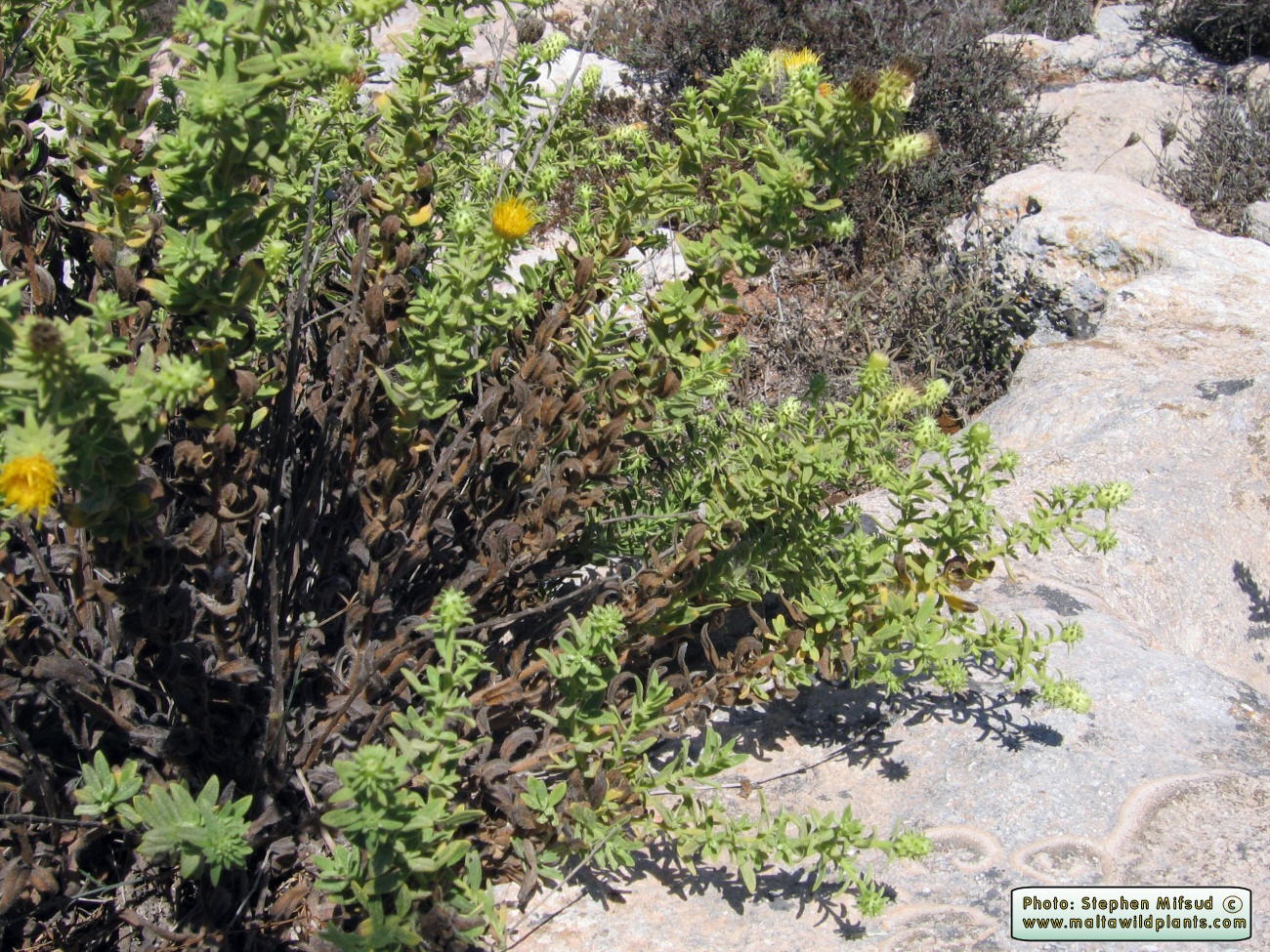
This herbaceous plant is seen in arid, rocky habitats, in the middle or late Summer as a small bush. The plant consist of numerous branches radiating away from a common multi-branching main stem at ground level. These individual branches do not branch again except at the upper part for the formation of flowering stems. The stem is woody or reddish brown, snaps easily, and covered with short fine hair.

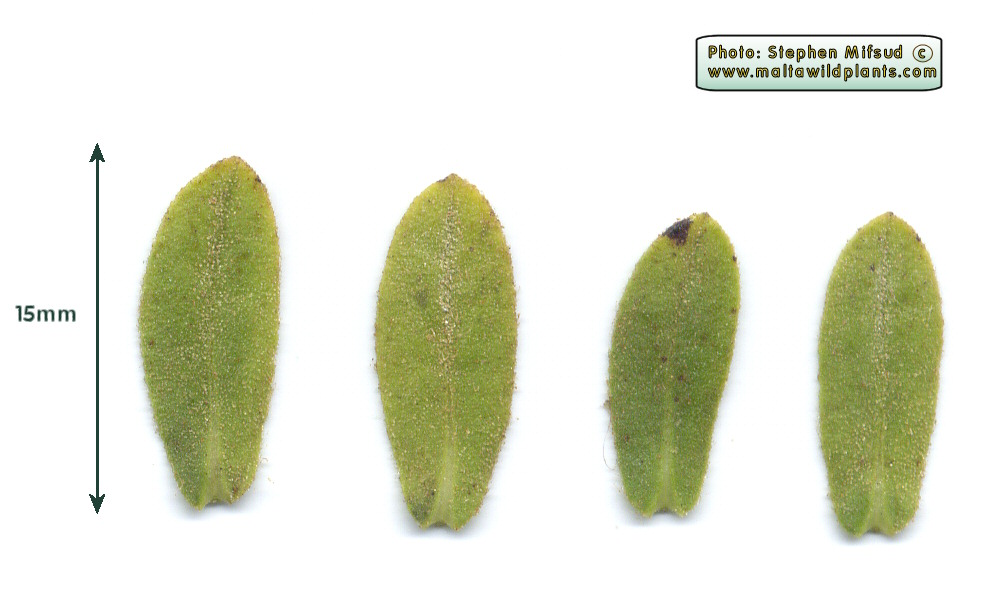
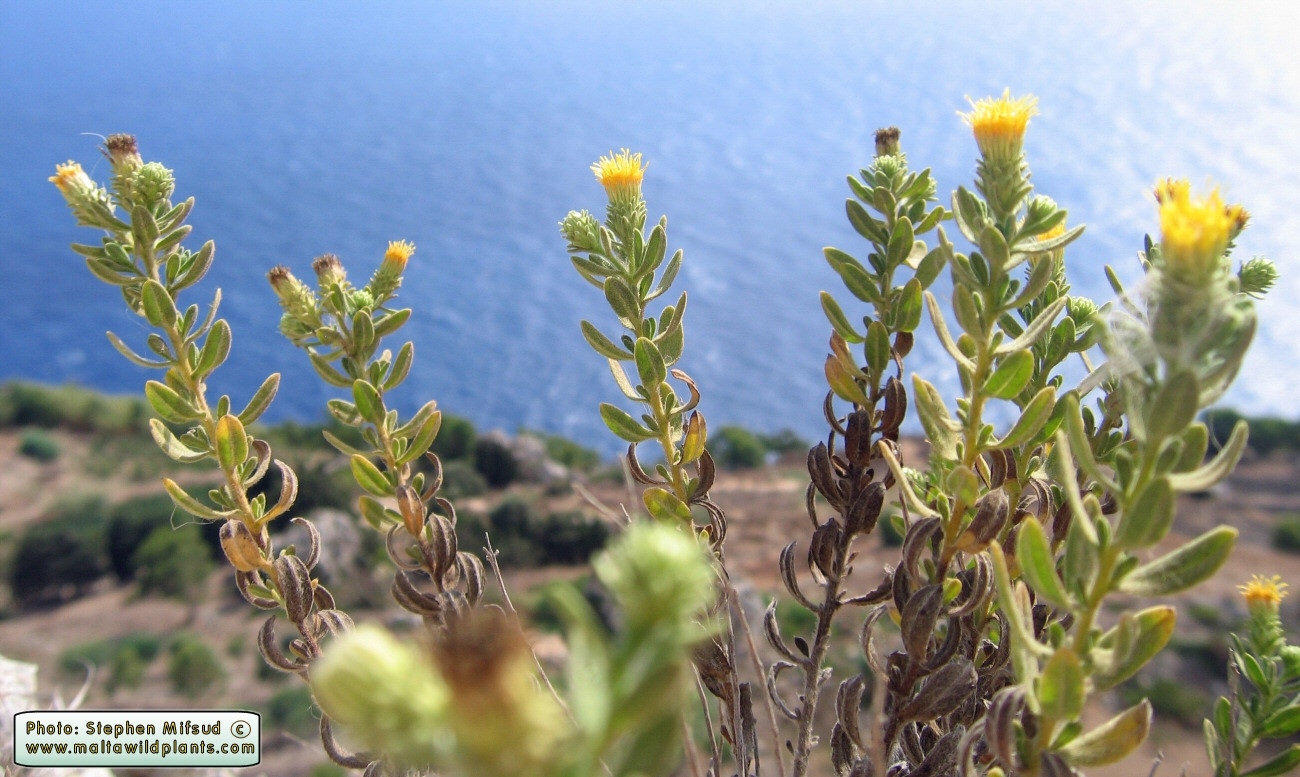
Leaves are found mostly along the sub-branches which gradually die and fall from the lower part towards the top. The alternate, sessile leaves are oblanceolate, covered with very short glandular hair and have an entire outline. There is one large leaf at the stem (15-25mm long) and from its axil a cluster of 6-10 alternately arranged leaves grows up. These leaves are much smaller (10mm or less) but similar shape to the main one.

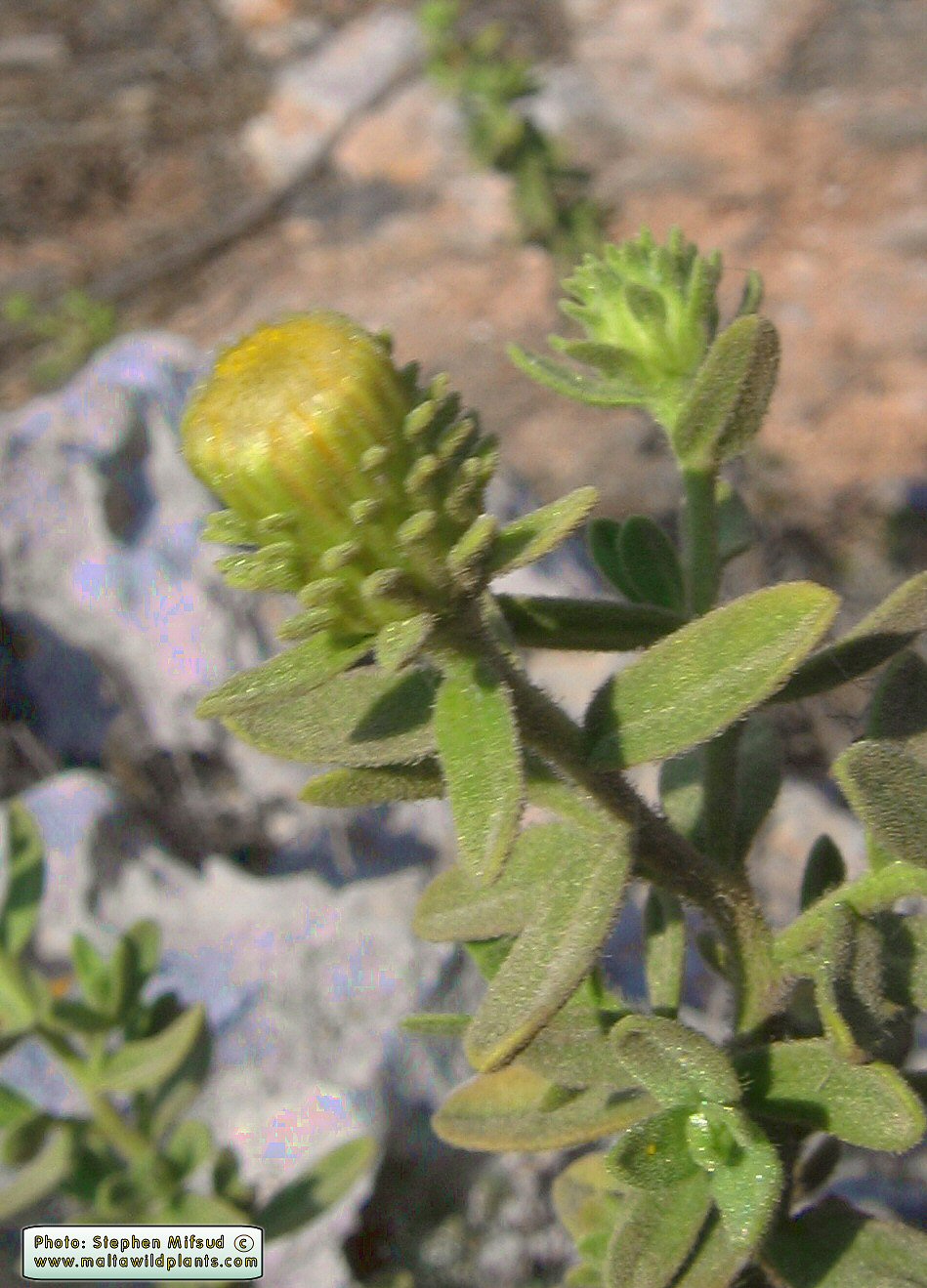
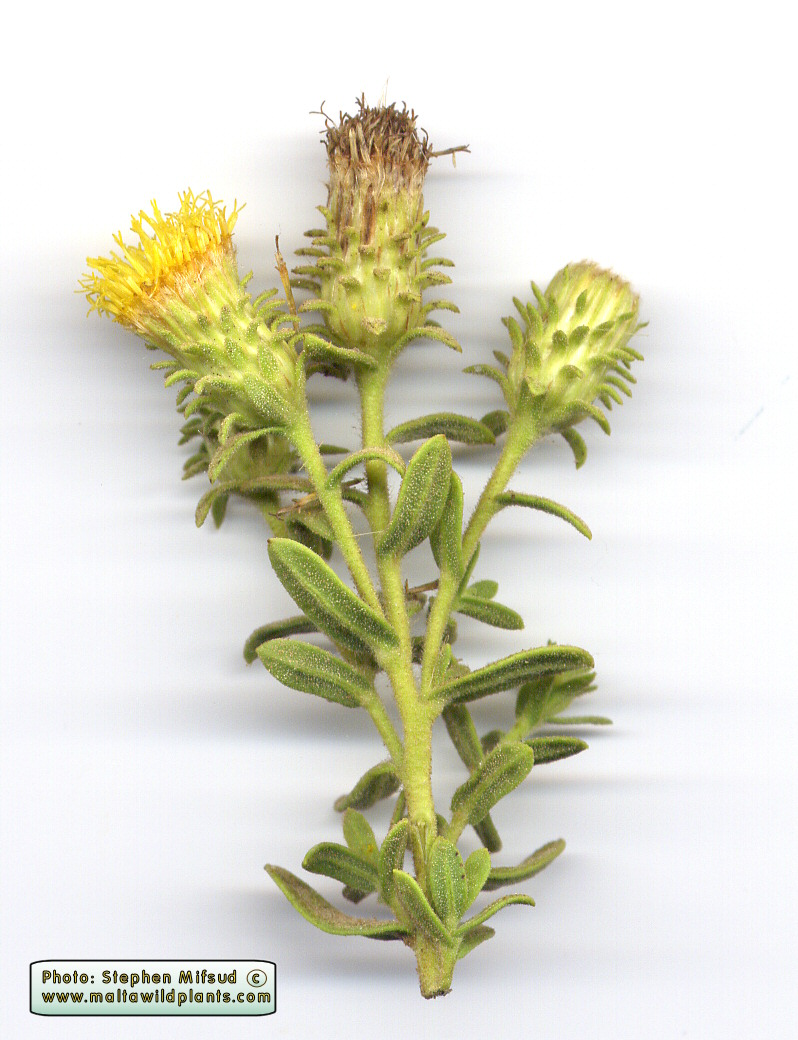
At the top of each branch there is the flowering part, which consists of few flowers (4-12) arranged as a corymb (or sometimes cymose panicles) where the apical bud flowers first, and subsequent lower buds develop next. The corymb inflorescence is not flat topped, but on the other hand they are not distant from each other either.

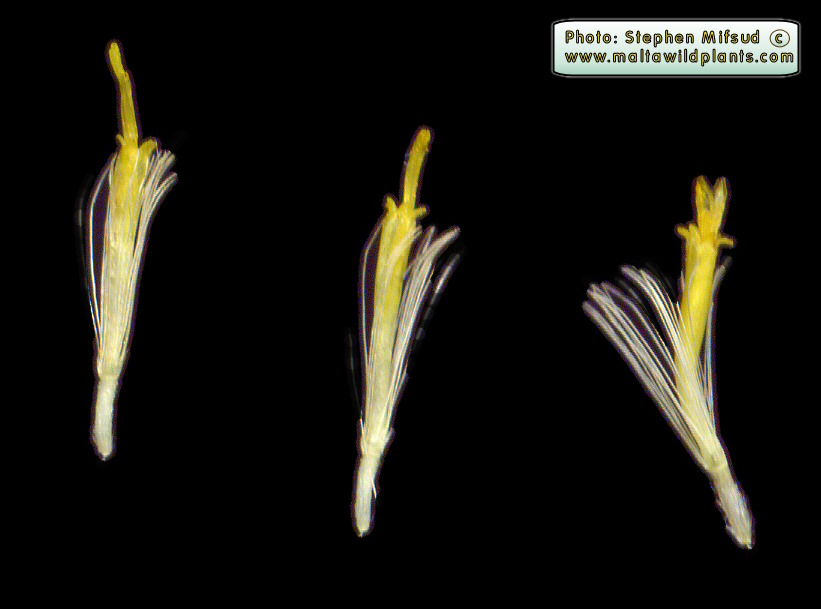
Each flower basically consists of a group of yellow, rayless disc florets enclosed in a green cylindrical involucre. Their is about 50-80 disc florets closely packed to each other, where the ones at the periphery open first, and flowering moves progressively to the centre. The floret produce a long style, which protrudes out by 5-6mm from the tiny, star-shaped petalled tube. There are 5 fused stamens around the long style which subdives into 2 curly stigma at its apex.

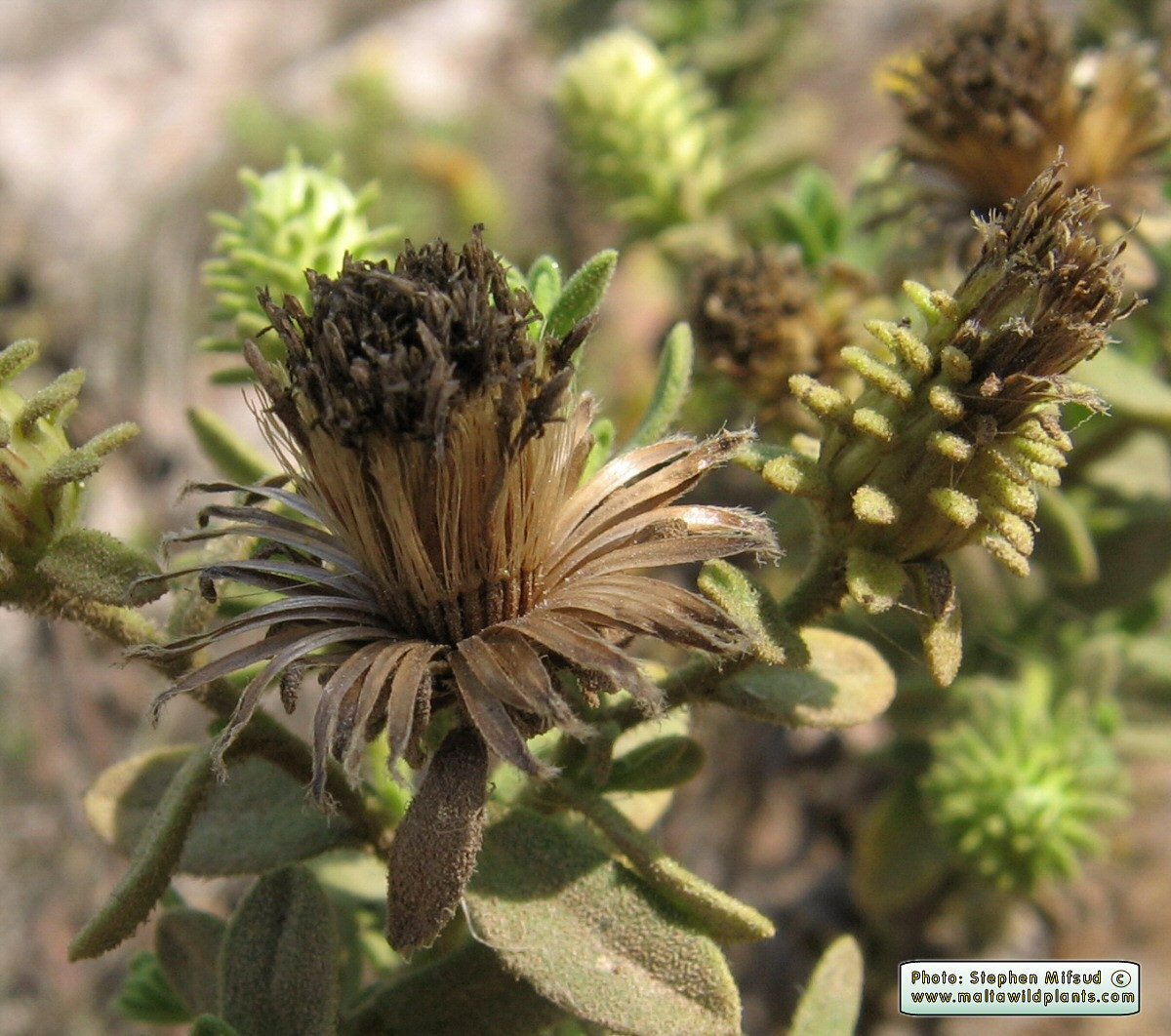
The involucre is made up from numerous long phyllaries (about 25-40) which their pointed tip is bent out. They are not spiny and completely green. During the flower phase, these phyllaries remain upright and tight together forming a barrel shaped involucre, but at the fruiting phase, they become loose and subtends slightly outwards.

The fruit actually consists of a collection of single achenes (each developed from a disc floret) which are grouped together on a common receptacle. The achene consists of a linear seed, 3mm long and greyish brown in colour, with a pappus on top. The pappus, which helps in seed dispersal by wind, is un-beaked, simple (unbranched) and have a beige to straw colour. The seed possess fine hairs mostly at its lower part.

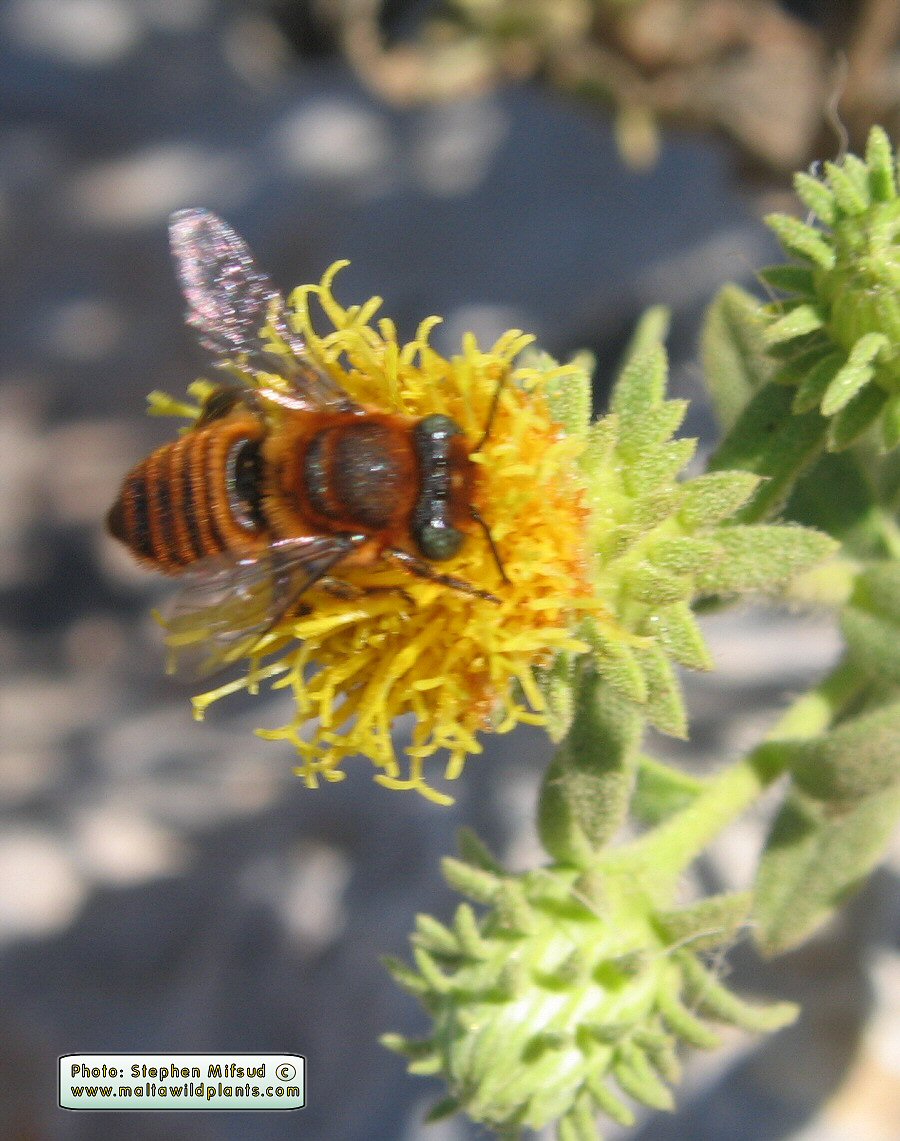
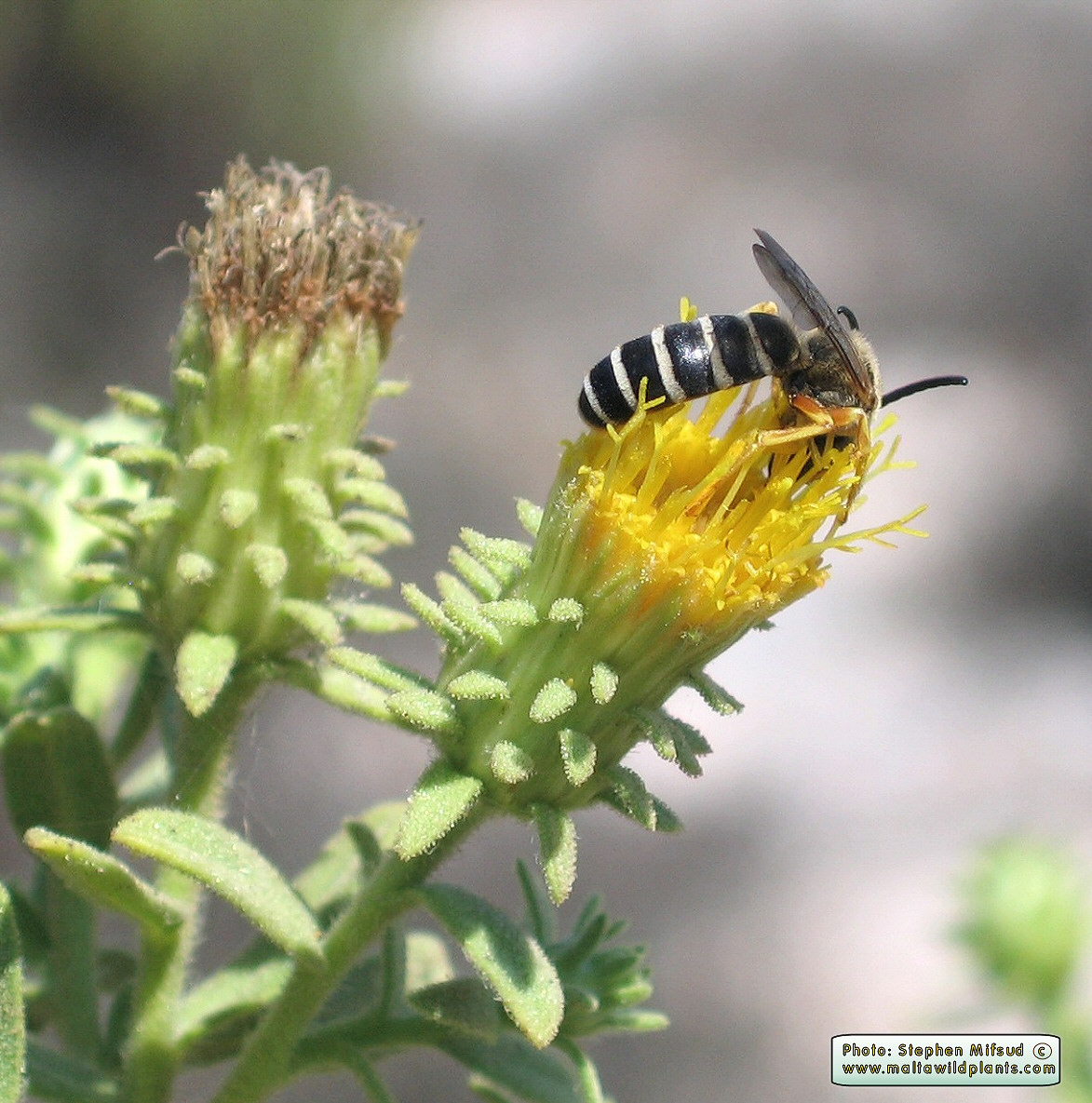
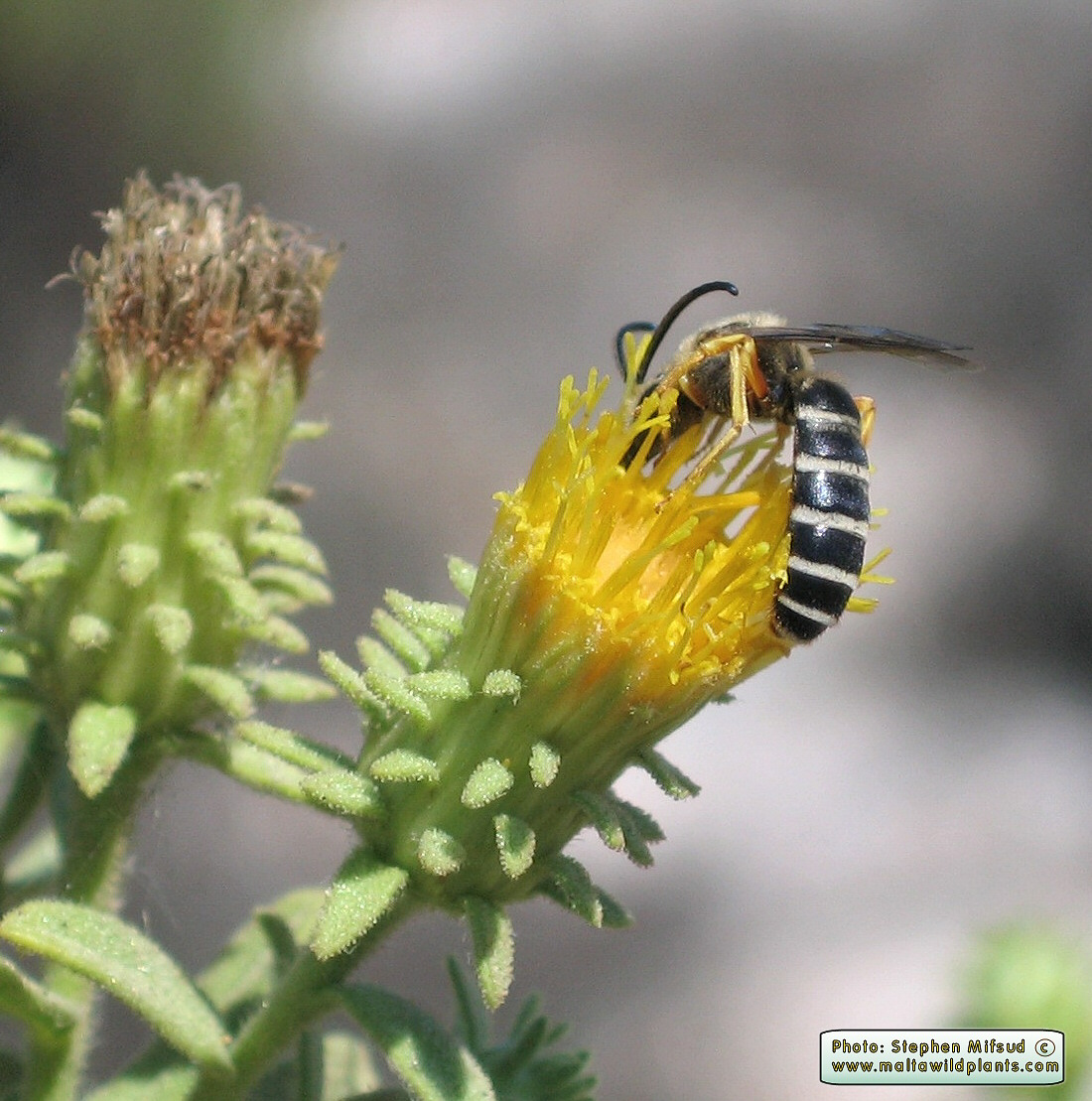
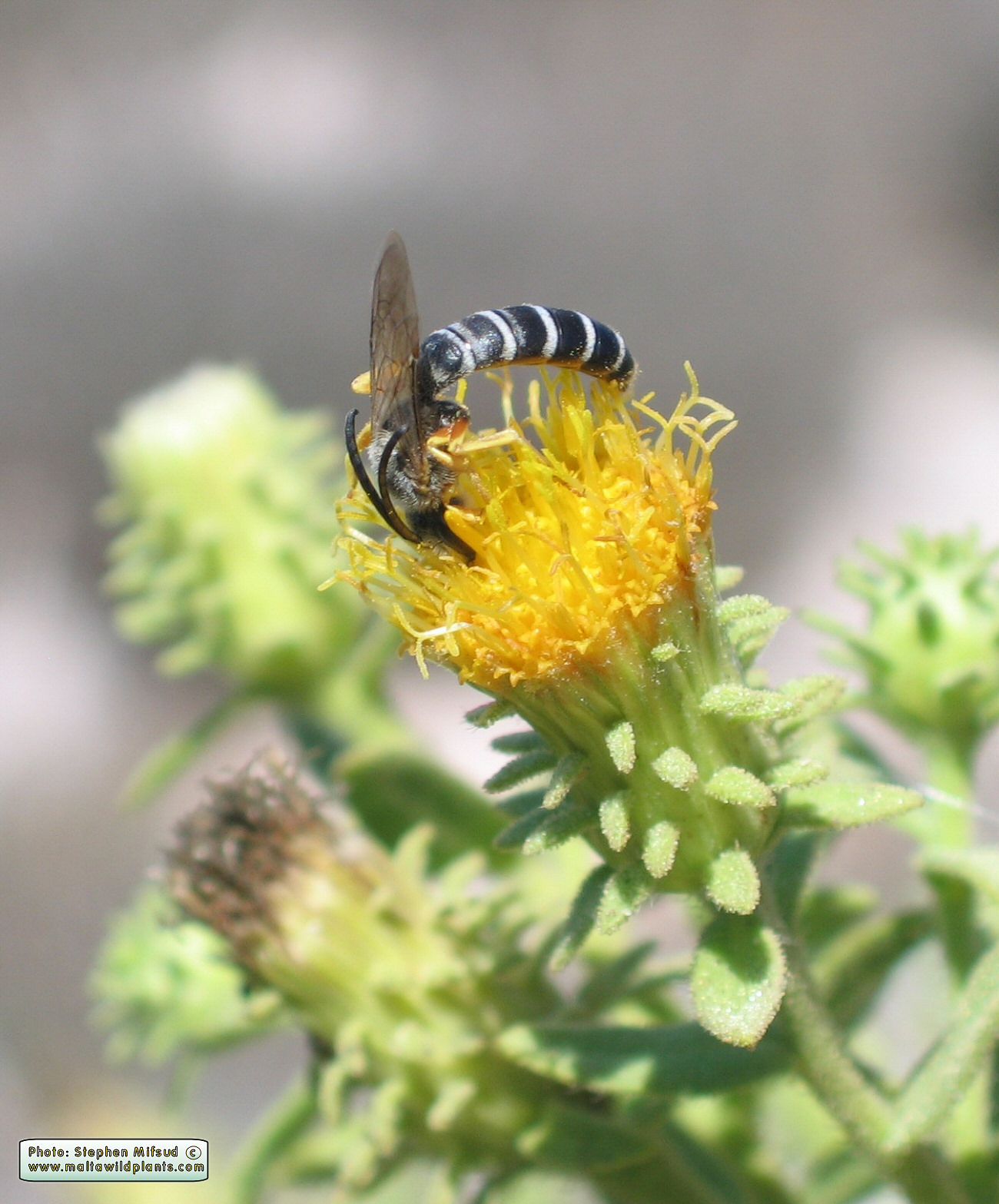
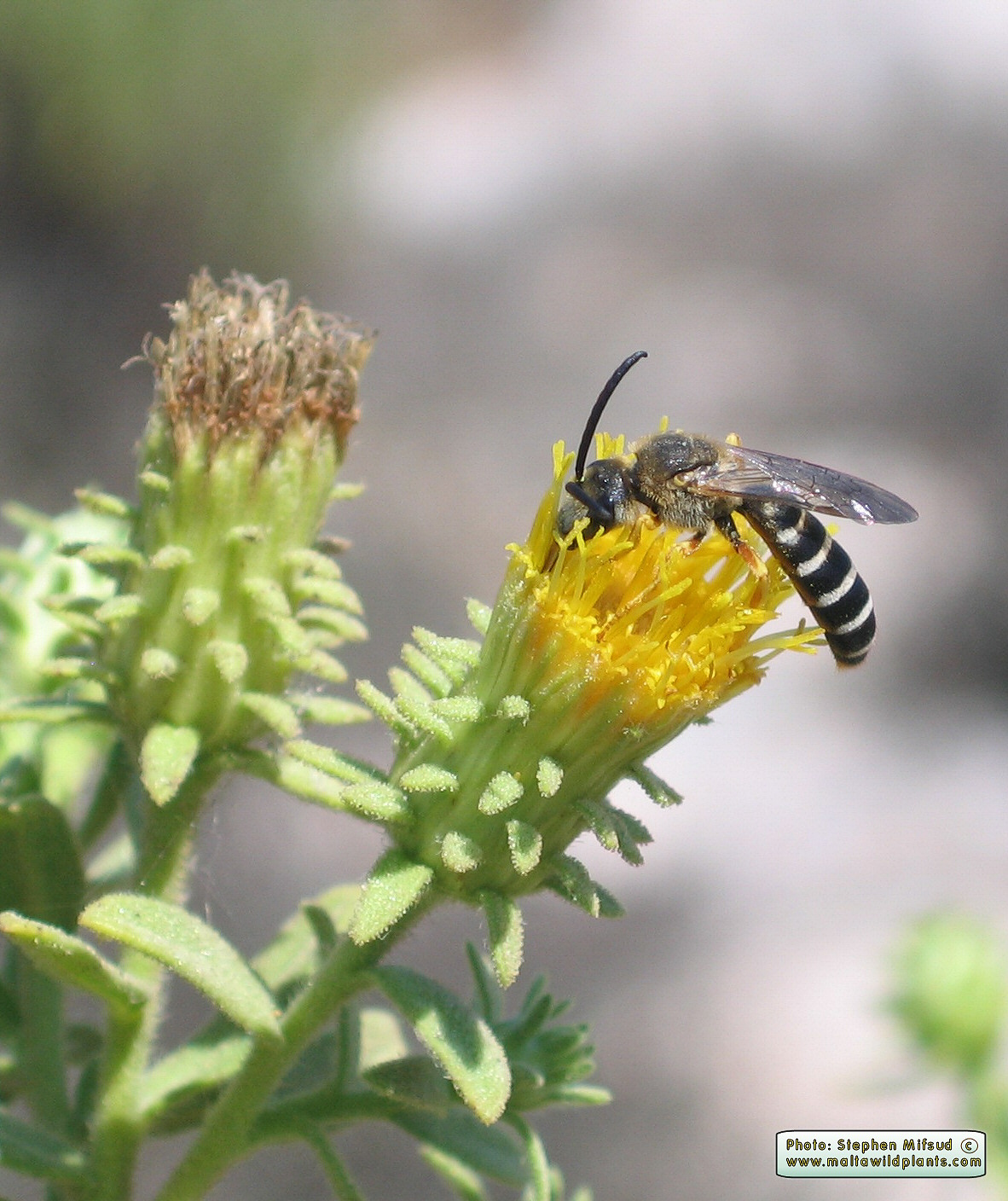
The plant is visited by many bees and wasps, and the leaves emit a strong, pleasant aromatic scent, similar to incense.


Information and Details


Nativity and Distribution

Chiliadenus bocconei is described as one of the 24 endemic plants in Malta.   [WWW-97] This endemic plant amongst other endemics are relics from the pre-glacial Mediterranean flora (these are called palaeoendemics) and have no close relatives anywhere else in the world.   [WWW-98] A similar species (Chiliadenus lopadusanos) is also found in Lampeduse, also described as an endemic for this Mediterranean island.   [WWW-99]

Use as a herbal tea

This plant (or as mentioned in the original context by its synonym name - Jasonia glutinosa) is used extensively in Spain precisely in the territories of the old Crown of Aragón to make a herbal tea known as the Aragon Tea or Rock Tea. It is described to have a pleasant alcanforado aroma, with a little bitter flavour. The parts used are the flowering parts of the branches.   [WWW-95]

The preparation is done as follows: Make an infusion of the plant using 20 to 40 grs in 1 liter of water. Up to 5 cups per day can be taken after the meals.   [WWW-95]

Properties and indications:

Its composition is not well well-known, although it is known that it contains neither theine nor caffein. It has an essence that grant digestive properties, as well as abundant tannins that justify their use like anti-diarretic.   [WWW-95]

Medicinal Properties

Digestive problems: Popularly it is used in cases of shyness, slow and heavy, diarreas indigestion, digestions and intestinal fermentations or rottings.   [WWW-95] It is also described as Stomachic   [WWW-66]

Nervous problems: It also shows an tonifying action, free of irritant effects on the nervous system, as it happens with the coffee or common tea.   [WWW-95]

Pharmacology - in vitro anti-inflammatory activity

Sesquiterpenes from Jasonia glutinosa: in vitro anti-inflammatory activity

Four sesquiterpenes isolated from Jasonia glutinosa (Asteraceae), namely lucinone, glutinone, 5-epi-kutdtriol and kutdtriol, have been evaluated for their in vitro anti-inflammatory activity in cellular systems generating cyclooxygenase (COX) and 5-lipoxygenase (5-LOX) metabolites. None of the compounds assayed had a significant effect on leukotriene C4 (LTC4)-release from calcium ionophore-stimulated mouse peritoneal cells. However, the release of prostaglandin E2 (PGE2) by mouse peritoneal cells stimulated with calcium ionophore was inhibited by these compounds, although with less potency than the reference drug indomethacin (IC50=0.24 microM). The IC50 values of the active compounds were: lucinone 42.69 microM, glutinone 3.61 microM, 5-epi-kutdtriol 1.28 microM and kutdtriol 39 microM. Of the tested compounds, only glutinone (IC50=24 microM) showed a significant effect on thromboxane B2 (TXB2)-release induced by calcium ionophore in human platelets, although with less potency than the reference drug ibuprofen (IC50=1.27 microM).   [333]

Pharmacology - Terpenes with leishmanicidal acitivity

Two species belonging to the Asteraceae family that contain terpenes with leishmanicidal activity are Vernonia brachycalyx and Jasonia glutinosa. The major antiprotozoal metabolite of V. brachycalyx has been identified as the sesquiterpene dilactone 16,17-dihydrobrachycalyoxide, which shows activity (IC50 17 µg ml1) against the promastigote forms of L. major. However, at this same concentration, inhibits the proliferation of human lymphocytes, suggesting that its antiprotozoal activity is due to its general toxicity and that its administration could suppress the immune mechanism in humans.62 On the other hand, kudtriol, a sesquiterpene alcohol obtained from the aerial parts of J. glutinosa, has shown toxic activity against promastigotes of L. donovani at a concentration of 250 µg ml1, and it is proposed that the presence of a C-5 hydroxy group in the a orientation is essential for the expression of its leishmanicidal activity.   [334] (Read the full document found in the links section of this page)

Personal Observations


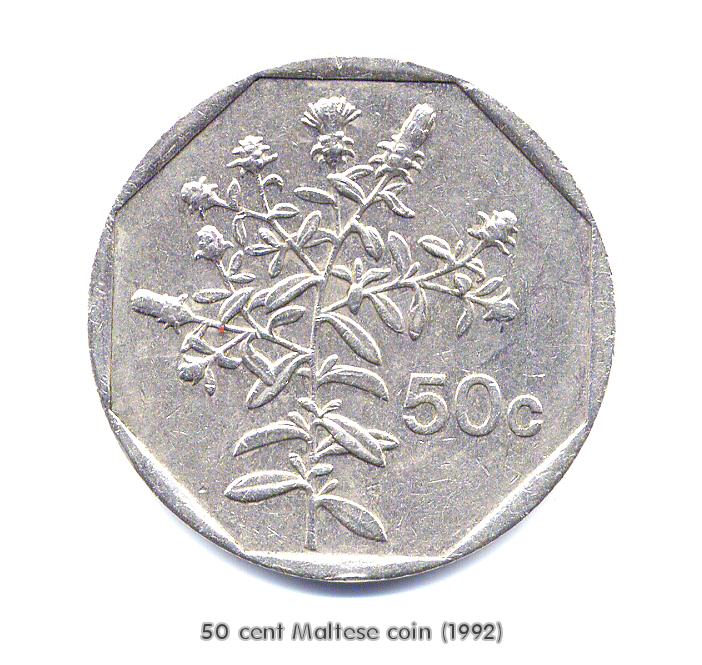
Maltese coin
The 50 cents Maltese coin depicts this plant on one of its sides.   [SM]

50 cents Maltese coin
Common insect visitors of this plant
During my photography session on this plant, I frequently noticed a black and white striped wasp feeding on the nectar of the flower. One could easily see about 2 or 3 wasps hovering or feeding on a medium sized plant. Once they are on a flower, they spend at least one minute upon until they hover to the next.   [SM]

Photo Gallery (46 images)

      -   Image Code: JSNBC-0.
 /  /
      -   Image Code: JSNBC-1.
 /  /
      -   Image Code: JSNBC-2.
 /  /
      -   Image Code: JSNBC-3.
 /  /
      -   Image Code: JSNBC-4.
 /  /
      -   Image Code: JSNBC-5.
 /  /
      -   Image Code: JSNBC-6.
 /  /
      -   Image Code: JSNBC-7.
 /  /
      -   Image Code: JSNBC-8.
 /  /
      -   Image Code: JSNBC-9.
 /  /
      -   Image Code: JSNBC-10.
 /  /
      -   Image Code: JSNBC-11.
 /  /
      -   Image Code: JSNBC-12.
 /  /
      -   Image Code: JSNBC-13.
 /  /
      -   Image Code: JSNBC-14.
 /  /
      -   Image Code: JSNBC-15.
 /  /
      -   Image Code: JSNBC-16.
 /  /
      -   Image Code: JSNBC-17.
 /  /
      -   Image Code: JSNBC-18.
 /  /
      -   Image Code: JSNBC-19.
 /  /
      -   Image Code: JSNBC-20.
 /  /
      -   Image Code: JSNBC-21.
 /  /
      -   Image Code: JSNBC-22.
 /  /
      -   Image Code: JSNBC-23.
 /  /
      -   Image Code: JSNBC-24.
 /  /
      -   Image Code: JSNBC-25.
 /  /
      -   Image Code: JSNBC-26.
 /  /
      -   Image Code: JSNBC-27.
 /  /
      -   Image Code: JSNBC-28.
 /  /
      -   Image Code: JSNBC-29.
 /  /
      -   Image Code: JSNBC-30.
 /  /
      -   Image Code: JSNBC-31.
 /  /
      -   Image Code: JSNBC-32.
 /  /
      -   Image Code: JSNBC-33.
 /  /
      -   Image Code: JSNBC-34.
 /  /
      -   Image Code: JSNBC-35.
 /  /
      -   Image Code: JSNBC-36.
 /  /
      -   Image Code: JSNBC-37.
 /  /
      -   Image Code: JSNBC-38.
 /  /
      -   Image Code: JSNBC-39.
 /  /
      -   Image Code: JSNBC-40.
 /  /
      -   Image Code: JSNBC-41.
 /  /
      -   Image Code: JSNBC-42.
 /  /
      -   Image Code: JSNBC-43.
 /  /
      -   Image Code: JSNBC-44.
 /  /
      -   Image Code: JSNBC-45.
 /  /

Links & Further info

Convention on the conservation of European Wildlife and natural habitats. Pharmacological properties (Spanish language)
Plant natural products with Leishmanicidal activity Notes on the genus Jasonia (Compositae, Inuleae). Taxonomy and uses. (Spanish language)
Search for on the FORUM of MaltaWildPlants.com


Buy Seeds and Docs

Buy Seeds from Maltawildplants.com Buy samples of seeds of certain wild plants for your studies, trials, research, etc. Not all species' seeds can be exported (depending on Maltese regulations), and availability depends on season of species. So, before any payment, you are kindly asked to fill in the online quotation/order form by which I can contact you back for availability and charges. Buy Seeds from Maltawildplants.com   Online Quotation

Buy Seeds from Maltawildplants.com   Online Payment
Buy Documents from Maltawildplants.com Buy documents related to Maltese Wild Plants such as the list of references, full profile, or other docs you request. Buy Documents from Maltawildplants.com   Online Payment
Buy Images  from Maltawildplants.com Buy any of my own copyright images found in this large collection of Maltese flora. You should first select the image you want to buy and input its corresponding code (found beneath each individual photo) in the online ordering form. Buy Seeds from Maltawildplants.com   Online Payment
Buy Seeds from Maltawildplants.com Kindly donate any sum of money (from 2USD / 2Euro) to help us covering some expenses needed to maintain Maltawildplants.com. Please bear in mind how much hard work such a large and up-to-date website needs to arrive directly to you home, office or library. Your kind donations are both greatly appreciated and recorded for future reference. Donors asking help will have first que preference for assistance and special attention. Buy Seeds from Maltawildplants.com   Online Donation


Submit further info on this species

Use the form below to submit more information about this plant or a related species. If the data is taken from a book, journal, website, etc, please provide the corresponding reference / website address as indicated in the form. If it is your own observation, then your name will be cited. Your Email address will never be displayed online, it is just for internal communication.


For plant species that are marked as rare, you can also report other locations in Malta where you have seen this species.

Finally you can report any mistakes or errors found on the plant profile for necessary corrections. This will help to improve the website's accuracy.


To have more details about each particular field, just move your mouse on it and wait for the help message to pop up

* = required fields.
Plant Species:  *
Your name:   *
Your Email:   *
 
Fill any of the 3 sections below (A, B, C) and send the form - Thank you.
 
A:  Additional Information about this plant species
Own observations:
Info from published material (books, journals, website):

Reference of published material:

 
B:   Where have you seen this plant on the Maltese Islands?
Locations in Malta or Gozo where you have encountered this plant.
Mostly applies for rare plants.


1:        2:   
3:       4:   
5:       6:   

Try to be as concise as possible. Examples: Dingli Cliffs (near chapel), Wied Incita (Zebbug side), Triq il-Kbira (Qormi), Barriera ta\' Abdul (Xlendi), Fields near Salib tal-gholja (Siggiewi). GPS bearings are also welcomed!
 
C:  Corrections for mistakes and errors in this plant profile.
Section of this page where you found an error (select one)

What is the error/mistake
What should be its correction


All material and data on this webpage is under the copyright of the author of this site - Stephen Mifsud / www.MaltaWildPlants.com / Malta. (2002-2010)
This research project about the flora of Malta is sponsored by:
Nature Guided Tours in the best countryside areas of Malta The Malta Council for Science and Technology (MCST) is the national advisory body to Government on science and technology policy. The MCST is also the national agency responsible for the management of the local RTDI programme, as well as the national contact organisation for the Seventh Framework Programme (FP7). Advertise in this space Advertise in this space Other sponsors / supporting companies