| Information and Details |
Nativity
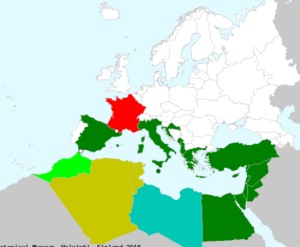
This plant is believed to originate from Europe but it had became native throughout Africa, Canada, North America and Asia. Examples of countries where has become naturalized include: [WWW-26]
Northern Africa: Algeria; Egypt; Morocco; Tunisia
Western Asia: Afghanistan; Iran; Iraq; Israel; Lebanon; Syria; Turkey
Caucasus: Armenia; Azerbaijan; Georgia; Russian Federation;
Soviet Middle Asia: Kazakhstan; Kyrgyzstan; Tajikistan; Turkmenistan; Uzbekistan; Siberia
Indian Subcontinent: India [n.] ; Pakistan
Northern Europe: Denmark; Norway; Sweden; United Kingdom
Middle Europe: Austria; Belgium; Czechoslovakia; Germany; Hungary; Netherlands; Poland; Switzerland
East Europe: Belarus; Moldova; Russian Federation; Ukraine
Southeastern Europe: Albania; Bulgaria; Greece; Italy; Romania; Yugoslavia
Southwestern Europe: France; Portugal; Spain
The plant is also widely naturalized in temperate regions [WWW-62]
Edible Uses
Young leaves can be eaten raw or cooked [13, 55, 62] but offer a bitter flavour [85] The young tender leaves are mild and make an excellent salad [183, 217] , but the whole plant becomes bitter as it gets older, especially when coming into flower [KF] As a potherb it needs very little cooking [183] Large quantities can cause digestive upsets [62]
Young shoots can be cooked and used as an asparagus substitute [13]
An edible oil is obtained from the seed [46, 61, 105] The oil must be refined before it is edible [114] This is not bitter but it has pleasant flavour [114, 183]
History:
The Roman emperor Augustus reportedly built a statue of the physician who had prescribed lettuce for him, in the belief that the plant had cured him of a serious illness. Although the species responsible for the cure was not specified, it was probably prickly lettuce. Since ancient times, this ancestor of all lettuce plants has been so greatly valued as a sedative and pain reliever that it was considered an opium substitute into the 19th century. Like opium, the milk like juice (latex) of prickly lettuce solidifies and turns brown when exposed to air; this substance, which looks and smells like opium, is called lactucarium. [WWW-71]
Over the centuries wild lettuce enjoyed great versatility as a medicinal plant. The Romans put wild lettuce on their banquet menus to prevent inebriation. New mothers once drank a tea brewed from the leaves to promote lactation. Wild lettuce sap has also been prescribed in herbals as a diuretic and as a soothing lotion for chapped skin. Also called compass plant because its leaves turn to follow the sun during the day, wild lettuce is bitter to some people's tastes, but horses delight in it. [WWW-71]
Complete List of chemicals and substance found in the plant
The plant has the following chemicals or substances according to reference [WWW-66] . For each chemical the part of plant where it is found is given. The main substance of the plant are indicated by a concentration value in parts per million (ppm).
8-DEOXYLACTUCIN (Plant)
ALPHA-TOCOPHEROL (Seed)
ARACHIDIC-ACID (Seed)
BETA-AMYRIN (Plant)
BETA-LACTUCEROL (Latex Exudate)
BETA-SITOSTEROL (Seed):
CAOUTCHOUC (Latex Exudate)
CAPROIC-ACID (Seed) - Concentration = 7392 ppm;
CITRIC-ACID (Latex Exudate)
FAT (Seed) - Conc = 352000 ppm;
GAMMA-LACTUCEROL (Latex Exudate)
GERMANICOL (Plant)
HYOSCYAMINE (Latex Exudate)
INULIN (Root)
LACTUCIN (Latex Exudate)
LACTUCOPICRIN (Plant)
LINOLEIC-ACID (Seed) - Conc. = 165616 - 204160 ppm
MALIC-ACID (Latex Exudate)
MANNITOL (Latex Exudate)
OLEIC-ACID (Seed) - Conc. = 95040 - 130170 ppm
OXALIC-ACID (Latex Exudate)
PALMITIC-ACID (Leaf) - Conc. = 14080 - 52800 ppm
RESIN (Latex Exudate)
SQUALENE (Seed)
STEARIC-ACID (Seed) - Conc. = 13,165 ppm;
TARAXASTEROL (Latex Exudate)
Properties of Main active Components
Below is a list of the 7 principle or most abundant chemical constituents of the plant followed by and their specific properties or activities. [WWW-66]
LACTUCIN:
Antitumor - Bitter (Dosage: 1.7 ppm) - CNS-Depressant - Cytotoxic - Sedative - Tonic
LINOLEIC-ACID:
5-Alpha-Reductase-Inhibitor -
AntiMS -
Antiacne -
Antialopecic -
Antianaphylactic -
Antiandrogenic -
Antiarteriosclerotic -
Antiarthritic -
Anticoronary -
Antieczemic -
Antifibrinolytic -
Antigranular -
Antihistaminic -
Anti-inflammatory (Dosage: IC50=31 uM ) -
Antileukotriene-D4 (Dosage: IC50=31 uM ) -
Antimenorrhagic -
Antiprostatitic -
Cancer-Preventive -
Carcinogenic -
Comedolytic -
Hepatoprotective -
Hypocholesterolemic -
Immunomodulator -
Insectifuge -
Metastatic -
Nematicide -
Propecic
LACTUCOPICRIN:
Bitter (Dosage: 0.5 ppm)
CNS-Depressant -
Hypoglycemic -
Sedative
CAPROIC-ACID:
Irritant
OLEIC-ACID:
5-Alpha-Reductase-Inhibitor -
Allergenic -
Alpha-Reductase-Inhibitor -
Anemiagenic -
Antialopecic -
Antiandrogenic -
Antiinflammatory (Dosage: IC50=21 uM) -
Antileukotriene-D4 (Dosage: IC50=21 uM) -
Cancer-Preventive -
Choleretic (Dosage: 5 ml/man) -
Dermatitigenic -
FLavor (Dosage: FEMA 1-30) -
Hypocholesterolemic -
Insectifuge -
Irritant -
Percutaneostimulant -
Perfumery -
Propecic
PALMITIC-ACID:
5-Alpha-Reductase Inhibitor -
Antialopecic -
Antiandrogenic -
Antifibrinolytic -
Antioxidant (Dosage: IC40=60) -
FLavor ( Dosage: FEMA 1) -
Hemolytic -
Hypercholesterolemic -
Lubricant -
Nematicide -
Pesticide -
Propecic -
Soap
STEARIC-ACID:
5-Alpha-Reductase Inhibitor -
Cosmetic -
FLavor (Dosage: FEMA 2-4000) -
Hypocholesterolemic -
Lubricant -
Perfumery -
Propecic -
Suppository
Medicinal Uses
The whole plant is rich in a milky sap that contains 'lactucarium', used in medicine for the following medicinal properties: [9, 21, 46, 165, 192, 213, 238, WWW-66]
| Anodyne |
Used to relieve pain. [WWW-32] |
| AntiCancer |
Used in the treatment of cancer; "anticancer drug"; "an antineoplastic effect". [WWW-32] |
| Chafe |
Used to cause irritation of the skin by friction; to rub in order to stimulate and make warm.
. [WWW-32] |
| Diuretic |
Tending to increase the secretion and discharge of urine. [WWW-32]
|
| Emollient |
Substances resembling cream that have a soothing and moisturizing effect when applied to the skin. [WWW-32] |
| Febrifuge |
A medicine that lowers body temperature to prevent or alleviate fever [WWW-32] |
| Homeopathic |
A term used in medicine when small doses of a drug cure symptoms like those that larger doses would cause [271] |
| Hypnotic |
Used to promote sleep where the effect is intermediate between that of a sedative (tranquilizer) and narcotic. [271] |
| Galactogogue |
An agent which promotes milking in nursing mothers [WWW-08] |
| Narcotic |
Causes dulling of consciousness, and hence induces sleep rapidly [271] |
| Sedative |
Used for making drowsy or sooth a patient, but not strong enough to induce sleep [271] |
| Tonic |
A medicine that strengthens and invigorates hence restores normal tone to tissues or to stimulate the appetite. [WWW-32] |
Lactucarium has the effects of a feeble opium, but without its tendency to cause digestive upsets [4] , nor is it addictive [7] It is taken internally in the treatment of insomnia, anxiety, neuroses, hyperactivity in children, dry coughs, whooping cough, rheumatic pain etc [238] Concentrations of lactucarium are low in young plants and most concentrated when the plant comes into flower [238] It is collected commercially by cutting the heads of the plants and scraping the juice into china vessels several times a day until the plant is exhausted [4]
This species does not contain as much lactucarium as L. virosa [4] Actually all lettuces possess some of this narcotic juice, Lactuca virosa having the most, and the others in the following order: L. scariola, or Prickly Lettuce, L. altissima, L. Canadensis, or Wild Lettuce of America, and L. sativa, or Garden Lettuce. [WWW-03]
An infusion of the fresh or dried flowering plant can also be used [9]
The plant should be used with caution, and never without the supervision of a skilled practitioner. Even normal doses can cause drowsiness whilst excess causes restlessness [238] and overdoses can cause death through cardiac paralysis [7, 9]
The fixed oil from the seeds is said to possess antipyretic and hypnotic properties [240]
A homeopathic remedy is made from the plant [9] It is used in the treatment of chronic catarrh, coughs, swollen liver, flatulence and ailments of the urinary tract [9]
Details about Lactucarium - main component found in Lactuca
The whole plant is rich in a milky juice that flows freely from any wound. This has a bitter taste and a narcotic odour. When dry, it hardens, turns brown, and is known as lactucarium. [WWW-03]
Lactucarium is produced in Germany and Scotland, France, and England. According to the American market, The English and scotch is the better quality.It occurs in angular pieces of various sizes, is brown in color, and earthy in appearance. The German product occurs in brown quarter-sections of plano-convex, circular, or saucer-shaped cakes. French lactucarium comes in small, circular cakes, otherwise resembling the German drug. [WWW-09]
The official product is thus described: "In sections of plano-convex, circular cakes, or in irregular, angular pieces, externally grayish-brown, or dull reddish-brown, internally whitish or yellowish, of a waxy luster; odor heavy, somewhat narcotic; taste bitter. It is partly soluble in alcohol and in ether. When triturated with water, it yields a turbid mixture, and, when boiled with water, it softens and yields a brownish-colored liquid which, after cooling, is not colored blue by iodine T.S."-(U. S. P.). [WWW-09]
Lactucarium does not absorb moisture from the atmosphere; is softened by heat, and at a high temperature burns with a large, white flame. Cold water takes up about a sixth of it, forming a deep-brown infusion; boiling water, proof-spirit, alcohol, and ether a much larger proportion. The addition of acetic acid to water or alcohol improves their solvent powers upon this substance. It pulverizes with difficulty. It does not readily emulsionize with water, unless gum Arabic be present. By previous titration with a small quantity of nitrous ether, it may be readily incorporated with water (Vogeler). [WWW-09]
Lactucarium contains neither morphine nor hyoscyamine, nor any other alkaloid , but is found to consist of the bitter substances lactucin, lactuco-picrin, and lactucic acid, large amounts of caoutchouc and lactucerin (lactucon), a camphoraceous volatile oil (Thieme), sugar, gum, pectic acid, albumen, oxalic acid, mannit, potassium nitrate, etc. [WWW-09]
Medical Properties and Activity of Lactucarium
Lactucarium has never been thoroughly and satisfactorily investigated in relation to its therapeutical influences: indeed, various experimenters differ in their views on this point, some asserting it to be a stimulant and others a sedative. It is, when employed at all, usually given as a calmative and hypnotic, and as a substitute for opium, to which it is to be preferred in many instances, on account of its freedom, from unpleasant after-effects, as constipation, excitement of the brain, etc. [WWW-09]
However, it is not considered equal in power to opium. The most energetic lactucarium. is said to be obtained from L. virosa and L. altissima. Moderate doses of it act as a narcotic poison on the lower animals, and 10 or 20 grains swallowed by a dog will cause sleep, or the watery solution injected into a vein occasions sleep, coma, and death. It appears to be of use in insomnia, due to mental overwork.
A syrup of lactucarium is of value in the cough of phthisis, and even garden lettuce appears to exert a good influence in this disease, tending to allay the broncho-pulmonary irritation. Dose of lactucarium in pill or powder, which is the most efficient mode of administration, from 5 to 20 grains; of the tincture, 30 to 60 drops; of the alcoholic extract, 1 to 5 grains. [WWW-09]
Details about Lactucin - Product of Lactucarium
Lactucin (C11 H14 O4, Kromayer, 1861), is one of the bitter principles of lactucarium. It may be obtained by extracting lactucarium, with cold alcohol of specific gravity 0.85. It is a colorless, odorless, fusible, neutral substance, crystallizing in rhombic plates, or in pearly-white scales. It dissolves in from 60 to 80 parts of water, is slightly soluble in ether, readily so in alcohol, and in acids. It reduces Fehling's solution, but yields no sugar upon hydrolysis. Lactucic acid (Ludwig, Archiv der Pharm., 1847) is light yellow, very bitter, soluble in water and alcohol, and does not readily crystallize. Alkalies turn its aqueous solution red. By some this acid is considered a prominent active constituent. The mother liquor of lactucin yielded (Kromayer, 1861) lactuco-picrin (C44 H32 O21). It is a brown, amorphous, bitter body, faintly acid in reaction, soluble in water and alcohol. It is probably an oxidation product of lactucin. Kromayer regards lactucic acid as the product of the oxidation of lactuco-picrin. [WWW-09]
Lactucin has sedative, diuretic and hypnotic properties. It has been used in some occasions as a substitute of the opium, because it presents similar effects , although without opium addictive values. It appears either in the wild lettuce or in the chicory, but it has generally been obtained from wild or prickly lettuce. This juice was a very well-known beverage during the XIX century, when addicts to the opium didn't have this drug. It is obtained from the latex that the plant produces when being cut. Then it can be taken drunk by diluting it in hot water or, if the liquid is boiled until evaporating all the water, a pasta is formed, that, once dry, can be smoked. his product can take in doses non superior to a coffee spoonful, or in form of syrups. [WWW-52]
Details about Lactucerin - Product of Lactucarium
By far the most abundant substance in lactucarium is lactucerin (lactucon of Lenoir, 1846) (C19 H30 O1, Flückiger and O. Schmidt, 1876),constituting half or more of its weight. It is obtained by extracting lactucarium with cold, then with boiling alcohol, which leaves caoutchouc undissolved; or by extracting lactucarium with a mixture of 1 part of chloroform and 3 parts of alcohol. It forms odorless, tasteless, colorless needles, soluble in alcohol, ether, benzin, benzol, chloroform, and volatile and fixed oils, but not soluble in water. Its exact chemical nature remains yet to be established Flückiger (Pharmacographia) calls attention to the fact that it is remarkably analogous to euphorbon (from euphorbium), cynanchol (C15 H24 O1) (from Cynanchum acutum, Linné), echicerin (from Alstonia), and taraxacerin (from Taraxacum). Lactucarium is liable to be adulterated with bread crumbs. [WWW-09]
Other Uses
The seed contains 35.2% of a semi-drying oil [240] It is used in soap making, paints, varnishes etc [114] It is cultivated for its oil in its seed in Egypt [46, 61]
Compass Plant
One of the common names given to the plant is 'compass plant' This is because this plant have a special and curious characteristics of acting like a traveller compass and hence one can say where is the North/South plane [200] The margins of the leaves are always arranged in a North-south direction, so as in this way they avoid the strong radiation and heat of the sun at noon. experiments have shown that leaves exposed to the full heat of the midday sun may attain temperatures of 3.6 - 7.6 Celcius above those set like the leaves of this species [272] .
N.b. the species Silphium laciniatum is more known as and referred to as the Compass Plant from the Lactuca serriola. As stated, th latter is more known as Prickly Lettuce
Resistance to herbicides
In some parts of USA and Australia this weed evolved resistance to Group B/2 herbicides. This fact occured and has been reported In South Australia (1994), Washington (1993), Oregon (1993) and the first time in Idaho (1987). The resistant plants have become a notorious weeds which infests cereals, and wheat.
Group B/2 herbicides are known as ALS inhibitors (Inhibition of acetolactate synthase ALS (acetohydroxyacid synthase AHAS). Research has shown that these particular biotypes are resistant to chlorsulfuron and they may be cross-resistant to other Group B/2 herbicides. Local weed scientists estimate that Group B/2 resistant Prickly Lettuce in Washington infests 11-50 sites, which estimate about 101-500 acres infested with Group B/2 resistant Prickly Lettuce. In Oregon infestation amounts ten times as much. [WWW-71]
Toxicity
Can accumulate toxic levels of nitrates in leaves and tops. Another seperate form of poisoning has occurred in very hungry animals that have eaten a large amount of the young weed. [WWW-72] The milky sap is mildly poisonous due to the presence of alkaloids [13, 272] The extracts of the plant (referring to lactucarium) should be used with caution, and never without the supervision of a skilled practitioner. Even normal doses can cause drowsiness whilst excess causes restlessness [238] and overdoses can cause death through cardiac paralysis [7, 9]
Plant Passport for Switzerland and EU Countries
Plant Passport all the species of this genus is required for Trade in UK/EU. Plant Passports also required for commercial growers in the UK/Europe. Article 2.1 of the document set by the EU about Plant passports actually states that the passport is needed for the plants intented for planting, but not for the seeds. The document was obtained from http://www.defra.gov.uk/planth/pass.htm
Personal Observations
More detail about the flowers
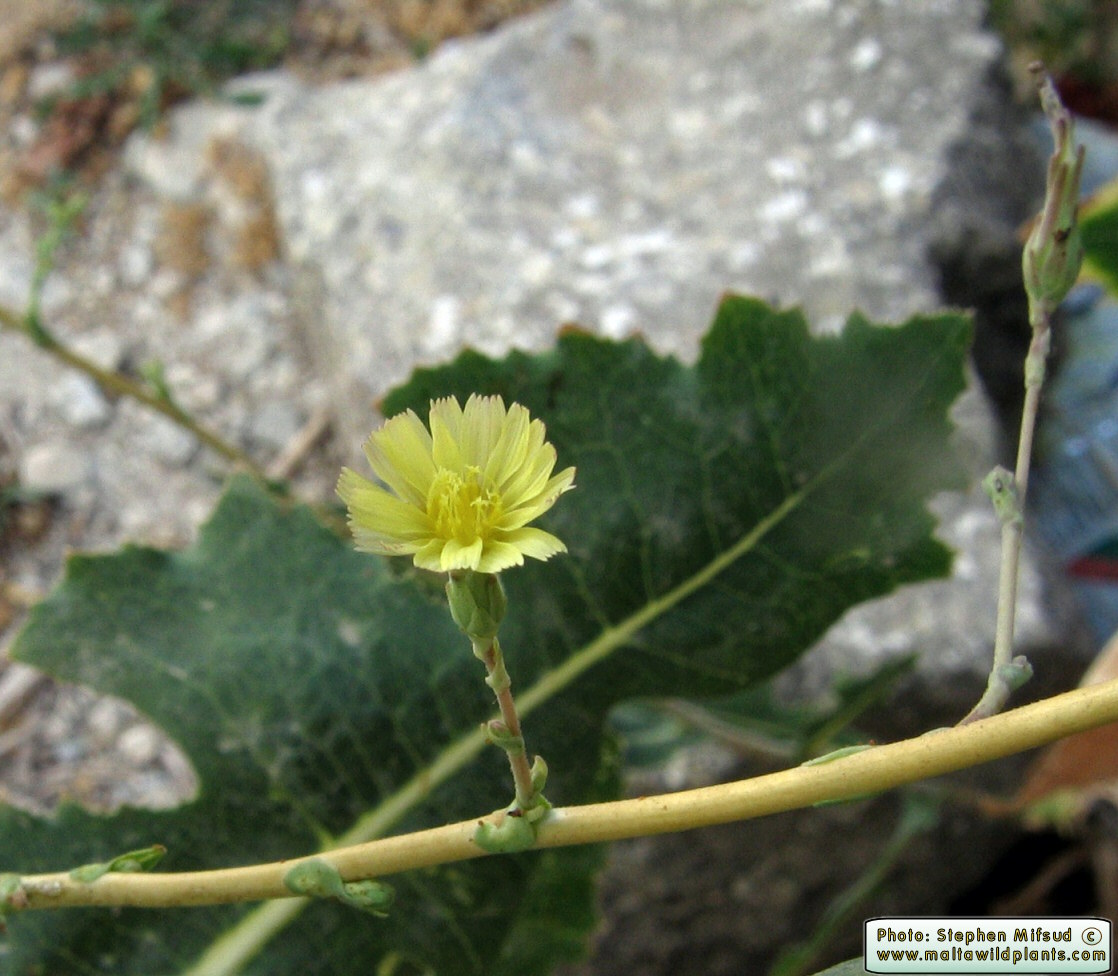
Finding the flowers on the plant might be tricky. The small pale yellow flowers opens up in the early morning and closes up soon after, when the sun rises and the temperature gets warm. For example at the end of June, the flowers would be already closing about 9am.
It is also strange that when the flower is expired, it does not simply fall off, but first it closes back and shrinks into a small pale lilac appendage which falls off later at the day. So it is unusual to find flowers later during the day, because every flower closes up. The reason for this mechanism is not yet understood, but perhaps it has something to do with the pollinating insects, which are usually available for pollinating in the early morning only. Pollinators include small flies and certain wasps. [SM]
The milky sap
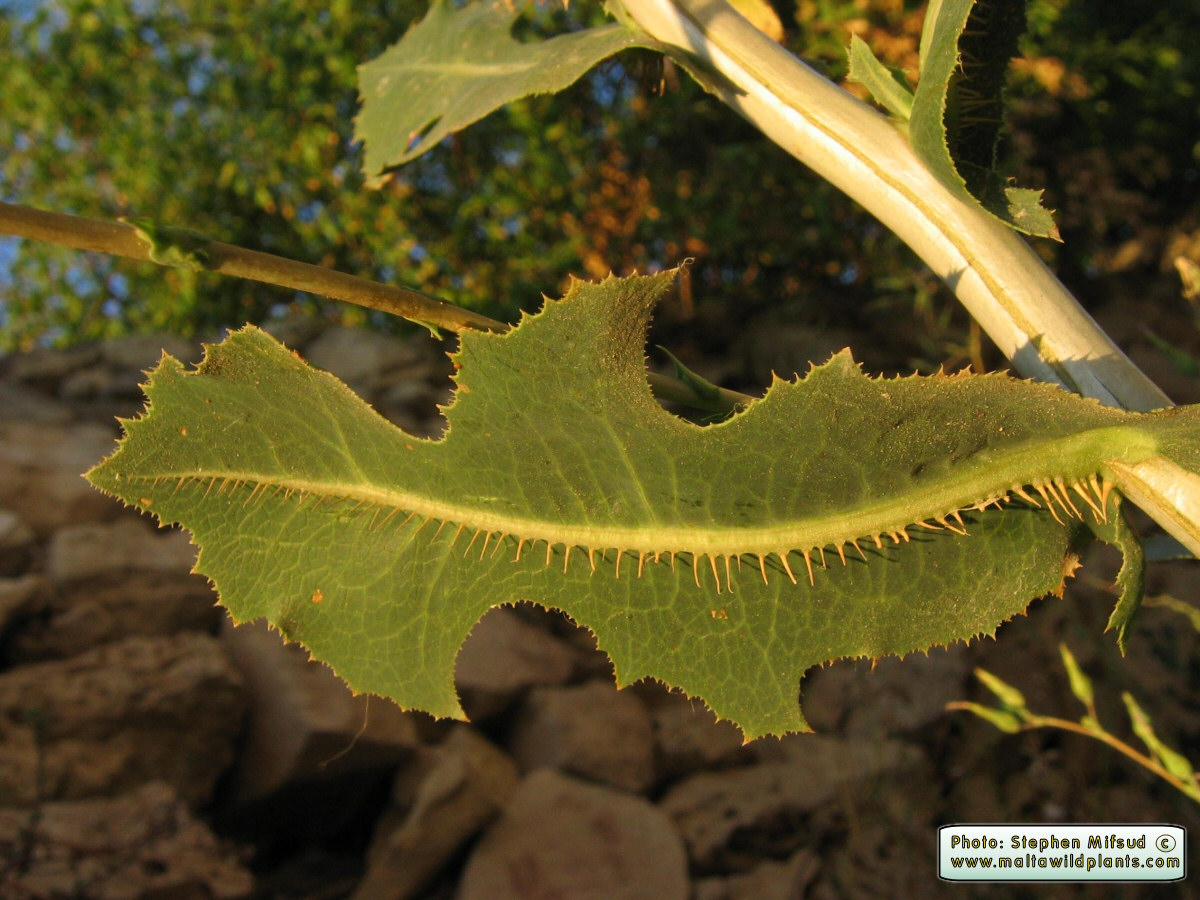
The white sap present in almost all aerial part of the plant, is sticky and have a faint irritating small. A particular feature about it is that it flows readily and in considerable amount from flower involucres and buds even just on gentle touch. For instance if a bud is just caressed, you could see white blobs of sap forming around it. The sap then dries into a iodine like reddish-brown hard residue. These can be seen as tiny speckles on several buds, which produces sap freely, probably by swaying with wind. [SM]
|
|